
LIST PRICE $19.99
PRICE MAY VARY BY RETAILER
Digital products purchased on SimonandSchuster.com must be read on the Simon & Schuster Books app. Learn more.
Buy from Other Retailers
Table of Contents
About The Book
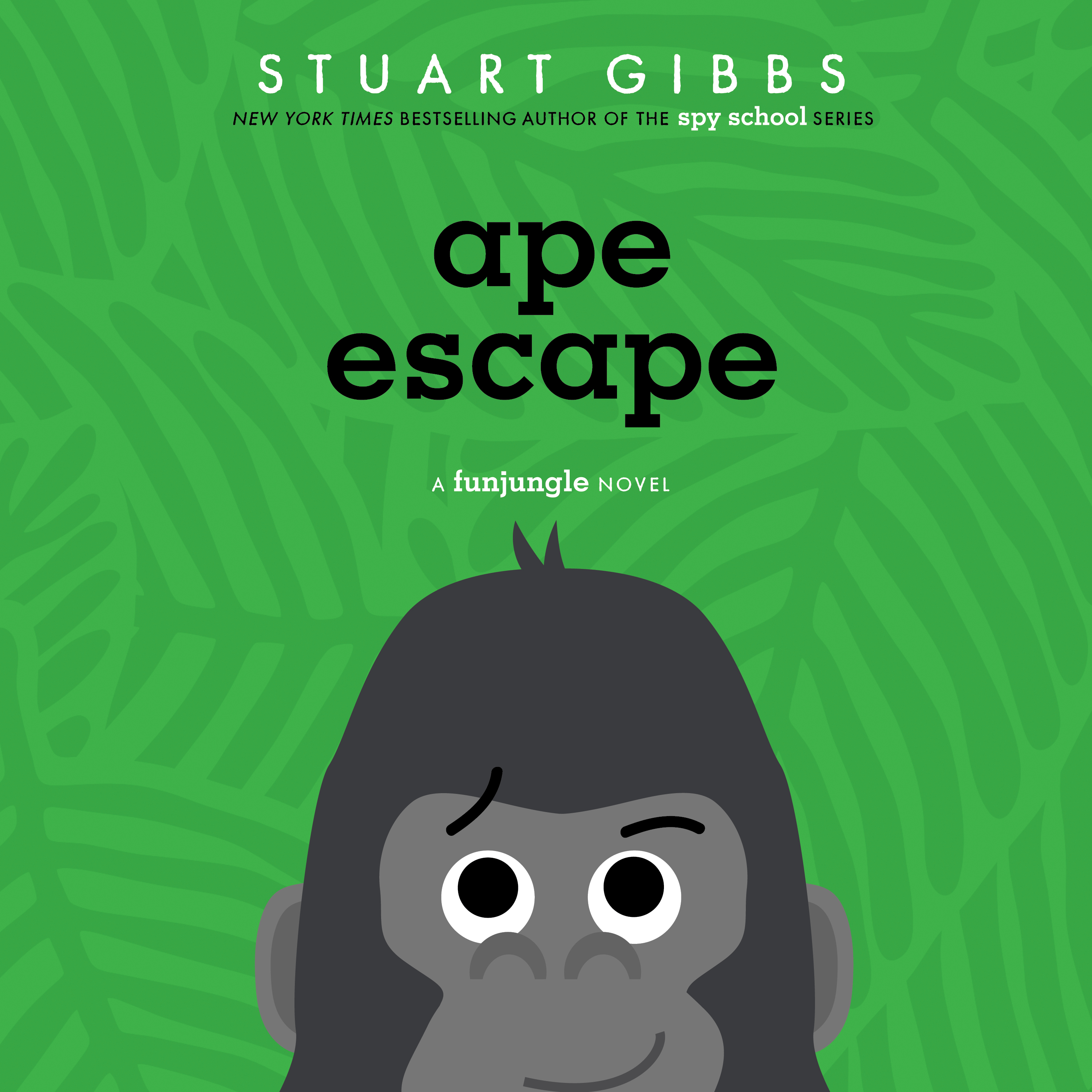
In the tenth novel in New York Times bestselling author Stuart Gibbs’s FunJungle series, super sleuth Teddy Fitzroy is on the case to rescue an abducted gorilla!
When a baby gorilla is stolen from an orphanage in Rwanda, Teddy, his parents, and an old family friend find themselves in a race against time to save it. Teddy has to piece together clues to figure out where the little ape is being taken while traveling through some of the most incredible—and dangerous—terrain in the world.
At the same time, he’s long-distance consulting with Summer to help solve another mystery back at FunJungle. Between facing down lions on the Serengeti and chasing poachers through the bazaars of Zanzibar, will Teddy be able to find the baby gorilla before it’s too late?
When a baby gorilla is stolen from an orphanage in Rwanda, Teddy, his parents, and an old family friend find themselves in a race against time to save it. Teddy has to piece together clues to figure out where the little ape is being taken while traveling through some of the most incredible—and dangerous—terrain in the world.
At the same time, he’s long-distance consulting with Summer to help solve another mystery back at FunJungle. Between facing down lions on the Serengeti and chasing poachers through the bazaars of Zanzibar, will Teddy be able to find the baby gorilla before it’s too late?
Reading Group Guide
Reading Group Guide
Ape Escape
A FunJungle Novel
By Stuart Gibbs
About the Book
When a baby gorilla is stolen from an orphanage in Rwanda, Teddy, his parents, and an old family friend find themselves in a race against time to save it. Teddy must piece together clues to figure out where the little ape is being taken while traveling through some of the most incredible—and dangerous—terrain in the world.
At the same time, he’s long-distance consulting with Summer to help solve another mystery back at FunJungle. Between facing down lions on the Serengeti and chasing poachers through the bazaars of Zanzibar, will Teddy be able to find the baby gorilla before it’s too late?
Discussion Questions
1. The novel opens with this observation from the protagonist and narrator, Teddy:
Since I was only in eighth grade, being a detective was more of a hobby than a full-time job. It had happened by accident; some crimes had occurred at FunJungle, I’d turned out to have a knack for solving them, and word got around. I didn’t handle major cases like armed robbery and murder. The local police took care of those. I was generally contacted about crimes that were more unusual. Crimes that professional law enforcement often didn’t take seriously. Like this one.
Based on what you already know about Teddy, why is he good at solving crimes? Can you identify any special skills he exhibits that the law enforcement professionals around him may miss? If so, what are they?
2. Orville, a neurodivergent custodial employee of FunJungle, declares to Teddy, “‘Someone has been stealing the ducklings,’” to which Teddy asks, “‘Have you actually seen someone stealing the ducklings?’”(Chapter one) Though he is presented with multiple possibilities for the duckling numbers to have decreased, why is Orville so certain that the ducklings are going missing, and how does this lead to another FunJungle investigation?
3. Teddy shares that “Marge was now FunJungle’s head of crowd control operations. I had first met her when she worked in security, and we hadn’t gotten along at all.” (Chapter one) Consider how the relationship between Teddy and Marge has evolved over the course of the FunJungle series. In what ways can readers see how they put their differences aside?
4. While focusing on the issue of the missing ducklings, Teddy notes that Marge “appeared to be good friends with Orville” and was very protective of him. (Chapter one) Does knowing that she is an advocate for Orville change your opinion of Marge in any way?
5. Why do the Fitzroys seem so devastated to learn about the disappearance and possible death of their friend? In what ways is it obvious that Jadim Okenoyo has meant a great deal to them? How does his disappearance set the stage for the events to come in Rwanda and beyond?
6. After traveling across the world to attend his funeral, how do the Fitzroys react to learning the truth about Jadim Okenoyo and his disappearance? If you were in a similar situation, how would you feel? Given the circumstances, do you believe Jadim’s actions were justified? Why or why not?
7. While visiting the Volcanoes National Park headquarters, Teddy and his family witness the bond between the orphaned baby gorilla Fuzi and Lana, the woman hand-rearing the infant. Why is the animal-human connection so strong between the pair? Do you have an animal in your life with which you also have a deep connection? If so, share with others what this animal means to you.
8. Though Teddy’s investigations have largely been centered around FunJungle mysteries, what have these offsite investigations offered him that the FunJungle investigations have not?
9. Consider the different types of bad behavior of some of the tourists at FunJungle. While littering is the most common, Teddy shares other types of poor behavior, like “knocking on the glass of [the animals’] exhibits” or trying to “feed animals food that wasn’t healthy for them” and throwing things at the animals to wake them up. (Chapter one) Have you personally witnessed similar poor actions at zoos or other animal-focused attractions? Do you have any suggestions on ways to help visitors make better choices in their behavior?
10. Readers learn that as a child seeing gorillas for the first time, Jadim was so awed that “his legs seemed to go out from under him. He just sat on the ground and stared in amazement.” (Chapter two) How does his deep reverence for them exemplify the profound connection that humans have with mountain gorillas? When he works with Teddy’s mom and in other situations, to what lengths does Jadim go to dedicate his life to the gorillas’ care and the preservation of their welfare?
11. Do you believe Summer and Xavier do an effective job of handling the mystery at FunJungle while Teddy is away? Using textual evidence from the novel, explain your position.
12. After they are captured, one of the poachers responsible for stealing Fuzi tries to explain his actions by stating, “‘When a man offers us five hundred dollars to steal a gorilla, we cannot pass up such an opportunity! That is more money than we make in three months!’” (Chapter fifteen) While there is no justification for this criminal behavior, in what ways does understanding the reality of their poverty as the reader change your moral perspective on why individuals are willing to commit to illegal endeavors?
13. As Teddy and his family engage in an international chase to recover Fuzi, the stolen baby gorilla, they learn more about the challenges they are facing from Chief Mosebe of the Tanzania National Park Authority. Mosebe uses a pyramid diagram to explain the structure of the trafficking ring where the captured men are at the bottom, criminals like Bob are in the middle, and a single “big fish” sits at the top. (Chapter seventeen) Given this structure of criminal activity for trafficked wild animals, what makes achieving justice so difficult?
14. From what you discovered in your reading of Ape Escape, what do you believe would be the most rewarding part of participating in an investigation such as this one? Can you think of any major drawbacks to this kind of experience?
15. One of the lessons of Ape Escape is that conservation is a collaborative effort. While the Fitzroys play a role in the recovery of Fuzi, the work of the Rwandan primatologists and rangers and the Tanzanian anti-poaching agents is essential to the ultimate success of this mission. Why is this collaboration so important to remember?
16. During the efforts to retrieve Fuzi, a large-scale smuggling operation is discovered that includes a diverse group of other illegally obtained animals, including a second juvenile gorilla (a Grauer’s gorilla), a cheetah, a warthog, multiple pangolins, and several barrels containing snakes (sand boas and rock pythons) inside a sealed and unventilated shipping container. How does learning that this type of cruelty and illegal trafficking in wildlife happens regularly make you feel? Can you think of ways to combat it?
17. Throughout Ape Escape, readers learn a great deal about mountain gorillas. From your reading of the novel, what were some of your favorite things you discovered about them? What makes these creatures so special and worthy of protecting?
18. As Ape Escape ends, Teddy, Summer, and Xavier have once again solved two cases. Predict what new mystery will come their way in the next installment of the FunJungle books.
Extension Activities
- In Ape Escape, readers learn about Volcanoes National Park in Rwanda and the important work being done there to support mountain gorillas. Using resources from the Volcanoes National Park website (https://www.volcanoesnationalpark.com/), work together with a small group to research and learn the following:
- Where is the park located?
- How large is it?
- What is it best known for?
- What other wild animals have their homes in the park?
- How many visitors does it receive annually?
- What are the greatest challenges faced by the park?
Continuing your work as a team, create an exploration plan for other young people lucky enough to visit the park to see gorillas.
- As Teddy and his family race across Rwanda and Tanzania to save the baby gorilla, they encounter travelers on safari in the Serengeti. Using library and internet resources, team up to learn more about safaris in Africa. Begin by exploring the following:
- What are the most common types of safaris?
- Where do most safaris happen, and how long do they take?
- What types of animals are common to see?
Next, build on that knowledge, and research a specific benefit of safaris by choosing one of the following categories to research:
- For travelers (education, wellness, adventure)
- For wildlife and environment (conservation)
- For local communities (economic and social benefits)
- For safari operators (sustainability)
Using this gathered knowledge, create a digital, visual, or online product that can be showcased and shared with others.
- While Teddy and his family race to save the baby gorilla from poachers, the mystery unfolding at FunJungle involves a baby gharial, revealing how a well-intentioned but misguided individual introduced an endangered species into the FunJungle park ecosystem. Begin by learning more about gharials here: https://www.nationalgeographic.com/animals/reptiles/facts/gharial.
Next, learn more about the illegal exotic pet trade and why a creature like the gharial might be included: https://www.worldwildlife.org/our-work/wildlife/wildlife-crime/#:~:text=It's%20the%20largest%20direct%20threat,protecting%20the%20planet's%20critical%20ecosystems.
Work with a partner to draft a plan to bring awareness to your community and help discourage others from purchasing animals from non-reputable sources.
- In Ape Escape, readers learn a myriad of interesting facts about mountain gorillas. Begin by reviewing facts about the species here: https://www.worldwildlife.org/species/gorilla/.
After these readings, research more about today’s conservation efforts for these majestic creatures. Using this new knowledge, have students create a visual project (pamphlet, poster, video, infographic, etc) that can be showcased and shared with others.
- Throughout the novel, readers learn that gorillas are endangered due to a variety of human-led activities, especially poaching. Working together, examine the website resources of the International Gorilla Conservation Program (IGCP) here: https://igcp.org/.
While reading and examining these resources, have students journal or create a “What I’ve Learned” notes page, detailing what information is new to them, and why they believe it to be significant. Have them share their findings with others.
This guide was created by Dr. Rose Brock, an associate professor at Sam Houston State University. Dr. Brock holds a Ph.D. in Library Science, specializing in children’s and young adult literature.
The websites referenced above are provided for informational purposes only and are not intended as an endorsement or promotion of any website. Simon & Schuster is not responsible for the functionality or content of any external website and expressly disclaims all responsibility and liability in connection therewith.
This guide has been provided by Simon & Schuster for classroom, library, and reading group use. It may be reproduced in its entirety or excerpted for these purposes. For more Simon & Schuster guides and classroom materials, please visit https://www.simonandschuster.net/m/prek12-teachers-librarians/teaching-resources
Ape Escape
A FunJungle Novel
By Stuart Gibbs
About the Book
When a baby gorilla is stolen from an orphanage in Rwanda, Teddy, his parents, and an old family friend find themselves in a race against time to save it. Teddy must piece together clues to figure out where the little ape is being taken while traveling through some of the most incredible—and dangerous—terrain in the world.
At the same time, he’s long-distance consulting with Summer to help solve another mystery back at FunJungle. Between facing down lions on the Serengeti and chasing poachers through the bazaars of Zanzibar, will Teddy be able to find the baby gorilla before it’s too late?
Discussion Questions
1. The novel opens with this observation from the protagonist and narrator, Teddy:
Since I was only in eighth grade, being a detective was more of a hobby than a full-time job. It had happened by accident; some crimes had occurred at FunJungle, I’d turned out to have a knack for solving them, and word got around. I didn’t handle major cases like armed robbery and murder. The local police took care of those. I was generally contacted about crimes that were more unusual. Crimes that professional law enforcement often didn’t take seriously. Like this one.
Based on what you already know about Teddy, why is he good at solving crimes? Can you identify any special skills he exhibits that the law enforcement professionals around him may miss? If so, what are they?
2. Orville, a neurodivergent custodial employee of FunJungle, declares to Teddy, “‘Someone has been stealing the ducklings,’” to which Teddy asks, “‘Have you actually seen someone stealing the ducklings?’”(Chapter one) Though he is presented with multiple possibilities for the duckling numbers to have decreased, why is Orville so certain that the ducklings are going missing, and how does this lead to another FunJungle investigation?
3. Teddy shares that “Marge was now FunJungle’s head of crowd control operations. I had first met her when she worked in security, and we hadn’t gotten along at all.” (Chapter one) Consider how the relationship between Teddy and Marge has evolved over the course of the FunJungle series. In what ways can readers see how they put their differences aside?
4. While focusing on the issue of the missing ducklings, Teddy notes that Marge “appeared to be good friends with Orville” and was very protective of him. (Chapter one) Does knowing that she is an advocate for Orville change your opinion of Marge in any way?
5. Why do the Fitzroys seem so devastated to learn about the disappearance and possible death of their friend? In what ways is it obvious that Jadim Okenoyo has meant a great deal to them? How does his disappearance set the stage for the events to come in Rwanda and beyond?
6. After traveling across the world to attend his funeral, how do the Fitzroys react to learning the truth about Jadim Okenoyo and his disappearance? If you were in a similar situation, how would you feel? Given the circumstances, do you believe Jadim’s actions were justified? Why or why not?
7. While visiting the Volcanoes National Park headquarters, Teddy and his family witness the bond between the orphaned baby gorilla Fuzi and Lana, the woman hand-rearing the infant. Why is the animal-human connection so strong between the pair? Do you have an animal in your life with which you also have a deep connection? If so, share with others what this animal means to you.
8. Though Teddy’s investigations have largely been centered around FunJungle mysteries, what have these offsite investigations offered him that the FunJungle investigations have not?
9. Consider the different types of bad behavior of some of the tourists at FunJungle. While littering is the most common, Teddy shares other types of poor behavior, like “knocking on the glass of [the animals’] exhibits” or trying to “feed animals food that wasn’t healthy for them” and throwing things at the animals to wake them up. (Chapter one) Have you personally witnessed similar poor actions at zoos or other animal-focused attractions? Do you have any suggestions on ways to help visitors make better choices in their behavior?
10. Readers learn that as a child seeing gorillas for the first time, Jadim was so awed that “his legs seemed to go out from under him. He just sat on the ground and stared in amazement.” (Chapter two) How does his deep reverence for them exemplify the profound connection that humans have with mountain gorillas? When he works with Teddy’s mom and in other situations, to what lengths does Jadim go to dedicate his life to the gorillas’ care and the preservation of their welfare?
11. Do you believe Summer and Xavier do an effective job of handling the mystery at FunJungle while Teddy is away? Using textual evidence from the novel, explain your position.
12. After they are captured, one of the poachers responsible for stealing Fuzi tries to explain his actions by stating, “‘When a man offers us five hundred dollars to steal a gorilla, we cannot pass up such an opportunity! That is more money than we make in three months!’” (Chapter fifteen) While there is no justification for this criminal behavior, in what ways does understanding the reality of their poverty as the reader change your moral perspective on why individuals are willing to commit to illegal endeavors?
13. As Teddy and his family engage in an international chase to recover Fuzi, the stolen baby gorilla, they learn more about the challenges they are facing from Chief Mosebe of the Tanzania National Park Authority. Mosebe uses a pyramid diagram to explain the structure of the trafficking ring where the captured men are at the bottom, criminals like Bob are in the middle, and a single “big fish” sits at the top. (Chapter seventeen) Given this structure of criminal activity for trafficked wild animals, what makes achieving justice so difficult?
14. From what you discovered in your reading of Ape Escape, what do you believe would be the most rewarding part of participating in an investigation such as this one? Can you think of any major drawbacks to this kind of experience?
15. One of the lessons of Ape Escape is that conservation is a collaborative effort. While the Fitzroys play a role in the recovery of Fuzi, the work of the Rwandan primatologists and rangers and the Tanzanian anti-poaching agents is essential to the ultimate success of this mission. Why is this collaboration so important to remember?
16. During the efforts to retrieve Fuzi, a large-scale smuggling operation is discovered that includes a diverse group of other illegally obtained animals, including a second juvenile gorilla (a Grauer’s gorilla), a cheetah, a warthog, multiple pangolins, and several barrels containing snakes (sand boas and rock pythons) inside a sealed and unventilated shipping container. How does learning that this type of cruelty and illegal trafficking in wildlife happens regularly make you feel? Can you think of ways to combat it?
17. Throughout Ape Escape, readers learn a great deal about mountain gorillas. From your reading of the novel, what were some of your favorite things you discovered about them? What makes these creatures so special and worthy of protecting?
18. As Ape Escape ends, Teddy, Summer, and Xavier have once again solved two cases. Predict what new mystery will come their way in the next installment of the FunJungle books.
Extension Activities
- In Ape Escape, readers learn about Volcanoes National Park in Rwanda and the important work being done there to support mountain gorillas. Using resources from the Volcanoes National Park website (https://www.volcanoesnationalpark.com/), work together with a small group to research and learn the following:
- Where is the park located?
- How large is it?
- What is it best known for?
- What other wild animals have their homes in the park?
- How many visitors does it receive annually?
- What are the greatest challenges faced by the park?
Continuing your work as a team, create an exploration plan for other young people lucky enough to visit the park to see gorillas.
- As Teddy and his family race across Rwanda and Tanzania to save the baby gorilla, they encounter travelers on safari in the Serengeti. Using library and internet resources, team up to learn more about safaris in Africa. Begin by exploring the following:
- What are the most common types of safaris?
- Where do most safaris happen, and how long do they take?
- What types of animals are common to see?
Next, build on that knowledge, and research a specific benefit of safaris by choosing one of the following categories to research:
- For travelers (education, wellness, adventure)
- For wildlife and environment (conservation)
- For local communities (economic and social benefits)
- For safari operators (sustainability)
Using this gathered knowledge, create a digital, visual, or online product that can be showcased and shared with others.
- While Teddy and his family race to save the baby gorilla from poachers, the mystery unfolding at FunJungle involves a baby gharial, revealing how a well-intentioned but misguided individual introduced an endangered species into the FunJungle park ecosystem. Begin by learning more about gharials here: https://www.nationalgeographic.com/animals/reptiles/facts/gharial.
Next, learn more about the illegal exotic pet trade and why a creature like the gharial might be included: https://www.worldwildlife.org/our-work/wildlife/wildlife-crime/#:~:text=It's%20the%20largest%20direct%20threat,protecting%20the%20planet's%20critical%20ecosystems.
Work with a partner to draft a plan to bring awareness to your community and help discourage others from purchasing animals from non-reputable sources.
- In Ape Escape, readers learn a myriad of interesting facts about mountain gorillas. Begin by reviewing facts about the species here: https://www.worldwildlife.org/species/gorilla/.
After these readings, research more about today’s conservation efforts for these majestic creatures. Using this new knowledge, have students create a visual project (pamphlet, poster, video, infographic, etc) that can be showcased and shared with others.
- Throughout the novel, readers learn that gorillas are endangered due to a variety of human-led activities, especially poaching. Working together, examine the website resources of the International Gorilla Conservation Program (IGCP) here: https://igcp.org/.
While reading and examining these resources, have students journal or create a “What I’ve Learned” notes page, detailing what information is new to them, and why they believe it to be significant. Have them share their findings with others.
This guide was created by Dr. Rose Brock, an associate professor at Sam Houston State University. Dr. Brock holds a Ph.D. in Library Science, specializing in children’s and young adult literature.
The websites referenced above are provided for informational purposes only and are not intended as an endorsement or promotion of any website. Simon & Schuster is not responsible for the functionality or content of any external website and expressly disclaims all responsibility and liability in connection therewith.
This guide has been provided by Simon & Schuster for classroom, library, and reading group use. It may be reproduced in its entirety or excerpted for these purposes. For more Simon & Schuster guides and classroom materials, please visit https://www.simonandschuster.net/m/prek12-teachers-librarians/teaching-resources
About The Author

Photograph by Dashiell Gibbs
Stuart Gibbs
Stuart Gibbs is the author of five New York Times bestselling series: Spy School, FunJungle, Moon Base Alpha, Charlie Thorne, and Once Upon a Tim—as well as the new nonfiction series Spy School Secret Files. He has written screenplays, worked on a whole bunch of animated films, developed TV shows, been a newspaper columnist, and researched capybaras. Stuart lives with his family in Los Angeles. You can learn more about what he’s up to at StuartGibbs.com.
About The Reader

Gibson Frazier
Product Details
- Publisher: Simon & Schuster Audio (March 24, 2026)
- Runtime: 7 hours and 53 minutes
- ISBN13: 9781668162187
- Ages: 8 - 12
Resources and Downloads
High Resolution Images
-
Book Cover Image (jpg): Ape Escape
Unabridged Audio Download 9781668162187
-
Author Photo (jpg): Stuart Gibbs Photograph by Dashiell Gibbs(0.1 MB)
Any use of an author photo must include its respective photo credit