Table of Contents
About The Book
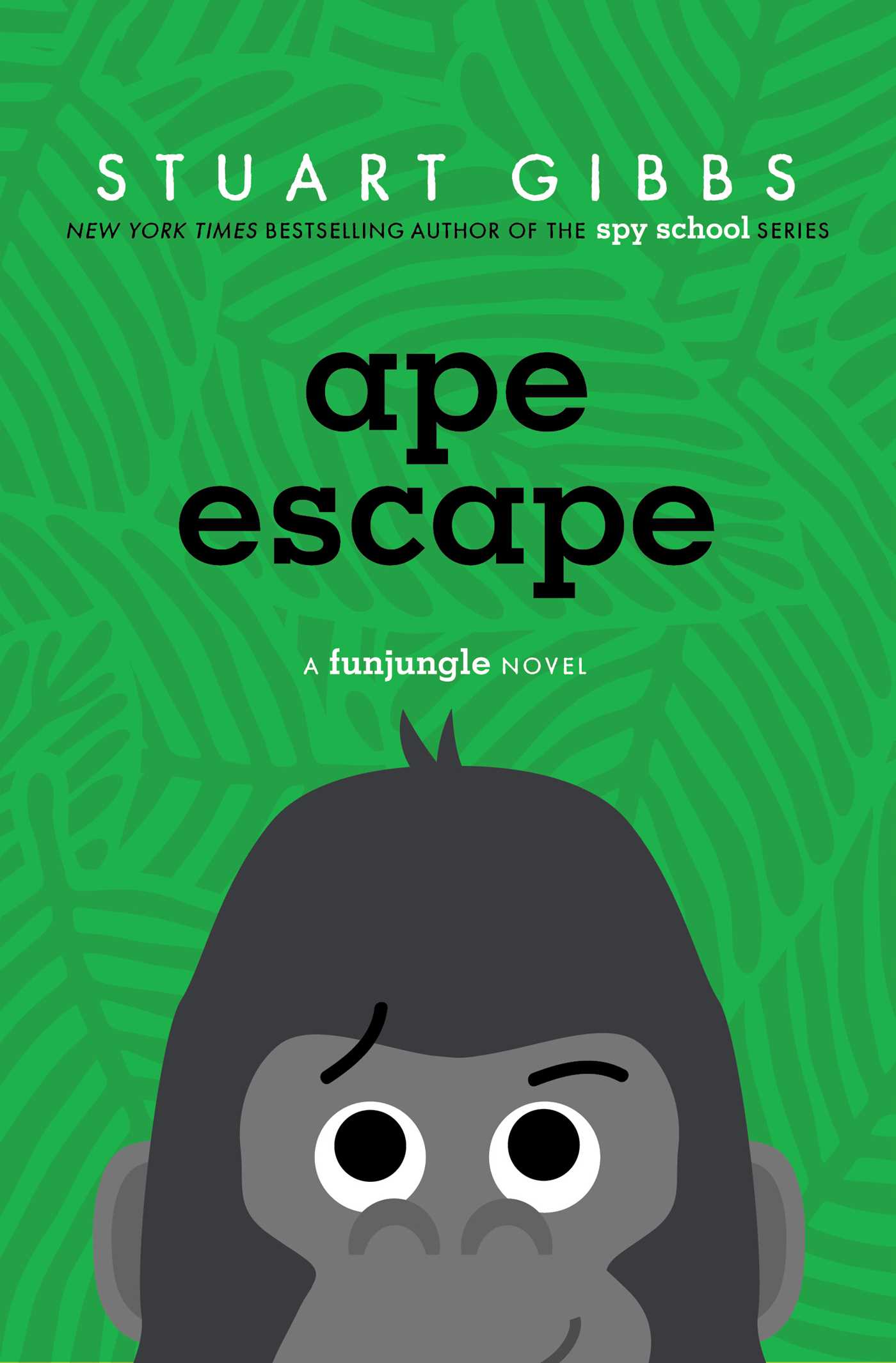
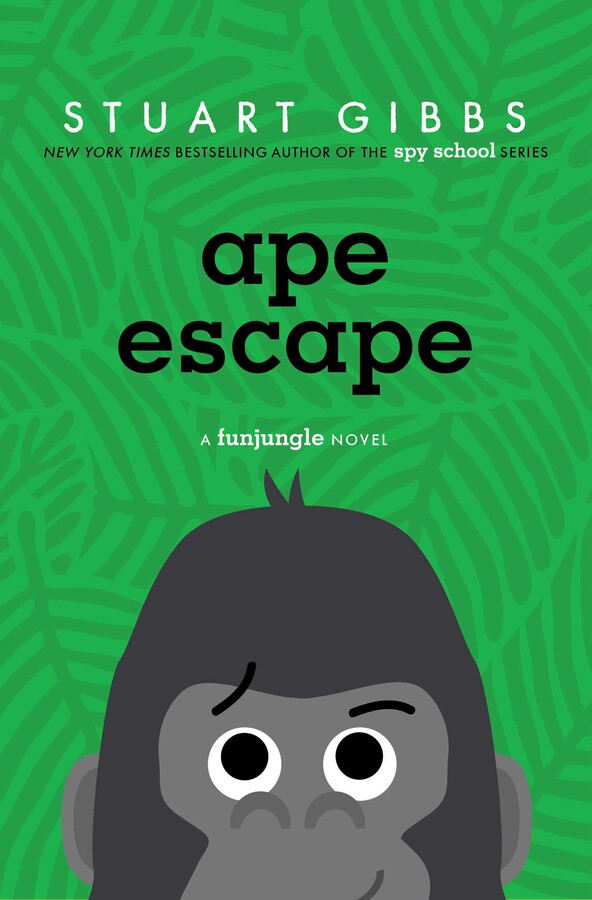
In the tenth novel in New York Times bestselling author Stuart Gibbs’s FunJungle series, super sleuth Teddy Fitzroy is on the case to rescue an abducted gorilla!
When a baby gorilla is stolen from an orphanage in Rwanda, Teddy, his parents, and an old family friend find themselves in a race against time to save it. Teddy has to piece together clues to figure out where the little ape is being taken while traveling through some of the most incredible—and dangerous—terrain in the world.
At the same time, he’s long-distance consulting with Summer to help solve another mystery back at FunJungle. Between facing down lions on the Serengeti and chasing poachers through the bazaars of Zanzibar, will Teddy be able to find the baby gorilla before it’s too late?
When a baby gorilla is stolen from an orphanage in Rwanda, Teddy, his parents, and an old family friend find themselves in a race against time to save it. Teddy has to piece together clues to figure out where the little ape is being taken while traveling through some of the most incredible—and dangerous—terrain in the world.
At the same time, he’s long-distance consulting with Summer to help solve another mystery back at FunJungle. Between facing down lions on the Serengeti and chasing poachers through the bazaars of Zanzibar, will Teddy be able to find the baby gorilla before it’s too late?
Excerpt
Chapter 1: The Big Stink
1 THE BIG STINK
I had just subdued an angry tourist with a zorilla when I got the bad news from Rwanda.
At the time, I was in the children’s zoo at FunJungle Wild Animal Park. Marge O’Malley, the former chief of security, had brought me and my girlfriend, Summer, there to meet an employee named Orville Fenster, who had a mystery for us to solve.
Since I was only in eighth grade, being a detective was more of a hobby than a full-time job. It had happened by accident; some crimes had occurred at FunJungle, I’d turned out to have a knack for solving them, and word got around. I didn’t handle major cases like armed robbery and murder. The local police took care of those. I was generally contacted about crimes that were more unusual. Crimes that professional law enforcement often didn’t take seriously. Like this one.
“Someone has been stealing the ducklings,” Orville declared.
Orville was in his early twenties and worked as a member of the FunJungle custodial staff. He wore a blue jumpsuit with a baseball cap and always carried a broom and dustpan, on the lookout for any stray garbage. The moment he saw some, it was his job to sweep it up and deposit it in the nearest trash receptacle. At any given time, there were dozens of people like him patrolling the park. The official job title was roving sanitation specialist, though everyone who worked at FunJungle called them sweepers.
“Have you actually seen someone stealing the ducklings?” I asked.
“No,” Orville admitted. “But three days ago, there were forty-eight of them in the pond. The next day, there were forty-seven. And today there are only forty-six.”
We were standing beside the pond in question. It was about the size of a tennis court and shaped like a kidney bean. Its shores were lined with cattails, reeds, and other water plants.
FunJungle was the largest zoo in the United States, and so its children’s zoo was the largest and most elaborate in the country as well. It featured an enormous petting zoo, several playgrounds, a performance stage, and an animal encounter area where keepers allowed visitors to meet—and occasionally even touch—live animals. The whole area featured whimsical architecture, animal-themed sculptures, and a great deal of topiary. The pond wasn’t really an exhibit so much as landscaping: a spot for people to sit at picnic tables and eat the overpriced snacks they’d bought at Eleanor Elephant’s Elegant Eatery.
Unfortunately, there had always been problems with the pond. It wasn’t a natural body of water; it had only been designed to look natural by a team of contractors, theme park consultants, and landscape architects. It was supposed to be filled with crystal-clear water and beautiful koi fish, but for reasons no one could explain, the water was always murky and choked with algae. Despite this, the pond had proved surprisingly enticing to wild birds. While some of these were cute and pleasant to look at, like the ducks, many were troublesome. The Canada geese were ornery. The seagulls had developed a taste for junk food and would snatch any refreshments left unattended for more than three seconds. And the grackles formed gigantic flocks that were extremely noisy and produced staggering amounts of poop. Trees that should have provided shade from the blazing Texas sun had been turned into danger zones; any guests who tried to dine beneath them would likely find themselves plastered with “grackle spackle.”
Between the bird poop and the algae, the pond often had an unpleasant, funky odor. As was the case at any zoo, there were plenty of places at FunJungle that didn’t smell great—but the pond was the worst offender by far. On hot and humid days, it emitted a noxious stench that my father said smelled like the outhouse section at a chili festival.
Luckily, the pond wasn’t particularly pungent that day. It was early November, so the temperature was mild, and a strong breeze was carrying any unpleasant aromas away. By that time of year, most ducks would have migrated out of central Texas, but the ones at FunJungle had plenty to eat and had become permanent residents. In the wild, ducklings were rarely born in the fall, and yet the FunJungle ducks had hatched a surprising number. I hadn’t realized how many there were until Orville mentioned it.
Everywhere I looked, there were small clutches of ducklings. Some swam in lines behind their parents. Some paddled off on their own. A quintet had waddled onto dry land a few feet away from us to devour some spilled popcorn. And those were just the ones I could see. The plants along the shores provided plenty of cover; there were certainly more ducklings hidden from sight among them.
“Seems like it’d be hard to get an accurate count of them all,” I said to Orville. “Are you sure you didn’t just miss a few?”
Orville shook his head. “No. I was very thorough. I’ve counted the ducks every day since they were born.” He then thought to add, “Not while I was working, of course. I count them on my own time.”
Summer carefully considered the ducklings in the pond. She had her long blond hair tucked under a baseball cap and wore big sunglasses to avoid being recognized. As the daughter of the park’s owner, J.J. McCracken, who was one of the richest people in America, Summer was famous, but when she dressed like a tourist, she was rarely noticed. Despite her wealth, Summer was extremely down-to-earth—and she was really smart as well. We had met while solving a mystery together, and had been a great team ever since.
“The ducklings all look really similar,” Summer said to Orville. “Is there a chance that you might have counted the same ones twice?”
Orville shook his head again, more emphatically this time. “They don’t look exactly alike. I can tell the differences. I didn’t make any mistakes.”
I started to ask another question about his accuracy, but Marge cut me off. “If Orville says he didn’t make any mistakes, then he didn’t make any mistakes.”
“I’m neurodivergent,” Orville explained helpfully. “And I really like birds.”
“Oh,” Summer said. “Cool.”
There were a lot of neurodivergent employees at FunJungle. The park was very supportive of them, which meant many neurodivergent people applied for jobs there.
Meanwhile, Marge was now FunJungle’s head of crowd control operations. I had first met her when she worked in security, and we hadn’t gotten along at all. She had immediately pegged me as a troublemaker and spent much of her time trying to bust me for breaking the rules, so I had retaliated by playing practical jokes on her, like slipping slices of bologna into her peanut butter sandwiches. Over time, we had put our differences aside. I still don’t think Marge liked me much, but she at least respected my talent for solving crimes. (I was much better at it than she had been, which was a major reason why J.J. McCracken had moved her to crowd control from security.) She appeared to be good friends with Orville, however, and was very protective of him. “Orville is really upset about this duckling situation,” she reported. “He cares a lot about ducks.”
“Especially hooded mergansers and buffleheads,” Orville put in. “The ducks in this pond are mostly mallards, which are extremely common, but I like them too.”
“Okay, so ducklings have been disappearing,” I conceded. “How do you know they’re being stolen and haven’t just…” I paused to pick my words carefully. “Had an accident?”
“Like the seagull at the dolphin show,” Summer added.
The pond wasn’t the only body of water at FunJungle that was plagued by gulls. They also flocked around the dolphin tank, where they would routinely try to swipe the fish that the trainers used as rewards. The previous week, a seagull had mistakenly swooped in to grab a piece of herring just as one of the dolphins launched itself out of the water to perform a double somersault. The dolphin’s tail had caught the unfortunate seagull head-on, smacking it so hard that it exploded in a cloud of feathers, mortifying the audience.
“There haven’t been any accidents,” Orville insisted. “I’ve checked. Ducklings rarely venture more than a few feet from their parents, so if anything had happened to one, it would have been within the general vicinity of the duck pond. But I haven’t found any proof of that occurring. No dead bodies. Or parts of bodies. Which ought to rule out the raccoons. They’re the primary predators at the pond.”
“You know that for sure?” I asked.
Orville nodded vigorously. “Raccoons sometimes eat the koi fish. When they do, it’s extremely messy. I know, because I’m usually the one who has to clean it up. If a raccoon had eaten a duckling, there would be evidence of it.”
“Is there a chance the ducklings just flew away?” Summer suggested.
“Mallard ducklings don’t fledge until approximately ten weeks after hatching,” Orville stated. “But none of the ducklings here are more than a month old.”
I looked out at the pond again, watching a clutch of six ducklings bob for food around their mother. It seemed to me that Orville had certainly done his detective work. “Do you have any suspects?”
“I think it’s definitely a tourist,” Orville said confidently, although he didn’t get to explain why, because a passing park guest chucked a beer can into the pond.
It never ceased to amaze me how many people could come to FunJungle, which was a park that celebrated wildlife, and then do things that were dangerous or cruel to the animals. They would pester the animals by knocking on the glass of their exhibits, even though there were signs telling them not to. They tried to feed animals food that wasn’t healthy for them and threw pebbles at sleeping animals to wake them up. But the most common bad behavior was littering. There were over five thousand trash cans at FunJungle, arranged so that no one would ever have to walk more than ten yards to find one, and yet tourists still left garbage everywhere. Usually, they just tossed it into the landscaping, but the worst offenders threw it into the exhibits on purpose. A few days before, some jerk had upended an entire raspberry slushie on top of a hamadryas baboon to see how it would react. The baboon had retaliated by throwing its own poop back at the guy, nailing him in the face with pinpoint accuracy.
Sadly, garbage could be very dangerous to the animals. If they ate something they weren’t supposed to, they could get sick—or even die. Most employees at FunJungle were vigilant about trying to protect the animals from litter.
The tourist who had tossed the beer can into the pond appeared to be careless, rather than malicious. He was visiting the children’s zoo with his wife and two young daughters. While passing the pond, he had polished off a beer, then casually chucked the empty can into the water, nearly clocking a koi fish with it.
Orville was obviously annoyed to see this, although he handled the situation diplomatically. He approached the man and said, “Sir, could you please pick up your garbage and deposit it in the appropriate receptacle?”
“You’re the garbageman,” the man said coldly, slurring his words in a way that made it clear that hadn’t been his first beer of the day. “Why don’t you deal with it?”
“Because you’re the one who littered,” Orville replied. “That sets a bad example for your children. You should show them how to put trash where it belongs, instead of where it can harm innocent animals.”
The man’s eyes narrowed. “Are you calling me a bad parent?” he said, although he added an extremely insulting word at the end.
My parents had told me that when they were young, that word had often been used to refer to neurodivergent people like Orville, but eventually, most folks had recognized that it was offensive and stopped using it. Now everyone within earshot of the man gasped in shock.
Marge was infuriated. She balled her hands into fists and might have gone on the attack if Summer hadn’t caught her arm and said, “Marge, don’t do anything that you’ll regret.”
Orville was visibly upset by the insult but remained surprisingly calm. “Please don’t call me that word in front of your children,” he said.
The man grew even angrier. “Don’t tell me how to raise my children,” he growled, and then shoved Orville hard.
Orville stumbled backward and fell on his rear end.
Marge yanked her arm free from Summer’s grasp. “I’m not gonna regret this at all,” she said, and then charged. She body-slammed the man, sending him flying into the duck pond. He landed with a tremendous splash, startling a Canada goose, which then bit him on the ear.
Several tourists applauded for Marge.
The man’s own daughters burst into laughter, although their mother looked mortified.
The man staggered to his feet, spluttering and draped with so many strands of neon-green algae that he looked like a wet pom-pom.
“I’m gonna kill you!” he roared at Marge.
Given the man’s inebriated condition, I was quite sure Marge could have pounded him senseless, but I felt that I ought to intervene before things got even further out of control. However, it was obvious that the man wasn’t about to listen to reason. So I grabbed the closest thing that I hoped would make him think twice about fighting. Which was the zorilla.
Two FunJungle employees happened to be passing by on their way from the animal encounter area, where they had been introducing guests to some of FunJungle’s more unusual species. The animals featured in this program were used to human contact. The presenters would bring the animals onstage, share some fascinating facts about each one, and then invite a few lucky kids to come up and pet them. Afterward, the animals were returned to a special area of the petting zoo where they were housed and cared for.
On this particular day, the presenters were carrying a reticulated python, a hedgehog, and the zorilla, which is a member of the weasel family from Africa.
A zorilla looks very similar to a skunk, being about the same size and having similar black-and-white markings. Like skunks, they spray scents from their anal glands to repel predators—although zorilla spray is significantly smellier than that of a skunk. The zorilla from the animal encounter area was named Yin-Yang and had been trained not to spray unless given the command.
I plucked Yin-Yang out of her handler’s arms, stepped in front of the angry tourist, and aimed her rear end toward him. “Back off,” I warned. “Or I’ll blast you.”
Sometimes I forget that I know a lot more about animals than most people. I spent the first ten years of my life in a remote part of the Congo, where my mother worked as a primatologist and my father was a nature photographer—and my parents now both worked at FunJungle, which gave me a great amount of access to the park. I mistakenly assumed that the drunken guest would know what a zorilla was and what it could do.
He did not. He was so enraged, he didn’t pay attention to me at all.
His wife made her own attempt to control him. “Donald,” she said sharply. “Don’t you dare ruin another family vacation.”
Donald didn’t seem to notice this either. He wiped a glob of algae off his face, flung it aside, and charged at Marge.
“Yin-Yang, bombs away!” one of the keepers ordered.
The zorilla obediently blasted a cloud of spray from its anal glands. It hit the angry father directly in the face.
The stench was nauseating, a putrid combination of burned hair and rotten eggs. Just being close to it was enough to make my eyes water. The father, who had caught the full brunt of it, stopped dead in his tracks and screamed in agony. In addition to making him smell repulsive, the spray also stung his eyes, temporarily blinding him. He reeled backward, slipped in a patch of mud, and toppled into the pond again.
The other tourists fled the area, repelled by the smell.
The man’s young daughters laughed once more. Their mother sighed in resignation, then led them away. “Let’s go see the polar bears,” she said. “I think your father’s done for the day.”
I handed Yin-Yang back to her handler. “Sorry to get you involved.”
“It’s okay,” she said. “The tourists always ask how bad the spray smells. Now they know.” With that, she and the other keeper continued on with the animals.
The angry father was trying to get back to his feet, but since he couldn’t see where he was going, he blundered farther into the pond, where he slipped and fell down again. All the waterfowl paddled away from him as fast as they could.
“We should get him out of there,” Orville said. “He’s agitating the ducks.”
“I think we should let park security handle this,” Marge suggested. “And probably not be here when they show up.” She took Orville by the hand and quickly hurried off with him.
Summer and I started to leave as well. As we did, my phone began buzzing in my pocket. I had it set to Do Not Disturb, which meant someone was trying to reach me urgently. So I took it out. Sure enough, it was my mother calling.
I answered it tentatively, fearing that somehow she had already heard about the zorilla incident and was upset with me for causing trouble at the park yet again.
But the news was far worse.
Jadim Okenoyo was dead.
1 THE BIG STINK
I had just subdued an angry tourist with a zorilla when I got the bad news from Rwanda.
At the time, I was in the children’s zoo at FunJungle Wild Animal Park. Marge O’Malley, the former chief of security, had brought me and my girlfriend, Summer, there to meet an employee named Orville Fenster, who had a mystery for us to solve.
Since I was only in eighth grade, being a detective was more of a hobby than a full-time job. It had happened by accident; some crimes had occurred at FunJungle, I’d turned out to have a knack for solving them, and word got around. I didn’t handle major cases like armed robbery and murder. The local police took care of those. I was generally contacted about crimes that were more unusual. Crimes that professional law enforcement often didn’t take seriously. Like this one.
“Someone has been stealing the ducklings,” Orville declared.
Orville was in his early twenties and worked as a member of the FunJungle custodial staff. He wore a blue jumpsuit with a baseball cap and always carried a broom and dustpan, on the lookout for any stray garbage. The moment he saw some, it was his job to sweep it up and deposit it in the nearest trash receptacle. At any given time, there were dozens of people like him patrolling the park. The official job title was roving sanitation specialist, though everyone who worked at FunJungle called them sweepers.
“Have you actually seen someone stealing the ducklings?” I asked.
“No,” Orville admitted. “But three days ago, there were forty-eight of them in the pond. The next day, there were forty-seven. And today there are only forty-six.”
We were standing beside the pond in question. It was about the size of a tennis court and shaped like a kidney bean. Its shores were lined with cattails, reeds, and other water plants.
FunJungle was the largest zoo in the United States, and so its children’s zoo was the largest and most elaborate in the country as well. It featured an enormous petting zoo, several playgrounds, a performance stage, and an animal encounter area where keepers allowed visitors to meet—and occasionally even touch—live animals. The whole area featured whimsical architecture, animal-themed sculptures, and a great deal of topiary. The pond wasn’t really an exhibit so much as landscaping: a spot for people to sit at picnic tables and eat the overpriced snacks they’d bought at Eleanor Elephant’s Elegant Eatery.
Unfortunately, there had always been problems with the pond. It wasn’t a natural body of water; it had only been designed to look natural by a team of contractors, theme park consultants, and landscape architects. It was supposed to be filled with crystal-clear water and beautiful koi fish, but for reasons no one could explain, the water was always murky and choked with algae. Despite this, the pond had proved surprisingly enticing to wild birds. While some of these were cute and pleasant to look at, like the ducks, many were troublesome. The Canada geese were ornery. The seagulls had developed a taste for junk food and would snatch any refreshments left unattended for more than three seconds. And the grackles formed gigantic flocks that were extremely noisy and produced staggering amounts of poop. Trees that should have provided shade from the blazing Texas sun had been turned into danger zones; any guests who tried to dine beneath them would likely find themselves plastered with “grackle spackle.”
Between the bird poop and the algae, the pond often had an unpleasant, funky odor. As was the case at any zoo, there were plenty of places at FunJungle that didn’t smell great—but the pond was the worst offender by far. On hot and humid days, it emitted a noxious stench that my father said smelled like the outhouse section at a chili festival.
Luckily, the pond wasn’t particularly pungent that day. It was early November, so the temperature was mild, and a strong breeze was carrying any unpleasant aromas away. By that time of year, most ducks would have migrated out of central Texas, but the ones at FunJungle had plenty to eat and had become permanent residents. In the wild, ducklings were rarely born in the fall, and yet the FunJungle ducks had hatched a surprising number. I hadn’t realized how many there were until Orville mentioned it.
Everywhere I looked, there were small clutches of ducklings. Some swam in lines behind their parents. Some paddled off on their own. A quintet had waddled onto dry land a few feet away from us to devour some spilled popcorn. And those were just the ones I could see. The plants along the shores provided plenty of cover; there were certainly more ducklings hidden from sight among them.
“Seems like it’d be hard to get an accurate count of them all,” I said to Orville. “Are you sure you didn’t just miss a few?”
Orville shook his head. “No. I was very thorough. I’ve counted the ducks every day since they were born.” He then thought to add, “Not while I was working, of course. I count them on my own time.”
Summer carefully considered the ducklings in the pond. She had her long blond hair tucked under a baseball cap and wore big sunglasses to avoid being recognized. As the daughter of the park’s owner, J.J. McCracken, who was one of the richest people in America, Summer was famous, but when she dressed like a tourist, she was rarely noticed. Despite her wealth, Summer was extremely down-to-earth—and she was really smart as well. We had met while solving a mystery together, and had been a great team ever since.
“The ducklings all look really similar,” Summer said to Orville. “Is there a chance that you might have counted the same ones twice?”
Orville shook his head again, more emphatically this time. “They don’t look exactly alike. I can tell the differences. I didn’t make any mistakes.”
I started to ask another question about his accuracy, but Marge cut me off. “If Orville says he didn’t make any mistakes, then he didn’t make any mistakes.”
“I’m neurodivergent,” Orville explained helpfully. “And I really like birds.”
“Oh,” Summer said. “Cool.”
There were a lot of neurodivergent employees at FunJungle. The park was very supportive of them, which meant many neurodivergent people applied for jobs there.
Meanwhile, Marge was now FunJungle’s head of crowd control operations. I had first met her when she worked in security, and we hadn’t gotten along at all. She had immediately pegged me as a troublemaker and spent much of her time trying to bust me for breaking the rules, so I had retaliated by playing practical jokes on her, like slipping slices of bologna into her peanut butter sandwiches. Over time, we had put our differences aside. I still don’t think Marge liked me much, but she at least respected my talent for solving crimes. (I was much better at it than she had been, which was a major reason why J.J. McCracken had moved her to crowd control from security.) She appeared to be good friends with Orville, however, and was very protective of him. “Orville is really upset about this duckling situation,” she reported. “He cares a lot about ducks.”
“Especially hooded mergansers and buffleheads,” Orville put in. “The ducks in this pond are mostly mallards, which are extremely common, but I like them too.”
“Okay, so ducklings have been disappearing,” I conceded. “How do you know they’re being stolen and haven’t just…” I paused to pick my words carefully. “Had an accident?”
“Like the seagull at the dolphin show,” Summer added.
The pond wasn’t the only body of water at FunJungle that was plagued by gulls. They also flocked around the dolphin tank, where they would routinely try to swipe the fish that the trainers used as rewards. The previous week, a seagull had mistakenly swooped in to grab a piece of herring just as one of the dolphins launched itself out of the water to perform a double somersault. The dolphin’s tail had caught the unfortunate seagull head-on, smacking it so hard that it exploded in a cloud of feathers, mortifying the audience.
“There haven’t been any accidents,” Orville insisted. “I’ve checked. Ducklings rarely venture more than a few feet from their parents, so if anything had happened to one, it would have been within the general vicinity of the duck pond. But I haven’t found any proof of that occurring. No dead bodies. Or parts of bodies. Which ought to rule out the raccoons. They’re the primary predators at the pond.”
“You know that for sure?” I asked.
Orville nodded vigorously. “Raccoons sometimes eat the koi fish. When they do, it’s extremely messy. I know, because I’m usually the one who has to clean it up. If a raccoon had eaten a duckling, there would be evidence of it.”
“Is there a chance the ducklings just flew away?” Summer suggested.
“Mallard ducklings don’t fledge until approximately ten weeks after hatching,” Orville stated. “But none of the ducklings here are more than a month old.”
I looked out at the pond again, watching a clutch of six ducklings bob for food around their mother. It seemed to me that Orville had certainly done his detective work. “Do you have any suspects?”
“I think it’s definitely a tourist,” Orville said confidently, although he didn’t get to explain why, because a passing park guest chucked a beer can into the pond.
It never ceased to amaze me how many people could come to FunJungle, which was a park that celebrated wildlife, and then do things that were dangerous or cruel to the animals. They would pester the animals by knocking on the glass of their exhibits, even though there were signs telling them not to. They tried to feed animals food that wasn’t healthy for them and threw pebbles at sleeping animals to wake them up. But the most common bad behavior was littering. There were over five thousand trash cans at FunJungle, arranged so that no one would ever have to walk more than ten yards to find one, and yet tourists still left garbage everywhere. Usually, they just tossed it into the landscaping, but the worst offenders threw it into the exhibits on purpose. A few days before, some jerk had upended an entire raspberry slushie on top of a hamadryas baboon to see how it would react. The baboon had retaliated by throwing its own poop back at the guy, nailing him in the face with pinpoint accuracy.
Sadly, garbage could be very dangerous to the animals. If they ate something they weren’t supposed to, they could get sick—or even die. Most employees at FunJungle were vigilant about trying to protect the animals from litter.
The tourist who had tossed the beer can into the pond appeared to be careless, rather than malicious. He was visiting the children’s zoo with his wife and two young daughters. While passing the pond, he had polished off a beer, then casually chucked the empty can into the water, nearly clocking a koi fish with it.
Orville was obviously annoyed to see this, although he handled the situation diplomatically. He approached the man and said, “Sir, could you please pick up your garbage and deposit it in the appropriate receptacle?”
“You’re the garbageman,” the man said coldly, slurring his words in a way that made it clear that hadn’t been his first beer of the day. “Why don’t you deal with it?”
“Because you’re the one who littered,” Orville replied. “That sets a bad example for your children. You should show them how to put trash where it belongs, instead of where it can harm innocent animals.”
The man’s eyes narrowed. “Are you calling me a bad parent?” he said, although he added an extremely insulting word at the end.
My parents had told me that when they were young, that word had often been used to refer to neurodivergent people like Orville, but eventually, most folks had recognized that it was offensive and stopped using it. Now everyone within earshot of the man gasped in shock.
Marge was infuriated. She balled her hands into fists and might have gone on the attack if Summer hadn’t caught her arm and said, “Marge, don’t do anything that you’ll regret.”
Orville was visibly upset by the insult but remained surprisingly calm. “Please don’t call me that word in front of your children,” he said.
The man grew even angrier. “Don’t tell me how to raise my children,” he growled, and then shoved Orville hard.
Orville stumbled backward and fell on his rear end.
Marge yanked her arm free from Summer’s grasp. “I’m not gonna regret this at all,” she said, and then charged. She body-slammed the man, sending him flying into the duck pond. He landed with a tremendous splash, startling a Canada goose, which then bit him on the ear.
Several tourists applauded for Marge.
The man’s own daughters burst into laughter, although their mother looked mortified.
The man staggered to his feet, spluttering and draped with so many strands of neon-green algae that he looked like a wet pom-pom.
“I’m gonna kill you!” he roared at Marge.
Given the man’s inebriated condition, I was quite sure Marge could have pounded him senseless, but I felt that I ought to intervene before things got even further out of control. However, it was obvious that the man wasn’t about to listen to reason. So I grabbed the closest thing that I hoped would make him think twice about fighting. Which was the zorilla.
Two FunJungle employees happened to be passing by on their way from the animal encounter area, where they had been introducing guests to some of FunJungle’s more unusual species. The animals featured in this program were used to human contact. The presenters would bring the animals onstage, share some fascinating facts about each one, and then invite a few lucky kids to come up and pet them. Afterward, the animals were returned to a special area of the petting zoo where they were housed and cared for.
On this particular day, the presenters were carrying a reticulated python, a hedgehog, and the zorilla, which is a member of the weasel family from Africa.
A zorilla looks very similar to a skunk, being about the same size and having similar black-and-white markings. Like skunks, they spray scents from their anal glands to repel predators—although zorilla spray is significantly smellier than that of a skunk. The zorilla from the animal encounter area was named Yin-Yang and had been trained not to spray unless given the command.
I plucked Yin-Yang out of her handler’s arms, stepped in front of the angry tourist, and aimed her rear end toward him. “Back off,” I warned. “Or I’ll blast you.”
Sometimes I forget that I know a lot more about animals than most people. I spent the first ten years of my life in a remote part of the Congo, where my mother worked as a primatologist and my father was a nature photographer—and my parents now both worked at FunJungle, which gave me a great amount of access to the park. I mistakenly assumed that the drunken guest would know what a zorilla was and what it could do.
He did not. He was so enraged, he didn’t pay attention to me at all.
His wife made her own attempt to control him. “Donald,” she said sharply. “Don’t you dare ruin another family vacation.”
Donald didn’t seem to notice this either. He wiped a glob of algae off his face, flung it aside, and charged at Marge.
“Yin-Yang, bombs away!” one of the keepers ordered.
The zorilla obediently blasted a cloud of spray from its anal glands. It hit the angry father directly in the face.
The stench was nauseating, a putrid combination of burned hair and rotten eggs. Just being close to it was enough to make my eyes water. The father, who had caught the full brunt of it, stopped dead in his tracks and screamed in agony. In addition to making him smell repulsive, the spray also stung his eyes, temporarily blinding him. He reeled backward, slipped in a patch of mud, and toppled into the pond again.
The other tourists fled the area, repelled by the smell.
The man’s young daughters laughed once more. Their mother sighed in resignation, then led them away. “Let’s go see the polar bears,” she said. “I think your father’s done for the day.”
I handed Yin-Yang back to her handler. “Sorry to get you involved.”
“It’s okay,” she said. “The tourists always ask how bad the spray smells. Now they know.” With that, she and the other keeper continued on with the animals.
The angry father was trying to get back to his feet, but since he couldn’t see where he was going, he blundered farther into the pond, where he slipped and fell down again. All the waterfowl paddled away from him as fast as they could.
“We should get him out of there,” Orville said. “He’s agitating the ducks.”
“I think we should let park security handle this,” Marge suggested. “And probably not be here when they show up.” She took Orville by the hand and quickly hurried off with him.
Summer and I started to leave as well. As we did, my phone began buzzing in my pocket. I had it set to Do Not Disturb, which meant someone was trying to reach me urgently. So I took it out. Sure enough, it was my mother calling.
I answered it tentatively, fearing that somehow she had already heard about the zorilla incident and was upset with me for causing trouble at the park yet again.
But the news was far worse.
Jadim Okenoyo was dead.
Reading Group Guide
Reading Group Guide
Ape Escape
A FunJungle Novel
By Stuart Gibbs
About the Book
When a baby gorilla is stolen from an orphanage in Rwanda, Teddy, his parents, and an old family friend find themselves in a race against time to save it. Teddy must piece together clues to figure out where the little ape is being taken while traveling through some of the most incredible—and dangerous—terrain in the world.
At the same time, he’s long-distance consulting with Summer to help solve another mystery back at FunJungle. Between facing down lions on the Serengeti and chasing poachers through the bazaars of Zanzibar, will Teddy be able to find the baby gorilla before it’s too late?
Discussion Questions
1. The novel opens with this observation from the protagonist and narrator, Teddy:
Since I was only in eighth grade, being a detective was more of a hobby than a full-time job. It had happened by accident; some crimes had occurred at FunJungle, I’d turned out to have a knack for solving them, and word got around. I didn’t handle major cases like armed robbery and murder. The local police took care of those. I was generally contacted about crimes that were more unusual. Crimes that professional law enforcement often didn’t take seriously. Like this one.
Based on what you already know about Teddy, why is he good at solving crimes? Can you identify any special skills he exhibits that the law enforcement professionals around him may miss? If so, what are they?
2. Orville, a neurodivergent custodial employee of FunJungle, declares to Teddy, “‘Someone has been stealing the ducklings,’” to which Teddy asks, “‘Have you actually seen someone stealing the ducklings?’”(Chapter one) Though he is presented with multiple possibilities for the duckling numbers to have decreased, why is Orville so certain that the ducklings are going missing, and how does this lead to another FunJungle investigation?
3. Teddy shares that “Marge was now FunJungle’s head of crowd control operations. I had first met her when she worked in security, and we hadn’t gotten along at all.” (Chapter one) Consider how the relationship between Teddy and Marge has evolved over the course of the FunJungle series. In what ways can readers see how they put their differences aside?
4. While focusing on the issue of the missing ducklings, Teddy notes that Marge “appeared to be good friends with Orville” and was very protective of him. (Chapter one) Does knowing that she is an advocate for Orville change your opinion of Marge in any way?
5. Why do the Fitzroys seem so devastated to learn about the disappearance and possible death of their friend? In what ways is it obvious that Jadim Okenoyo has meant a great deal to them? How does his disappearance set the stage for the events to come in Rwanda and beyond?
6. After traveling across the world to attend his funeral, how do the Fitzroys react to learning the truth about Jadim Okenoyo and his disappearance? If you were in a similar situation, how would you feel? Given the circumstances, do you believe Jadim’s actions were justified? Why or why not?
7. While visiting the Volcanoes National Park headquarters, Teddy and his family witness the bond between the orphaned baby gorilla Fuzi and Lana, the woman hand-rearing the infant. Why is the animal-human connection so strong between the pair? Do you have an animal in your life with which you also have a deep connection? If so, share with others what this animal means to you.
8. Though Teddy’s investigations have largely been centered around FunJungle mysteries, what have these offsite investigations offered him that the FunJungle investigations have not?
9. Consider the different types of bad behavior of some of the tourists at FunJungle. While littering is the most common, Teddy shares other types of poor behavior, like “knocking on the glass of [the animals’] exhibits” or trying to “feed animals food that wasn’t healthy for them” and throwing things at the animals to wake them up. (Chapter one) Have you personally witnessed similar poor actions at zoos or other animal-focused attractions? Do you have any suggestions on ways to help visitors make better choices in their behavior?
10. Readers learn that as a child seeing gorillas for the first time, Jadim was so awed that “his legs seemed to go out from under him. He just sat on the ground and stared in amazement.” (Chapter two) How does his deep reverence for them exemplify the profound connection that humans have with mountain gorillas? When he works with Teddy’s mom and in other situations, to what lengths does Jadim go to dedicate his life to the gorillas’ care and the preservation of their welfare?
11. Do you believe Summer and Xavier do an effective job of handling the mystery at FunJungle while Teddy is away? Using textual evidence from the novel, explain your position.
12. After they are captured, one of the poachers responsible for stealing Fuzi tries to explain his actions by stating, “‘When a man offers us five hundred dollars to steal a gorilla, we cannot pass up such an opportunity! That is more money than we make in three months!’” (Chapter fifteen) While there is no justification for this criminal behavior, in what ways does understanding the reality of their poverty as the reader change your moral perspective on why individuals are willing to commit to illegal endeavors?
13. As Teddy and his family engage in an international chase to recover Fuzi, the stolen baby gorilla, they learn more about the challenges they are facing from Chief Mosebe of the Tanzania National Park Authority. Mosebe uses a pyramid diagram to explain the structure of the trafficking ring where the captured men are at the bottom, criminals like Bob are in the middle, and a single “big fish” sits at the top. (Chapter seventeen) Given this structure of criminal activity for trafficked wild animals, what makes achieving justice so difficult?
14. From what you discovered in your reading of Ape Escape, what do you believe would be the most rewarding part of participating in an investigation such as this one? Can you think of any major drawbacks to this kind of experience?
15. One of the lessons of Ape Escape is that conservation is a collaborative effort. While the Fitzroys play a role in the recovery of Fuzi, the work of the Rwandan primatologists and rangers and the Tanzanian anti-poaching agents is essential to the ultimate success of this mission. Why is this collaboration so important to remember?
16. During the efforts to retrieve Fuzi, a large-scale smuggling operation is discovered that includes a diverse group of other illegally obtained animals, including a second juvenile gorilla (a Grauer’s gorilla), a cheetah, a warthog, multiple pangolins, and several barrels containing snakes (sand boas and rock pythons) inside a sealed and unventilated shipping container. How does learning that this type of cruelty and illegal trafficking in wildlife happens regularly make you feel? Can you think of ways to combat it?
17. Throughout Ape Escape, readers learn a great deal about mountain gorillas. From your reading of the novel, what were some of your favorite things you discovered about them? What makes these creatures so special and worthy of protecting?
18. As Ape Escape ends, Teddy, Summer, and Xavier have once again solved two cases. Predict what new mystery will come their way in the next installment of the FunJungle books.
Extension Activities
- In Ape Escape, readers learn about Volcanoes National Park in Rwanda and the important work being done there to support mountain gorillas. Using resources from the Volcanoes National Park website (https://www.volcanoesnationalpark.com/), work together with a small group to research and learn the following:
- Where is the park located?
- How large is it?
- What is it best known for?
- What other wild animals have their homes in the park?
- How many visitors does it receive annually?
- What are the greatest challenges faced by the park?
Continuing your work as a team, create an exploration plan for other young people lucky enough to visit the park to see gorillas.
- As Teddy and his family race across Rwanda and Tanzania to save the baby gorilla, they encounter travelers on safari in the Serengeti. Using library and internet resources, team up to learn more about safaris in Africa. Begin by exploring the following:
- What are the most common types of safaris?
- Where do most safaris happen, and how long do they take?
- What types of animals are common to see?
Next, build on that knowledge, and research a specific benefit of safaris by choosing one of the following categories to research:
- For travelers (education, wellness, adventure)
- For wildlife and environment (conservation)
- For local communities (economic and social benefits)
- For safari operators (sustainability)
Using this gathered knowledge, create a digital, visual, or online product that can be showcased and shared with others.
- While Teddy and his family race to save the baby gorilla from poachers, the mystery unfolding at FunJungle involves a baby gharial, revealing how a well-intentioned but misguided individual introduced an endangered species into the FunJungle park ecosystem. Begin by learning more about gharials here: https://www.nationalgeographic.com/animals/reptiles/facts/gharial.
Next, learn more about the illegal exotic pet trade and why a creature like the gharial might be included: https://www.worldwildlife.org/our-work/wildlife/wildlife-crime/#:~:text=It's%20the%20largest%20direct%20threat,protecting%20the%20planet's%20critical%20ecosystems.
Work with a partner to draft a plan to bring awareness to your community and help discourage others from purchasing animals from non-reputable sources.
- In Ape Escape, readers learn a myriad of interesting facts about mountain gorillas. Begin by reviewing facts about the species here: https://www.worldwildlife.org/species/gorilla/.
After these readings, research more about today’s conservation efforts for these majestic creatures. Using this new knowledge, have students create a visual project (pamphlet, poster, video, infographic, etc) that can be showcased and shared with others.
- Throughout the novel, readers learn that gorillas are endangered due to a variety of human-led activities, especially poaching. Working together, examine the website resources of the International Gorilla Conservation Program (IGCP) here: https://igcp.org/.
While reading and examining these resources, have students journal or create a “What I’ve Learned” notes page, detailing what information is new to them, and why they believe it to be significant. Have them share their findings with others.
This guide was created by Dr. Rose Brock, an associate professor at Sam Houston State University. Dr. Brock holds a Ph.D. in Library Science, specializing in children’s and young adult literature.
The websites referenced above are provided for informational purposes only and are not intended as an endorsement or promotion of any website. Simon & Schuster is not responsible for the functionality or content of any external website and expressly disclaims all responsibility and liability in connection therewith.
This guide has been provided by Simon & Schuster for classroom, library, and reading group use. It may be reproduced in its entirety or excerpted for these purposes. For more Simon & Schuster guides and classroom materials, please visit https://www.simonandschuster.net/m/prek12-teachers-librarians/teaching-resources
Ape Escape
A FunJungle Novel
By Stuart Gibbs
About the Book
When a baby gorilla is stolen from an orphanage in Rwanda, Teddy, his parents, and an old family friend find themselves in a race against time to save it. Teddy must piece together clues to figure out where the little ape is being taken while traveling through some of the most incredible—and dangerous—terrain in the world.
At the same time, he’s long-distance consulting with Summer to help solve another mystery back at FunJungle. Between facing down lions on the Serengeti and chasing poachers through the bazaars of Zanzibar, will Teddy be able to find the baby gorilla before it’s too late?
Discussion Questions
1. The novel opens with this observation from the protagonist and narrator, Teddy:
Since I was only in eighth grade, being a detective was more of a hobby than a full-time job. It had happened by accident; some crimes had occurred at FunJungle, I’d turned out to have a knack for solving them, and word got around. I didn’t handle major cases like armed robbery and murder. The local police took care of those. I was generally contacted about crimes that were more unusual. Crimes that professional law enforcement often didn’t take seriously. Like this one.
Based on what you already know about Teddy, why is he good at solving crimes? Can you identify any special skills he exhibits that the law enforcement professionals around him may miss? If so, what are they?
2. Orville, a neurodivergent custodial employee of FunJungle, declares to Teddy, “‘Someone has been stealing the ducklings,’” to which Teddy asks, “‘Have you actually seen someone stealing the ducklings?’”(Chapter one) Though he is presented with multiple possibilities for the duckling numbers to have decreased, why is Orville so certain that the ducklings are going missing, and how does this lead to another FunJungle investigation?
3. Teddy shares that “Marge was now FunJungle’s head of crowd control operations. I had first met her when she worked in security, and we hadn’t gotten along at all.” (Chapter one) Consider how the relationship between Teddy and Marge has evolved over the course of the FunJungle series. In what ways can readers see how they put their differences aside?
4. While focusing on the issue of the missing ducklings, Teddy notes that Marge “appeared to be good friends with Orville” and was very protective of him. (Chapter one) Does knowing that she is an advocate for Orville change your opinion of Marge in any way?
5. Why do the Fitzroys seem so devastated to learn about the disappearance and possible death of their friend? In what ways is it obvious that Jadim Okenoyo has meant a great deal to them? How does his disappearance set the stage for the events to come in Rwanda and beyond?
6. After traveling across the world to attend his funeral, how do the Fitzroys react to learning the truth about Jadim Okenoyo and his disappearance? If you were in a similar situation, how would you feel? Given the circumstances, do you believe Jadim’s actions were justified? Why or why not?
7. While visiting the Volcanoes National Park headquarters, Teddy and his family witness the bond between the orphaned baby gorilla Fuzi and Lana, the woman hand-rearing the infant. Why is the animal-human connection so strong between the pair? Do you have an animal in your life with which you also have a deep connection? If so, share with others what this animal means to you.
8. Though Teddy’s investigations have largely been centered around FunJungle mysteries, what have these offsite investigations offered him that the FunJungle investigations have not?
9. Consider the different types of bad behavior of some of the tourists at FunJungle. While littering is the most common, Teddy shares other types of poor behavior, like “knocking on the glass of [the animals’] exhibits” or trying to “feed animals food that wasn’t healthy for them” and throwing things at the animals to wake them up. (Chapter one) Have you personally witnessed similar poor actions at zoos or other animal-focused attractions? Do you have any suggestions on ways to help visitors make better choices in their behavior?
10. Readers learn that as a child seeing gorillas for the first time, Jadim was so awed that “his legs seemed to go out from under him. He just sat on the ground and stared in amazement.” (Chapter two) How does his deep reverence for them exemplify the profound connection that humans have with mountain gorillas? When he works with Teddy’s mom and in other situations, to what lengths does Jadim go to dedicate his life to the gorillas’ care and the preservation of their welfare?
11. Do you believe Summer and Xavier do an effective job of handling the mystery at FunJungle while Teddy is away? Using textual evidence from the novel, explain your position.
12. After they are captured, one of the poachers responsible for stealing Fuzi tries to explain his actions by stating, “‘When a man offers us five hundred dollars to steal a gorilla, we cannot pass up such an opportunity! That is more money than we make in three months!’” (Chapter fifteen) While there is no justification for this criminal behavior, in what ways does understanding the reality of their poverty as the reader change your moral perspective on why individuals are willing to commit to illegal endeavors?
13. As Teddy and his family engage in an international chase to recover Fuzi, the stolen baby gorilla, they learn more about the challenges they are facing from Chief Mosebe of the Tanzania National Park Authority. Mosebe uses a pyramid diagram to explain the structure of the trafficking ring where the captured men are at the bottom, criminals like Bob are in the middle, and a single “big fish” sits at the top. (Chapter seventeen) Given this structure of criminal activity for trafficked wild animals, what makes achieving justice so difficult?
14. From what you discovered in your reading of Ape Escape, what do you believe would be the most rewarding part of participating in an investigation such as this one? Can you think of any major drawbacks to this kind of experience?
15. One of the lessons of Ape Escape is that conservation is a collaborative effort. While the Fitzroys play a role in the recovery of Fuzi, the work of the Rwandan primatologists and rangers and the Tanzanian anti-poaching agents is essential to the ultimate success of this mission. Why is this collaboration so important to remember?
16. During the efforts to retrieve Fuzi, a large-scale smuggling operation is discovered that includes a diverse group of other illegally obtained animals, including a second juvenile gorilla (a Grauer’s gorilla), a cheetah, a warthog, multiple pangolins, and several barrels containing snakes (sand boas and rock pythons) inside a sealed and unventilated shipping container. How does learning that this type of cruelty and illegal trafficking in wildlife happens regularly make you feel? Can you think of ways to combat it?
17. Throughout Ape Escape, readers learn a great deal about mountain gorillas. From your reading of the novel, what were some of your favorite things you discovered about them? What makes these creatures so special and worthy of protecting?
18. As Ape Escape ends, Teddy, Summer, and Xavier have once again solved two cases. Predict what new mystery will come their way in the next installment of the FunJungle books.
Extension Activities
- In Ape Escape, readers learn about Volcanoes National Park in Rwanda and the important work being done there to support mountain gorillas. Using resources from the Volcanoes National Park website (https://www.volcanoesnationalpark.com/), work together with a small group to research and learn the following:
- Where is the park located?
- How large is it?
- What is it best known for?
- What other wild animals have their homes in the park?
- How many visitors does it receive annually?
- What are the greatest challenges faced by the park?
Continuing your work as a team, create an exploration plan for other young people lucky enough to visit the park to see gorillas.
- As Teddy and his family race across Rwanda and Tanzania to save the baby gorilla, they encounter travelers on safari in the Serengeti. Using library and internet resources, team up to learn more about safaris in Africa. Begin by exploring the following:
- What are the most common types of safaris?
- Where do most safaris happen, and how long do they take?
- What types of animals are common to see?
Next, build on that knowledge, and research a specific benefit of safaris by choosing one of the following categories to research:
- For travelers (education, wellness, adventure)
- For wildlife and environment (conservation)
- For local communities (economic and social benefits)
- For safari operators (sustainability)
Using this gathered knowledge, create a digital, visual, or online product that can be showcased and shared with others.
- While Teddy and his family race to save the baby gorilla from poachers, the mystery unfolding at FunJungle involves a baby gharial, revealing how a well-intentioned but misguided individual introduced an endangered species into the FunJungle park ecosystem. Begin by learning more about gharials here: https://www.nationalgeographic.com/animals/reptiles/facts/gharial.
Next, learn more about the illegal exotic pet trade and why a creature like the gharial might be included: https://www.worldwildlife.org/our-work/wildlife/wildlife-crime/#:~:text=It's%20the%20largest%20direct%20threat,protecting%20the%20planet's%20critical%20ecosystems.
Work with a partner to draft a plan to bring awareness to your community and help discourage others from purchasing animals from non-reputable sources.
- In Ape Escape, readers learn a myriad of interesting facts about mountain gorillas. Begin by reviewing facts about the species here: https://www.worldwildlife.org/species/gorilla/.
After these readings, research more about today’s conservation efforts for these majestic creatures. Using this new knowledge, have students create a visual project (pamphlet, poster, video, infographic, etc) that can be showcased and shared with others.
- Throughout the novel, readers learn that gorillas are endangered due to a variety of human-led activities, especially poaching. Working together, examine the website resources of the International Gorilla Conservation Program (IGCP) here: https://igcp.org/.
While reading and examining these resources, have students journal or create a “What I’ve Learned” notes page, detailing what information is new to them, and why they believe it to be significant. Have them share their findings with others.
This guide was created by Dr. Rose Brock, an associate professor at Sam Houston State University. Dr. Brock holds a Ph.D. in Library Science, specializing in children’s and young adult literature.
The websites referenced above are provided for informational purposes only and are not intended as an endorsement or promotion of any website. Simon & Schuster is not responsible for the functionality or content of any external website and expressly disclaims all responsibility and liability in connection therewith.
This guide has been provided by Simon & Schuster for classroom, library, and reading group use. It may be reproduced in its entirety or excerpted for these purposes. For more Simon & Schuster guides and classroom materials, please visit https://www.simonandschuster.net/m/prek12-teachers-librarians/teaching-resources
About The Author

Photograph by Dashiell Gibbs
Stuart Gibbs
Stuart Gibbs is the author of five New York Times bestselling series: Spy School, FunJungle, Moon Base Alpha, Charlie Thorne, and Once Upon a Tim—as well as the new nonfiction series Spy School Secret Files. He has written screenplays, worked on a whole bunch of animated films, developed TV shows, been a newspaper columnist, and researched capybaras. Stuart lives with his family in Los Angeles. You can learn more about what he’s up to at StuartGibbs.com.
Product Details
- Publisher: Simon & Schuster Books for Young Readers (March 24, 2026)
- Length: 320 pages
- ISBN13: 9781665986779
- Ages: 8 - 12
Resources and Downloads
High Resolution Images
-
Book Cover Image (jpg): Ape Escape
Hardcover 9781665986779
-
Author Photo (jpg): Stuart Gibbs Photograph by Dashiell Gibbs(0.1 MB)
Any use of an author photo must include its respective photo credit