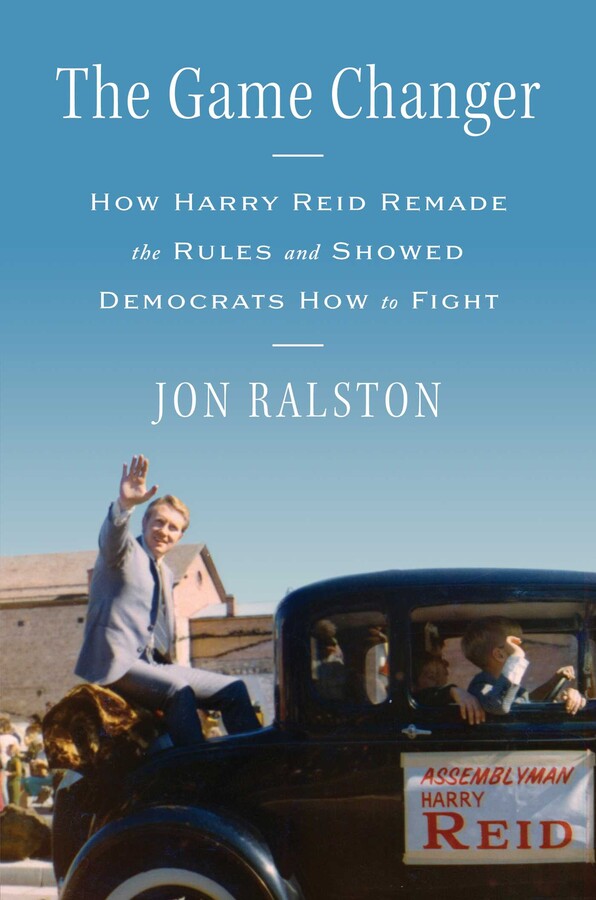
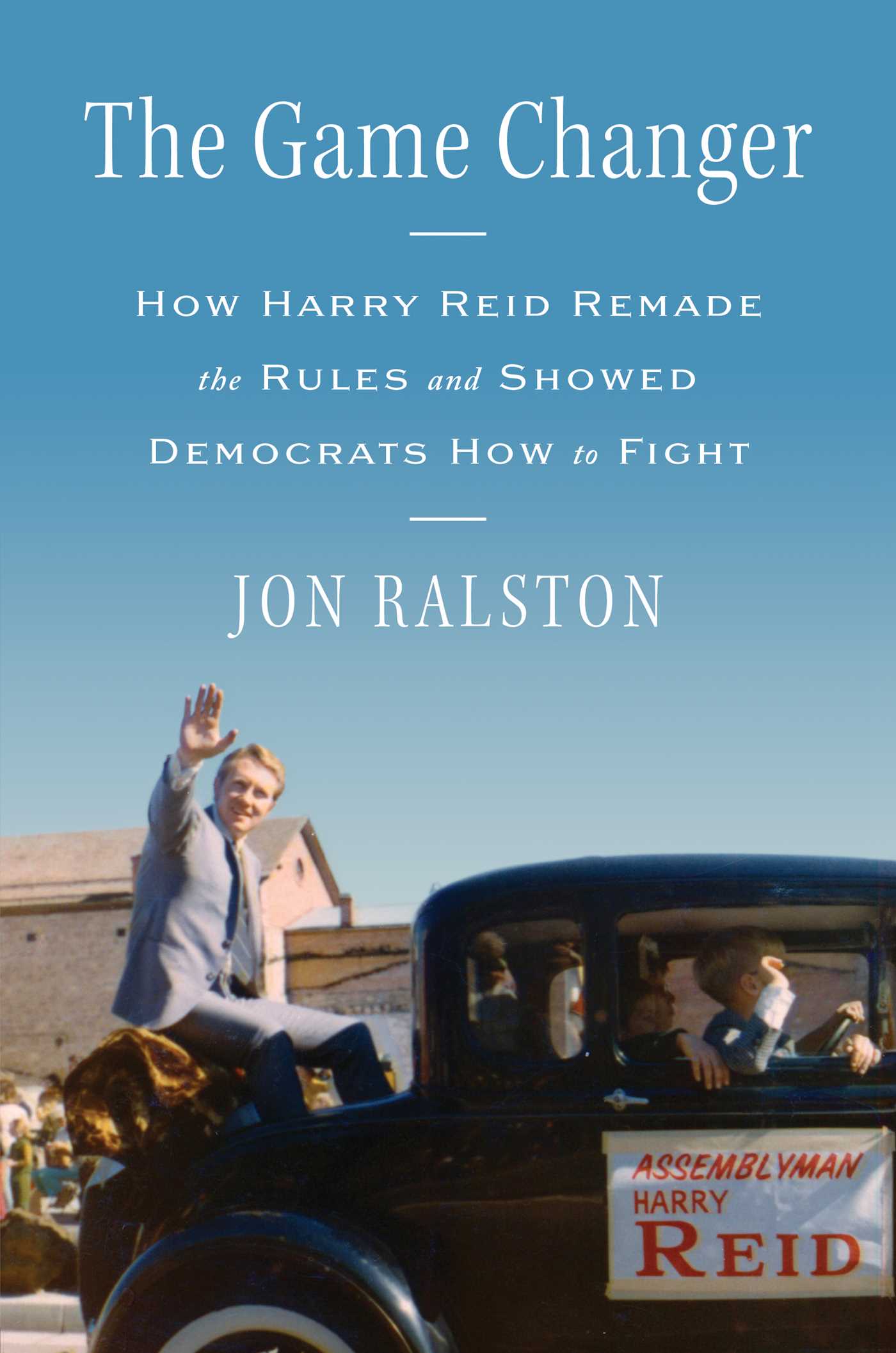
The Game Changer
How Harry Reid Remade the Rules and Showed Democrats How to Fight
Table of Contents
About The Book
Born in tiny Searchlight, Nevada, Harry Reid rose from a childhood in a ramshackle home in the middle of nowhere to become the Democratic leader who ensured Obamacare became law, that the nation’s banks played by the rules, and who helped rescue the American economy by pushing through a stimulus bill.
His political instincts were forged in the take-no-prisoners culture of Nevada where he was once investigated by the FBI for his ties to the mob. He persuaded a Republican senator to switch parties to gain partisan control, and he changed the Senate filibuster rules to save President Obama’s lower court nominees. That maneuver later helped Republicans to cement the appointments of three Supreme Court justices. Reid also became a formidable force in Nevada, building a political machine that turned a red state blue and left an unmatched legacy on infrastructure and the environment—including squelching a planned nuclear waste dump.
In The Game Changer, Ralston shows the endurance of his accomplishments, but also his role in the enduring dysfunction of what was once called the world’s greatest deliberative body. It is a complicated portrait of a man who would not be denied.
Excerpt
Harry Reid was despondent.
It was 1979, and the chairman of the Nevada Gaming Commission had just learned that Kansas City mobsters caught on FBI wiretaps had referred to someone they controlled as “Cleanface.” Reid knew—as did many others—they meant him. It was an ironic reference to the thirty-nine-year-old’s pristine image. The implication of the wiretaps to the feds was that Reid was unclean: the state’s top casino regulator could be—and had been—compromised.
After the wiretaps surfaced, raising questions about his integrity, Reid reported a death threat to the FBI, with the caller saying he would be “going out on a table.” Armed guards were stationed at his home. For Reid, it had become too much to bear.
The chairman went to visit the man who had appointed him, former governor Mike O’Callaghan, who had left office a few months earlier. Reid believed he owed it to O’Callaghan, his mentor since high school, to tell him to his face that he was leaving the job that the governor had given him to resurrect his public career after two devastating campaign losses for US Senate (1974) and Las Vegas mayor (1975). He could not credibly regulate the state’s most important industry while this cloud hung over him.
O’Callaghan was having none of it. The gruff, blunt veteran of the Korean War, who had only one leg after being wounded in combat, knew that if Reid stepped down, he would always be seen as a tool of the mob.
“If you resign it’ll be the biggest mistake you ever make in your life,” Reid recalled the governor saying.
Reid remained on the gaming regulatory panel for two more years and eventually was cleared of any wrongdoing. He never looked back.
This was the pivotal moment in the political life of a man who would go on to become the most powerful elected official in Nevada history and one of the most consequential national leaders of the twenty-first century. Reid would use the gaming commission as a springboard to run for a newly created congressional seat in 1982, which eventually led to the US Senate, where he would serve for thirty years and become the Democratic leader for the last third of his tenure.
Reid’s career can be seen like the fifteen marathons he ran—an endurance test where he worked harder and stayed longer than anyone else, always playing the long game. He came from nothing and nowhere—Searchlight, Nevada, a hopelessly poor hamlet not far from Las Vegas that gave him a will to succeed despite an alcoholic father and what could barely be called a home. Reid would survive taking on the mob, being investigated by the state and the FBI, barely winning reelection to the Senate in 1998, and getting elected to a fifth term in 2010 in a race few thought he could win.
Reid’s indomitability after that moment of doubt in 1979 became the signature feature of a remarkable career in which he became one of the most accomplished and polarizing figures of his time. His willingness to join any fight he believed was worthwhile—even if others did not think it was worth the risk—and his ability to rally his troops to the cause changed the culture of Washington, for good and ill. From that day forward, Reid showed no fear, becoming almost as ruthless as the mob bosses whom he helped drive from the state, a political godfather whose blessing would be sought by hundreds of Nevada elected officials and candidates. Like a Mafia chieftain, Reid put family above all else—and he was occasionally faulted for doing so. He somehow found a way to compartmentalize, or perhaps rationalize, in a way The Godfather’s Michael Corleone would understand: not personal, just business.
“I did what no one else would do,” Reid often said, which he meant as a simple statement of fact, but it also revealed how little self-reflection he did in the pursuit of his goals. He hectored bankers to save a casino company and perhaps the Las Vegas Strip during the Great Recession; he intimidated hedge fund managers to kill coal plants planned by Nevada’s electric monopoly; and he legally bought senators’ votes with lucre for their states to ensure the Affordable Care Act became the law of the land. There were few lines he would not cross or rules he would not bend.
But Reid also performed private deeds of kindness. As a former Capitol policeman, he treated his security detail with respect, insisting they eat dinner inside the same restaurants where he dined and picking up the tab. He had a genuine relationship with Astrid Silva, an undocumented Dreamer who came to the United States as a four-year-old and became a pen pal and friend. When a staffer kept botching phone numbers of people for him to call back, Reid called her aside, discovered she was dyslexic, and comforted her, marveling at how difficult it must have been for her to achieve what she had.
“Harry was tough as nails, a fighter to his core, but one of the most compassionate individuals you could ever imagine,” said his friend New York senator Chuck Schumer, who succeeded him as Democratic leader.
Reid altered the course of history for his state and for the country on more than one occasion. It wasn’t just the health care law named for President Barack Obama that would not have passed without his persistence. He persuaded Jim Jeffords, a Vermont Republican, to caucus with the Democrats as the millennium dawned, which drastically changed the Senate dynamic. Reid, in partnership with Nancy Pelosi, the woman he lionized as the greatest Speaker in history, also fought off President George W. Bush’s efforts to privatize Social Security. Reid upended Senate tradition and created a historical hinge in 2013, changing the filibuster rules to ensure President Obama’s judicial nominees could be considered, but he also opened the door to Republicans’ turning the tables when they regained control of the Senate, invoking the precedent to push through President Trump’s Supreme Court nominees.
Closer to home, Reid created an unmatched environmental legacy while also relishing being the protector of the mining industry—a needle few others could have threaded. He also changed a virtually all-white Nevada judiciary into a rainbow, brushing aside accusations of identity politics over qualifications. It is not a stretch to say that every Nevada politician of the last half century in both parties has a Harry Reid story to tell—tales of kindness or nastiness, elevation or defenestration. He made or broke more careers than any Nevada politician in history—including indisputable giants such as the execrable senator Pat McCarran, a McCarthy-era anti-Semite and nativist whose name was erased from the Las Vegas airport and replaced with Reid’s shortly before his death in 2021.
Reid left an indelible mark on the national scene, too, the pro-life Mormon who came to lead a pro-choice party, a restrictionist on immigration for the first half of his career who advocated for the DREAM Act, a Democratic darling of the National Rifle Association who later became an advocate for gun control, and a man who once thought being gay was a choice before he spoke at a gay staffer’s wedding and later supported same-sex marriage.
That last switch he explained in typical Reid style:
“I came to the conclusion: An individual will not go through the hell they have had to go through during that time, being gay. It would not be a choice. They did it because they couldn’t help themselves.”
The protean Reid, born on the cusp of World War II in an oft-ridiculed small state, changed as Nevada’s population became larger and more diverse, his positions flipping as his stature grew. Reid insisted he evolved, arguing that remaining intellectually static was the mark of a narrow thinker.
It’s hard to miss the essential duality of a man who wrote thousands of handwritten notes throughout his life to colleagues, many of them heartfelt, often signing off with “your forever friend,” while he also brusquely and dismissively talked about his political foes, calling a sitting Republican president a “liar” and “loser” and a Republican presidential candidate a tax dodger sans evidence. When he ended some of his scrawled thank-you missives “I have a long memory,” that, too, had a double meaning. Reid, who had close to photographic recall, remembered who had been true to him but also who had wronged him. “Don’t worry,” he once told a staffer, “vengeance is in my soul.”
Through his half century in public life, Reid remained a man of striking contradictions. He was a devout Mormon, who regularly attended church and read scripture every night, but who would not hesitate to go biblical against political enemies. He was against abortion as a matter of religion, but he became a favorite of women’s groups because he did not stifle pro-choice advocates in his caucus. He was as grounded a person as you could ever meet, but he also believed in UFOs—so much so that he helped secretly funnel a fortune to a Pentagon program to study sightings.
Despite his often awkward interactions with the media, Reid also cultivated close friendships with those who ran journalism outlets in Nevada, including Hank and Brian Greenspun of the Las Vegas Sun (Reid helped Brian Greenspun get on the board of Barrick Gold, a huge mining company). For a politician who eked out victories, every little bit helped.
Reid lived his public life in prose but his private life in poetry, including a sixty-two-year love affair with his wife, Landra, his closest friend and counselor, who helped protect him and the family. Reid accomplished all he did by combining his work ethic with his transactional instincts, by hiring the best people he could find, promoting remarkable women into his inner circle on Capitol Hill and Nevada, by making connections with his colleagues and private sector people who could help him retain power, and by encouraging the kind of loyalty that is enduring and priceless. No one ever spent more time on the Senate floor finding out what his colleagues needed—displaying a disarming style and wry humor behind the scenes that contrasted with his awkward, occasionally gaffe-prone public appearances. (Once, when Reid arrived at what he did not realize was a toga-themed fundraiser in a suit, the greeter asked whether he could take the senator’s clothes. “How many of you are there?” the former boxer deadpanned.)
“He was very secure in who he was in a town with very insecure people,” said Kristen Orthman, his former spokeswoman. Echoed Kai Anderson, his erstwhile legislative director who went on to run lobbying behemoth Cassidy & Associates: “Much of what he got done, he got done because he didn’t worry about what people thought of him.”
What Reid cared about was the acquisition of power and using it to the ends he saw were justified—for his country, his state, his family, his friends. While he was a long-distance runner, he also sprinted through most of his days, hanging up on people to save time and meet his packed schedule.
Not having a rearview mirror is dangerous, though, and the senator had a few crashes. His Reidisms became legendary and infamous, from declaring the Iraq War lost to publicly wondering what could ameliorate the smell of tourists in the Capitol to musing that a Black man from Illinois—one who spoke with a “Negro dialect” if he needed to—could be elected president. Often, as with his unsubstantiated claims about Republican presidential hopeful Mitt Romney’s taxes, there was a method to his madness, but Reid also acknowledged that he was impulsive and counted on his stellar staff to clean up after him. (“I can’t believe him sometimes,” one staffer wrote in a 2014 internal email after he spoke to the Asian Chamber of Commerce in Las Vegas and said: “I don’t think you’re smarter than anybody else, but you’ve convinced a lot of us you are,” and “One problem that I’ve had today is keeping my Wongs straight.” He later apologized.)
All of this had benefits and drawbacks, with his duality reflected in the polar responses to him. Reid was beloved by his staff, by progressives (some of the time), by many of his colleagues, by President Obama. But this product of a small town became so reviled in rural Nevada that a man once told one of Reid’s opponents, “There are only two people I hate—the man who shot my dog and Harry Reid.”
Reid, the Senate maestro who also was part of the dysfunctional mess the Senate became, was a survivor against the odds, just like the town where he grew up. Reid wrote a book about Searchlight in 1998 called The Camp That Didn’t Fail a turgid historical tome but one he treasured. Without understanding the place of his birth and how it began to shape him, Harry Reid himself could not comprehend where he came from and, more important, where he was going.
Reid might not have looked back, but he always had Searchlight on his mind.
About The Author
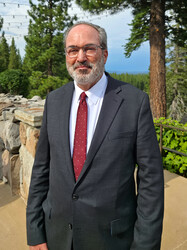
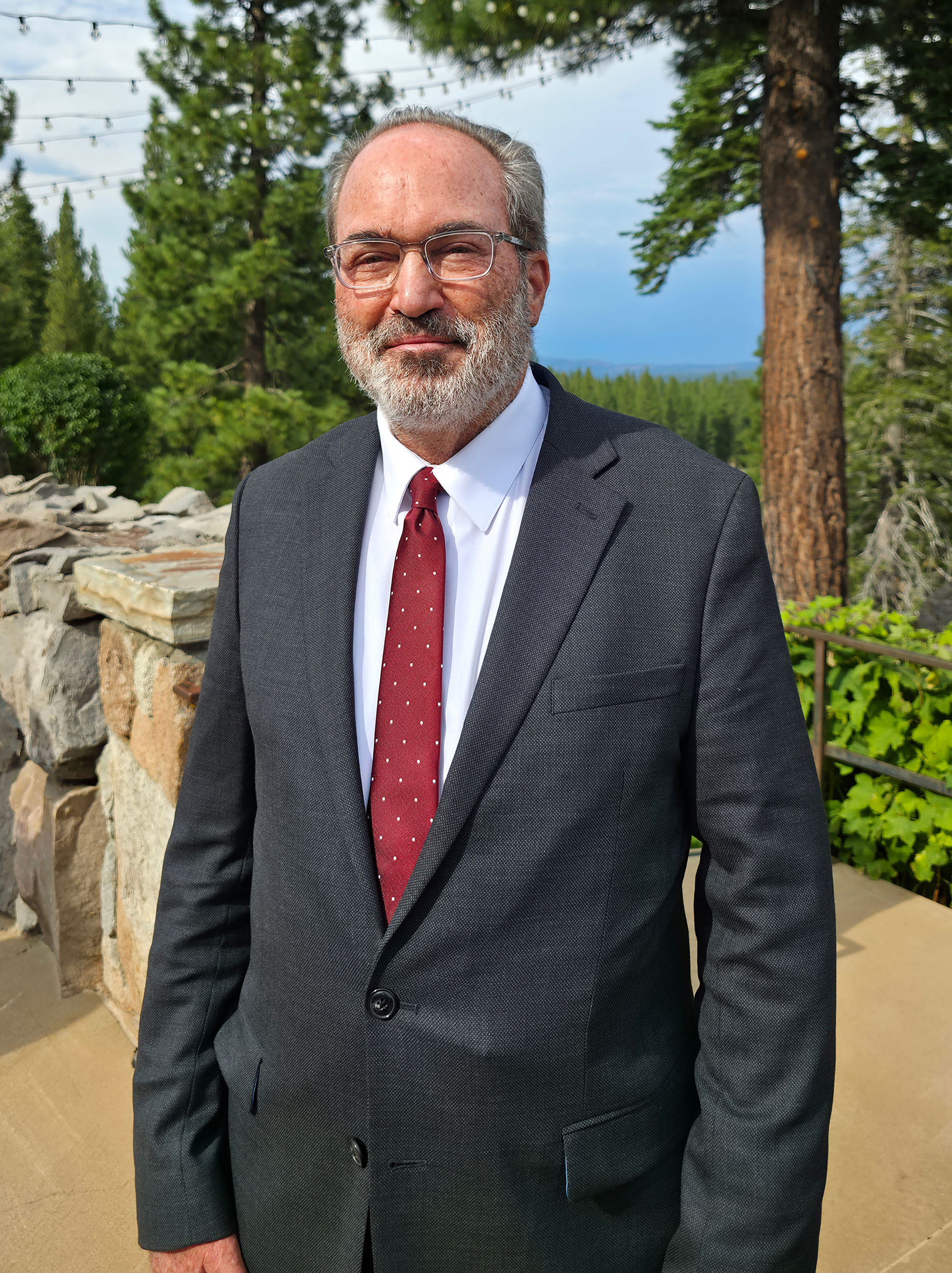
Jon Ralston is the founder and CEO of The Nevada Independent. He has been covering politics in Nevada for more than thirty-five years and has been a columnist at the Las Vegas Review-Journal, Las Vegas Sun, and most recently at the Reno Gazette-Journal, which he left in November 2016 to start The Indy. He has hosted several TV programs over the years, including Ralston Live on Vegas PBS and Ralston Reports on KSNV News 3. In 2012, Politico named Ralston one of the Top 50 “Politicos to Watch.” He frequently appears on MSNBC, and he has also appeared on NBC’s long-running Meet the Press. He lives in Las Vegas.
Product Details
- Publisher: Simon & Schuster (January 20, 2026)
- Length: 400 pages
- ISBN13: 9781982194413
Raves and Reviews
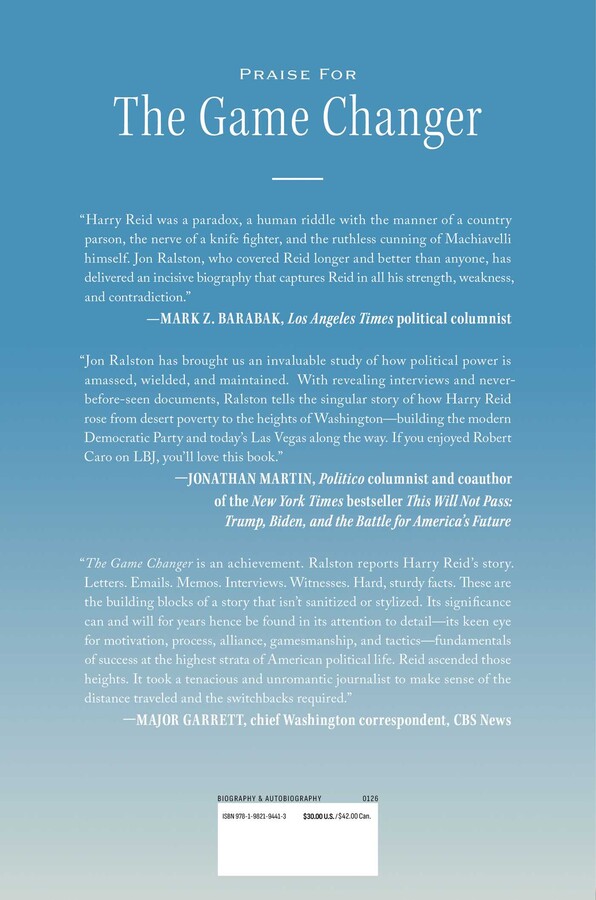
"A critical but appreciative biography that explores how a quietly persistent politician got things done."
—Kirkus Reviews
"Ralston paints Reid as, above all, wryly self-aware of his own willingness to bend his principles to make progress. It’s an insightful, entertaining portrait."
—Publishers Weekly
"The Game Changer is an achievement. Ralston reports Harry Reid's story. Reports. Letters. Emails. Memos. Interviews. Witnesses. Hard, sturdy facts. These are the building blocks of a story that isn't sanitized or stylized. Its significance can and will for years hence be found in its attention to detail - its keen eye for motivation, process, alliance, gamesmanship, and tactics—fundamentals of success at the highest strata of American political life. Reid ascended those heights. It took a tenacious and non-romantic journalist to make sense of the distance traveled and the switchbacks required."
—Major Garrett, Chief Washington Correspondent, CBS News
"Jon Ralston has brought us an invaluable study of how political power is amassed, wielded and maintained. With revealing interviews and never-before-seen documents, Ralston tells the singular story of how Harry Reid rose from desert poverty to the heights of Washington-- building the modern Democratic Party and today's Las Vegas along the way. If you enjoyed Robert Caro on LBJ, you’ll love this book."
—Jonathan Martin, Politico columnist and co-author of New York Times bestseller This Will Not Pass: Trump, Biden and the Battle for America's Future
"Harry Reid was a paradox, a human riddle with the manner of a country parson, the nerve of a knife-fighter and the ruthless cunning of Machiavelli himself. Jon Ralston, who covered Reid longer and better than anyone, has delivered an incisive biography that captures Reid in all his strength, weakness and contradictions."
—Mark Z. Barabak, LA Times political columnist
Resources and Downloads
High Resolution Images
-
Book Cover Image (jpg): The Game Changer
Hardcover 9781982194413
-
Author Photo (jpg): Jon Ralston Gil Hair-Ralston(0.1 MB)
Any use of an author photo must include its respective photo credit