Close Relationships with Strangers
A Novel
Table of Contents
About The Book
Reviled by celebrities and the public, Ben is one of the last remaining paparazzi scouring the streets of Los Angeles. Amateurs with camera phones, social media, and a lack of bonafide stars have slowly killed a once essential role in the Hollywood apparatus. Jack Whitlock is one of the last remaining A-listers, and Ben has followed his career since the years he spent bussing tables at a diner in Las Vegas where his most popular movie once filmed a scene.
When Jack Whitlock is suddenly embroiled in a sex scandal, Ben begins his pursuit, eager for both a big paycheck and a chance to be close to the elusive star. Along the way, he is haunted by mistakes from his past: the photos he took of a pop star that have led to death threats, the ghost of his failed relationship with a burlesque dancer named Ellory, and his abandoned dream of being a wildlife photographer.
Searing and propulsive, Close Relationships with Strangers is a behind the lens tour-de-force through the streets of Los Angeles, Las Vegas, and the desert in between, as readers follow Ben, unrelenting, obsessive, and wry, on a quest that will lead either to his redemption or demise.
Appearances
In Person
w/ Ruth Madievsky
Skylight Bookstore
In Person
Books Are Magic
Excerpt
When she asks me what I photograph, I say people, which is technically true.
We’re on a first date in Los Feliz—a bar inside a bungalow, banana leaves shading the porch, blood orange margaritas. She is a teacher at a private elementary school in Hancock Park.
The cocktail is pulpy. “Famous people,” I say. “I take pictures of famous people.”
“For magazines?” the teacher asks.
“Sometimes.”
“You’re being opaque.”
“Websites mostly.”
“What kind of websites?”
I press my fingers against the condensation on the glass. “Celebrity websites.”
“Oh.”
I ease into what I want to ask her: “Your profile said you teach third grade, right? What school is it, again?”
She gives me the name in a tone that says, Come on, I can tell you already know it.
But I keep pushing. “You must be around celebrities all the time. Teaching where you teach.”
“I really can’t say.”
“Do the parents usually pick them up or do the nannies—”
“No, I really can’t say.” She knows what I’m trying to do.
“Right,” I say. “I’m sorry. I shouldn’t have asked that.”
She nods, stirs her drink.
“Your teeth are nice,” I tell her. “Like, they’re a little bit crooked.”
“Sorry?”
“They’re a little bit crooked in a good way, I mean.”
“That doesn’t sound like a compliment.”
“I mean, I’m always looking at veneers. I’ve been looking at veneers all day. Your teeth are real and that’s nice.”
The teacher reaches for her ice water and starts drinking it very quickly. She sets the glass down and doesn’t look at me. “I don’t really want to talk about my teeth. So you’re a… is it okay to say paparazzi?”
“Well, yeah, it’s not a slur.”
“It has negative connotations. You don’t want to be called something else? Celebrity photographer, maybe?”
“No, I wouldn’t want that.”
Mentally, I compare her to famous actresses who have played teachers, trying to figure out which one she looks the most like, organizing them by the ones I’ve photographed, the ones I haven’t yet, the ones I could be photographing right now.
I’ll give you some free advice, a celebrity meditation coach once told me. Be present.
“You like the term paparazzi?” she asks.
I finish the margarita, attempt to recalibrate. “It’s accurate.”
“But your profile said photographer.”
“That’s accurate too.”
“So this is a stepping stone to being a photographer photographer—doing something artistic.” She relaxes.
Her dress is white with blue flowers, which makes me think of Ellory, who had one just like it. She wore it once, on her birthday. Sunset on a terrace. A vanilla cake. The spray from the Bellagio fountains. The opera song I recognized but couldn’t place.
“I don’t mean to minimize what you do,” she says.
“It’s okay. I get it.”
A pop song is playing—it’s a former child star named Roxane Alexandra, who now goes by Roxy A. Break my heart in the moonlight, go ahead and give it to me. Last week, after her publicist paid me to take pictures of her leaving SoulCycle, she tweeted, I just want to be left alone like a normal teenager for like five minutes.
I try to get the teacher to talk about her job again, the celebrity parents, but she continues to ask me about what I do. “So what is it that you like about it?”
I give her one of my prepared answers. Paparazzi photography is art, I say. I tell her about Ron Galella, who shot iconic images of Audrey Hepburn. Rino Barillari’s photos of Sophia Loren. That kind of photo, I tell her, the kind that ends up in magazines, sometimes even books and galleries, creates a cultural conversation. That kind of photo, I say, is art. I wonder, when I finish speaking, if I sound like I believe myself.
“But I don’t know who Ron Galella and Rino Barberella are,” she says.
“Barillari.”
“Exactly. I don’t know who those guys are.”
“But you know their work.”
“Maybe.”
Three girls in USC apparel sit down at the table next to us. They order Moscow mules and talk about the movie they just saw. I try to listen in. You never know; one could have a friend who served the lead actor his usual cucumber-celery-kale at a Brentwood juice bar. I could overhear the name of that juice bar and go there tomorrow and photograph him ordering that again, maybe with a new girlfriend in tow. It is impossible to predict how these things will happen. You just have to remain open, the meditation coach said.
“I promise I’m trying not to be judgmental of what you do,” the teacher says.
“You have every right to be judgmental in your line of work. The celebrity parents must say awful things about us.”
Nothing in her eyes confirms or denies what I’ve just said. “I like my job,” she says, a warning in her voice. “I’m not going to jeopardize it by telling you—”
“I’m not asking you to.”
I could offer her money, I think. I could be direct about what I want.
In an alternate reality, I might really be on this date, completely present with no ulterior motive. But I don’t live in that world anymore.
The light through the banana leaves is heavy and honeyed. I can smell the Thai restaurant across the street—coconut, tamarind, lime. Maybe I will go there after this is over and eat alone.
“Tell me about your day,” the teacher says. She wants to be convinced that I’m not so bad. Or she’s curious, the way a person is curious about a place they’d never visit.
“Well,” I say, “this bodyguard texted me, telling me that his client, a model, had just sat down for lunch in Beverly Hills. She announced her divorce last week, so, you know.”
“What does that have to do with her having lunch?”
“People want to know what she’s up to.”
She nods but doesn’t look convinced.
“So,” I continue. “I drove as fast as I could, parked in a garage with free two-hour parking, and was the first one outside of the restaurant.”
“Did you have to hide so she didn’t see you waiting?”
“She wanted to be papped—that’s what we call it. A lot of them do. Paparazzi only hide when the celebrity is doing or has recently done something bad. You know, like that socialite, Misty Wilcox, cruising around Santa Monica with a suspended license and a glove compartment full of cocaine.”
“I’m not familiar with that story,” the teacher says. “Have you ever done that? Hidden and secretly gotten a photo of someone who didn’t want to have their picture taken.”
“We all have to do that sometimes.”
“What about if someone is really in crisis, or is doing something that feels very private, very personal? Have you ever photographed someone like that?”
My mind goes to the photo of Mia Luna. Everyone knows it, but not everyone remembers who took it. So I say, “No. I’ve never done that before.”
“That’s good.”
“Anyway,” I say. “The model came out of the restaurant, I said hello and took her picture. I sold it and I gave the bodyguard his cut. It was a good photo set.”
She looks at me blankly.
“A photo set,” I say, “is a set of—”
“Yes, I get it.”
“It’s good money,” I tell her, because some people like that as a reason why. Some people want to know how much. Come on, ballpark figure, they’ll say. And I’ll smile coyly, like, Let’s just say it’s pretty good, ignoring the ghosts of paparazzi around me saying good is a word best applied to years ago—a decade ago. A time, they keep reminding me, that I wasn’t even present in Los Angeles for. Six-figure checks. Paparazzi driving the same nice cars as the celebrities they photographed. You had to be there, they keep saying.
I am half listening to the teacher, half listening to the tables around me, when one of the USC girls says, “… Jack Whitlock…”
I look to the street, to the kitchen, as if the most famous actor in the world might appear. For a moment, every other noise in the restaurant goes silent and I am tuned in to the specific frequency of his name.
“Do you know those people?” the teacher asks.
“Oh, what? No, sorry.”
The girls notice me staring at them and shift uncomfortably, turning toward one another. What are they saying about Jack Whitlock?
I try to return my attention to the teacher. I try not to look at the dress.
The dress on a hanger. Ellory in her underwear, running a steamer up and down it, releasing the wrinkles.
“Do you ever think about doing another kind of photography?” the teacher asks.
“I used to do something else.”
“But you don’t anymore?”
“No.”
Her phone chimes, a sound I associate with a tip coming through from a front desk agent at the Chateau Marmont, who often texts at this time with an update on who has recently checked in.
“Sorry. I meant to put it on silent.”
“Oh, no, that’s okay,” I say, as if letting her check her texts, her Instagram, her email, will erase how lousy the date has been, put her in a better mood, ease her into talking about the parents of the kids at the school she teaches at.
“Look at it as much as you want,” I add, which sounds pathetic at best, sarcastic at worst.
The hostess appears, lacquered nails drumming on a tablet. “Sorry, guys, but I’m going to need this table for a reservation.”
“No problem,” the teacher says. “We’ll go ahead and close out.”
It’s almost dinner, or at least almost time for an early dinner, and I think about asking her if she wants to get something to eat at the Thai restaurant. But I don’t.
“It was great meeting you,” she says outside the bar. “I parked on Prospect.”
After she’s gone, I stand on the sidewalk, feeling the air cool around me. When I first moved to Los Angeles, I could taste the ocean, even miles inland. Sometimes I still find myself looking for that sensation.
I imagine the teacher stopping for a burrito, a consolation prize for a disappointing evening. She’ll unwrap it on her couch and tell her roommate how much dating sucks here. Why was the date bad? the roommate will ask. And maybe the answer will have something to do with me saying too much, or not saying enough. Or maybe it was too obvious why I asked her out in the first place. What might it have been like, I wonder, if she had liked me?
I don’t think about it for long.
I think about earlier, after I got the shot of the model. I took surface streets all the way home, driving leisurely, talking to the photo agency on speaker as reflections of palm trees kissed the hood of my car. The afternoon swelled, open and abundant, and I rolled the windows down. By the time I hit Hollywood, I’d already sold the photo for three hundred dollars. It wasn’t much, but it was the most money I’d made in a long time, a reminder of how things had once been.
At my apartment, I stand in the kitchen, resting my palms on the white quartz countertop. The rent is thirty-five hundred a month. It will go up when I renew.
The sun goes down. I pour some vodka into a glass with ice and sip it in the bathtub, a superstition I picked up after having the same drink the night I got the Mia Luna photo, the one that changed everything. Tonight, the vodka tastes like a prayer for a miracle. I turn on the waterproof TV on the wall. I drink and I wait. I close my eyes. And when I open them, I see Jack Whitlock’s face.
“BREAKING,” says E! News.
I am suddenly aware of every vein in my limbs, every sac of air in my lungs. My bones, my skin, my body.
I spent most of my life four hours from him in Las Vegas, wanting to get closer, and yet moving to Los Angeles—to the city where he lives—hasn’t given me that. And here he is now, in a context that is so beneath him. E! News.
The bathwater is hot. The drink is cold. My breath hitches in my throat.
Stills from Jack’s films on the TV.
The entertainment reporter gazes seriously into the camera. “An unnamed source close to the matter exclusively revealed intimate photos of the actor.”
The image on the screen changes. The photo is a selfie, shot from overhead: Jack shirtless on a floral comforter—something made by Target for a dorm room—a girl with chestnut hair and heavy eyelashes on his chest, her tongue extended, licking his nipple. His smile is careless, drunk.
“The famously scandal-free actor, forty-five, is married to Jessica Hartley of the popular L.A. Facelift home renovation show. The couple has one child together.” The screen flashes to a photo of Jack and Jessica at the premiere of his World War II epic. Then back to the shot of Jack on the bed with the girl. A sheen of sweat on his forehead. “The woman pictured with Whitlock has not been identified, but our source informs us there are more images forthcoming. We’ve reached out to both Whitlock and Hartley for comment and have yet to hear back. This story is developing.”
“Holy shit,” I say to no one.
I stand, letting the water run off me, walk to my bedroom closet, soaking the floor as I go, not caring. I get dressed quickly. The usual uniform: jeans and a black hoodie. A phone call from the photo agency, right on cue. I tell them I know, I’m already on my way, even if I don’t know where I’m going yet.
This is it.
I text Eddie, even though he never responds, because he is the person who got me into this work and because I can’t text Ellory. Remember when you asked me if there was one celebrity I really, really wanted to take a picture of?
Jack Whitlock appears on screens and billboards and bus stop ads and magazine covers in many forms: the spy sliding out of the black car, the lovesick cowboy in the red desert, the soldier reaching for his weapon, blue eyes fixed on the sky. I don’t know what he does in his real life. He has no social media. He rarely gives interviews. But still. There is something in his eyes that forges an immediate connection. This, I think, when I watch him, is a person I can understand no matter what role he is playing. Film reviewers call him “the last movie star.” Old Hollywood jawline. Voice like a friend entering the room. When he appears in a scene, there is the comfort of a reunion, the simultaneous connection and total isolation of a stranger who is deeply familiar. Sometimes I wonder if he even occupies a physical space, if we exist in the same universe. On nights when I can’t sleep, I circle my apartment and try to see it through his eyes. I pick up the things I own and imagine him asking me about them.
Everyone says the paparazzi industry is dying, that it’s a relic going the way of print magazines, that it’s being replaced by social media and smartphones. People say that about Hollywood too. But here is Jack Whitlock, the last real movie star. And here I am, the guy with the camera.
Jack Whitlock is the Grand Canyon. He is a landmark. And there is no shame in capturing a landmark. It is an instinct so natural, it is accepted. It is expected.
If you saw him, you would take a picture too.
About The Author
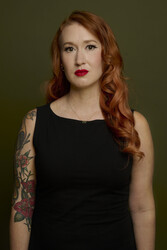
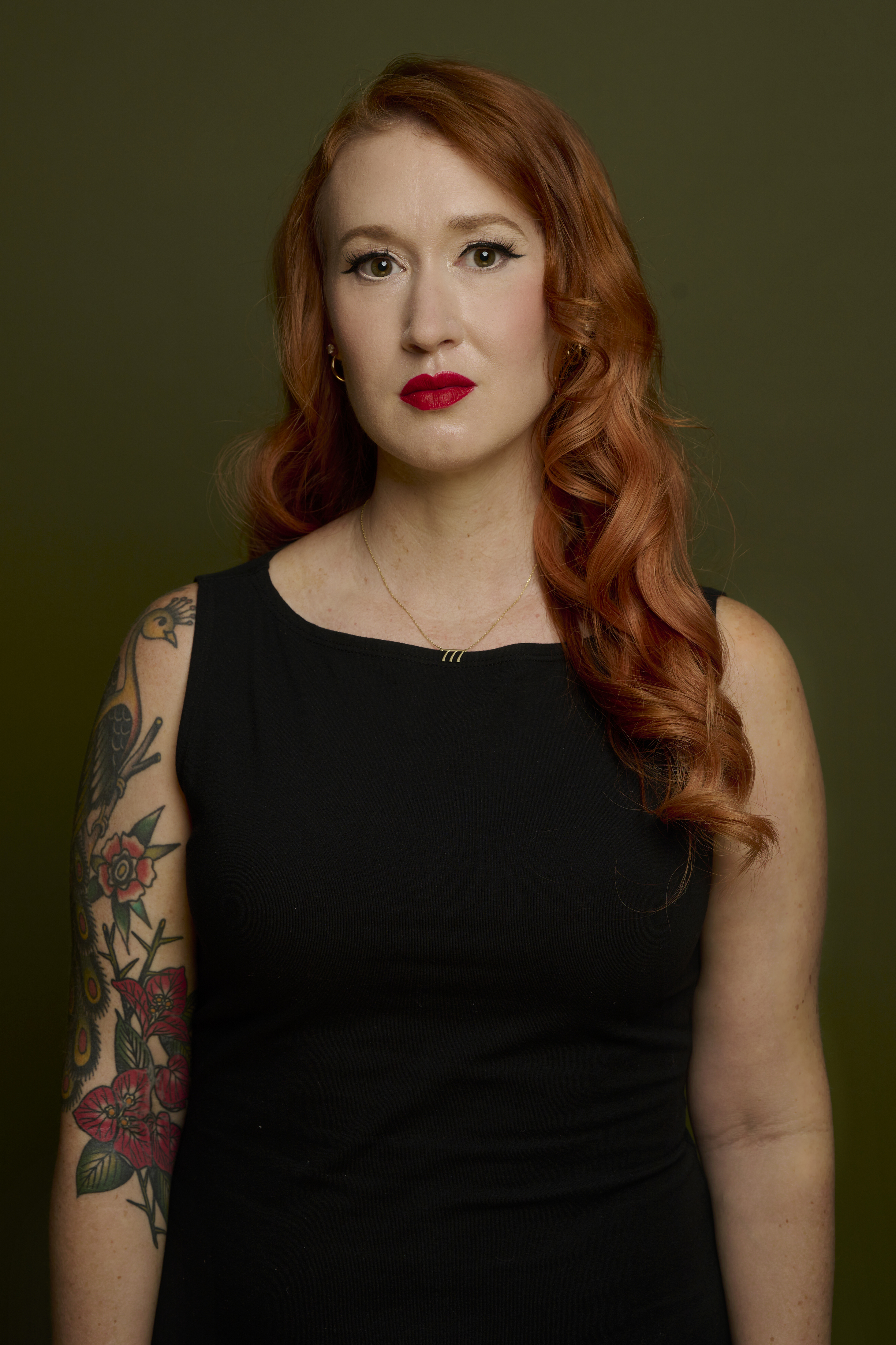
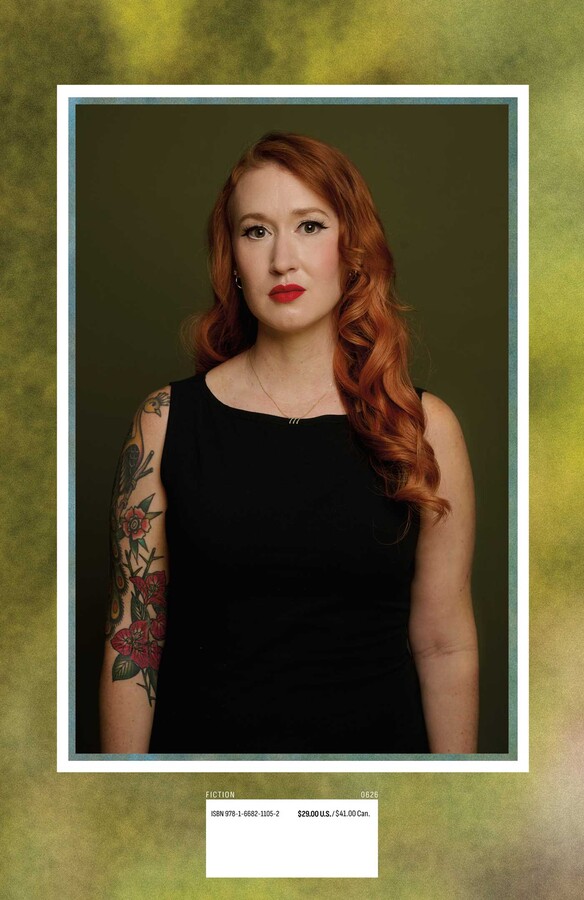
Krista Diamond’s writing has appeared or is forthcoming in The New York Times, The Paris Review, Cosmopolitan, and elsewhere. She holds an MFA from the University of Nevada Las Vegas and her work has been supported by Bread Loaf, Tin House, and the Nevada Arts Council. She lives in Las Vegas. Close Relationships with Strangers is her debut novel.
Product Details
- Publisher: Simon & Schuster (June 23, 2026)
- Length: 320 pages
- ISBN13: 9781668211052
Raves and Reviews
"A chilly, accomplished debut that unflinchingly dissects our obsession with celebrity."
—Kirkus Reviews
"A perfect novel for celebrity-culture lovers and skeptics alike."
—Booklist
“Diamond convincingly brings to life the amoral Ben and his eroded sense of self… It’s a distinctive character portrait.”
—Publishers Weekly
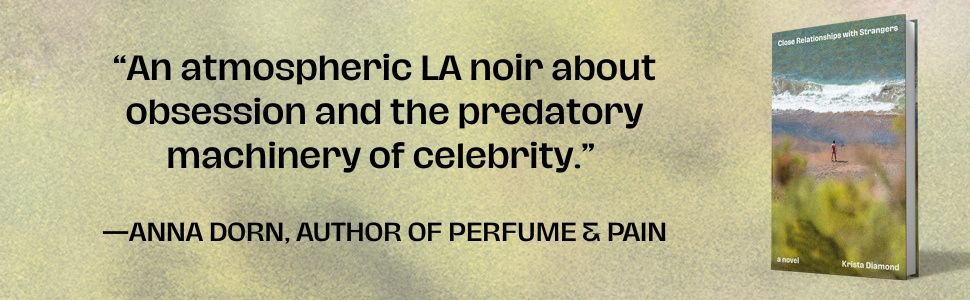
“I loved Krista Diamond’s Close Relationships with Strangers, an atmospheric LA noir about obsession and the predatory machinery of celebrity (my shit). Desperate and morally adrift, Ben is a compelling antihero—a loner paparazzo hunting the one photograph that could save him.”
—Anna Dorn, author of Perfume & Pain
"Close Relationships with Strangers is a taut, mesmerizing portrait of a photographer undone by the images he pursues. An elegant exploration of desire and delusion, Krista Diamond’s debut is as haunting as it is humane."
—Antonia Angress, author of Sirens & Muses
“Krista Diamond beautifully depicts Ben, a paparazzo at the end of the golden age of tabloid photography, as he is drawn into the liminal zone between illusion and delusion. She's captured the uncanny solitude of Las Vegas and Los Angeles, both cities in the American west that loom as simulacra in popular imagination, with an undercurrent of nostalgia for the recent past in this story of a loner obsessively pursuing his already anachronistic calling; it's reminiscent of the noir stories of Raymond Chandler and Nathaniel West, and the mood it evokes has stayed with me a very long time.”
—Maile Chapman, author of Your Presence is Requested at Suvanto
Resources and Downloads
High Resolution Images
-
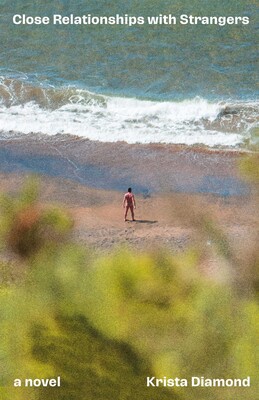
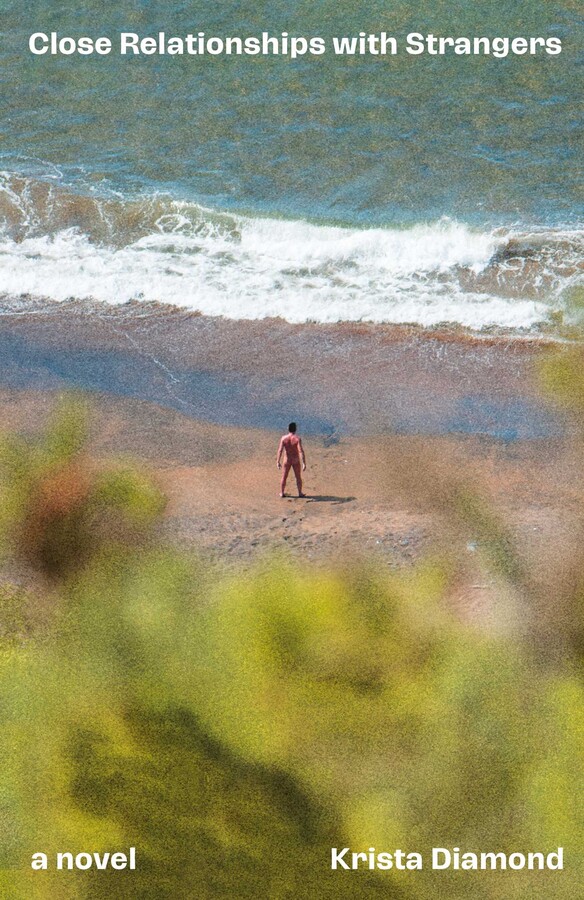
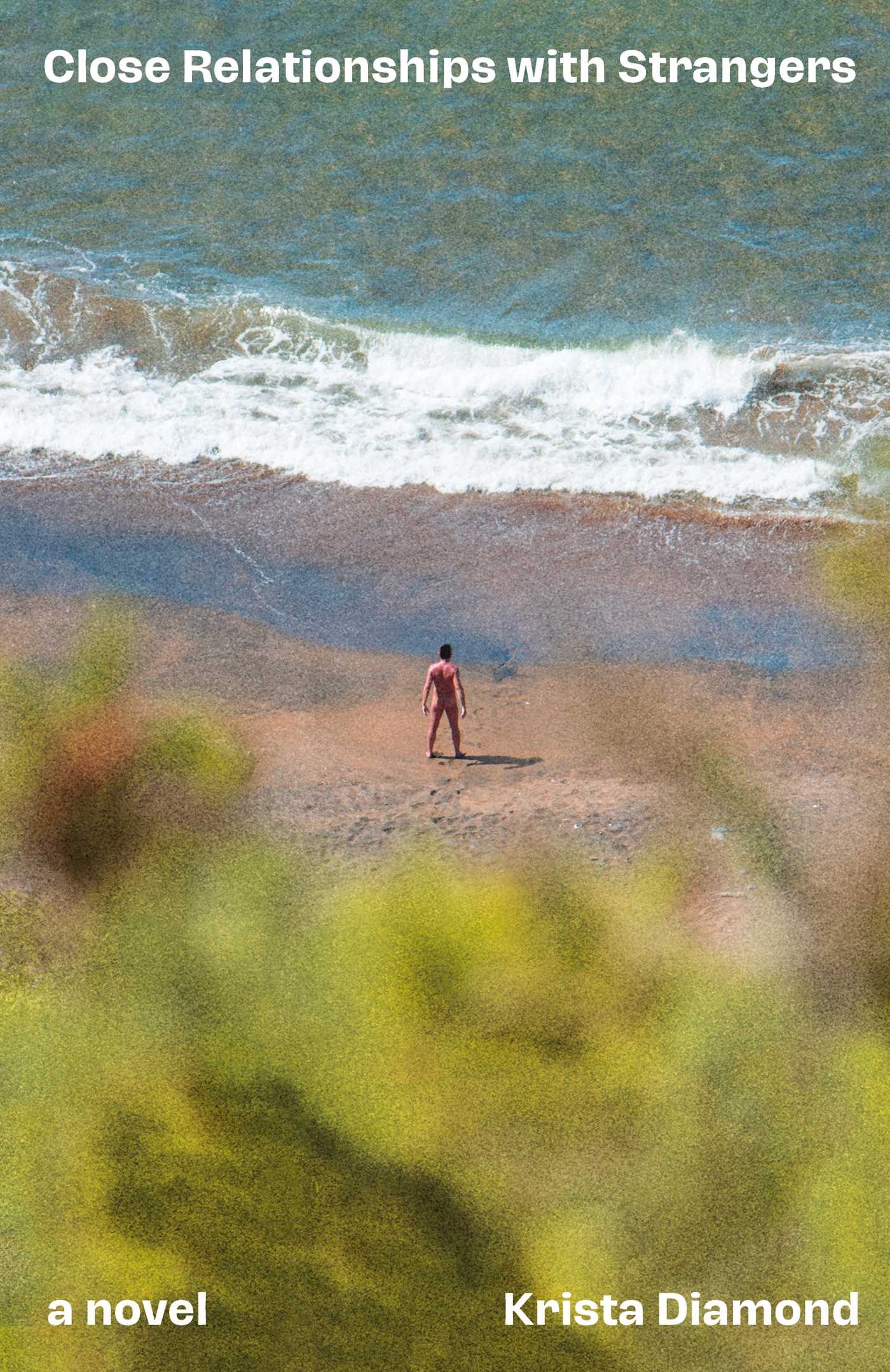
Book Cover Image (jpg): Close Relationships with Strangers
Hardcover 9781668211052
-
Author Photo (jpg): Krista Diamond Bridget Bennett(0.1 MB)
Any use of an author photo must include its respective photo credit