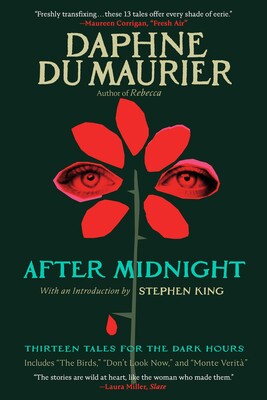
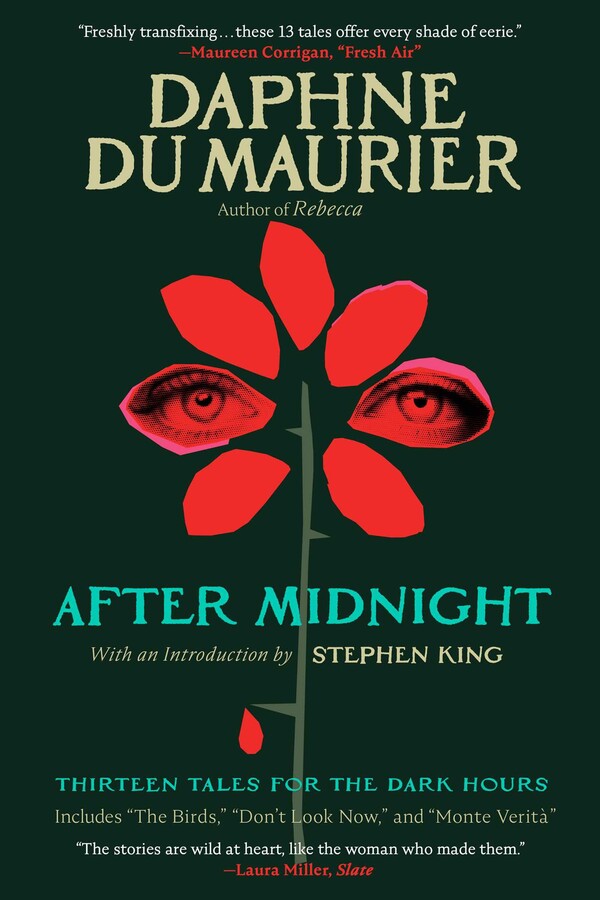
After Midnight
Thirteen Tales for the Dark Hours
Table of Contents
About The Book
Daphne du Maurier is best known for Rebecca, “one of the most influential novels of the 20th century” (Sarah Waters) and basis for Alfred Hitchcock’s iconic film adaptation. More than thirty-five years after her death, du Maurier is celebrated for her gothic genius and stunning psychological insight by authors such as Ottessa Moshfegh, Maggie O’Farrell, Lucy Foley, Gillian Flynn, Jennifer Egan, and countless others, including Stephen King and Joe Hill.
After Midnight brings together some of du Maurier’s darkest, most haunting stories, ranging from sophisticated literary thriller to twisted love story. Alongside classics such as “The Birds” and “Don’t Look Now,”—both of which inspired unforgettable films—are gems such as “Monte Verità,” a masterpiece about obsession, mysticism, and tragic love, and “The Alibi,” a chilling tale of an ordinary man’s descent into lies, manipulation, and sinister fantasies that edge dangerously close to reality. In “The Blue Lenses,” a woman recovering from eye surgery finds she now perceives those around her as having animal heads corresponding to their true natures. “Not After Midnight” follows a schoolteacher on holiday in Crete who finds a foreboding message from the chalet’s previous occupant who drowned while swimming at night. In “The Breakthrough,” a scientist conducts experiments to harness the power of death, blurring the line between genius and madness.
Each story in this collection exemplifies du Maurier’s exquisite writing and singular insight into human frailty, jealousy, and the macabre. She “makes worlds in which people and even houses are mysterious and mutable; haunted rooms in which disembodied spirits dance at absolute liberty” (Olivia Laing, author of Crudo). Daphne du Maurier is mistress of the sleight of hand and slow-burning menace, often imitated and rarely surpassed.
Stories include:
-“The Blue Lenses”
-“Don’t Look Now”
-“The Alibi”
-“The Apple Tree”
-“The Birds”
-“Monte Verita”
-“The Pool”
-“The Doll”
-“Ganymede”
-“Leading Lady”
-“Not After Midnight”
-“Split Second”
-“The Breakthrough”
Reading Group Guide
Introduction
Daphne du Maurier is best known for Rebecca, “one of the most influential novels of the twentieth century” (Sarah Waters) and basis for Alfred Hitchcock’s iconic film adaptation. More than thirty-five years after her death, du Maurier is celebrated for her gothic genius and stunning psychological insight.
After Midnight brings together some of du Maurier’s darkest, most haunting stories, ranging from sophisticated literary thrillers to twisted love stories. Alongside classics such as “The Birds” and “Don’t Look Now”—both of which inspired unforgettable films—are gems such as “Monte Verità,” a masterpiece about obsession, mysticism, and tragic love, and “The Alibi,” a chilling tale of an ordinary man’s descent into lies, manipulation, and sinister fantasies that edge dangerously close to reality. In “The Blue Lenses,” a woman recovering from eye surgery finds she now perceives those around her as having animal heads corresponding to their true natures. “Not After Midnight” follows a schoolteacher on holiday in Crete who finds a foreboding message from the chalet’s previous occupant who drowned while swimming at night. In “The Breakthrough,” a scientist conducts experiments to harness the power of death, blurring the line between genius and madness.
Each story in this collection exemplifies du Maurier’s exquisite writing and singular insight into human frailty, jealousy, and the macabre. Daphne du Maurier is mistress of the sleight of hand and slow-burning menace, often imitated and rarely surpassed.
Topics & Questions for Discussion
How does du Maurier use nature to explore the human condition throughout this chilling collection? When do we see humans vying to conquer nature, and when do we see humans trying to control themselves? What are the outcomes?
Du Maurier’s protagonists are members of the upper class. In what ways do manners and savagery coexist across these stories?
Some of these stories are deadly serious; others, ironic. What subject matter does du Maurier choose to satirize and how does this shape our understanding of her work?
How does du Maurier build suspense in in her stories? Discuss her style and how she subverts expected tropes in the thriller and suspense genres.
In “The Blue Lenses,” Marda West says to Nurse Ansel, “The most precious thing in the world is sight” (page 36). Across these stories, du Maurier is concerned with how perception can be altered and how that altered perception shapes reality. What does it take for du Maurier’s protagonists to truly “see”?
In “The Alibi,” Mr. Fenton claims to be an artist searching for a studio space, a conduit for his less savory ambitions. How does du Maurier play with the ideas of fate and self-fulfilled prophecy? In what other stories does she explore these ideas?
How do the natural and the unnatural intermingle in “The Birds”? How does this shape the narrative impact? If you’ve seen the film, talk about the differences and similarities between forms.
“Now go back to your world of men and women and build yourself a Monte Verità,” Anna tells our narrator (page 276). What would it take to build a Monte Verità in the “world of men and women”? Is it indeed possible? How does “The Mountain of Truth” connect to the rumored immortality of its inhabitants?
Apples appear in “The Pool” and, even more prominently, “The Apple Tree.” How does the apple motif serve each story? Compare and contrast.
In “Not After Midnight,” the narrator is told not to go swimming after midnight; he meets his fate during the day. What do you make of this? Why do you think “After Midnight” was chosen as the story collection’s name?
Some of du Maurier’s narrators are unnamed. Why do you think the author made this choice? How does this affect the story’s point of view and the narrative drive?
Which among these thirteen tales was your favorite? Why?
Enhance Your Book Club
1. In Stephen King’s introduction, he writes, “Du Maurier’s horrors—and some of these stories are quite nasty—are described with a calm rationality that makes them true nightmare fuel.” Compare and contrast du Maurier’s work with King’s.
2. Read one of du Maurier’s novels and compare her longer fiction to her short stories.
3. Watch Nicholas Roeg’s film adaptation of “Don’t Look Now” and discuss it in relation to the short story.
4. Pick one of the short stories and deconstruct it. What makes the story masterful? How the author’s narrative choices make it so?
5. And you can always read or watch Rebecca again.
About The Author
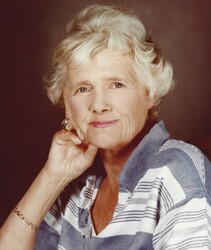
Daphne du Maurier (1907–1989) was an English writer, biographer, and playwright born in London. Her debut novel, The Loving Spirit was published in 1931. Her fifth novel, Rebecca, published in 1938, solidified her as one of the most popular writers of the 20th century. Many of her works were adapted for the screen, including the novels Rebecca, Jamaica Inn, My Cousin Rachel, and the short stories, “Don’t Look Now” and “The Birds.” Du Maurier grew up and spent much of her life in Cornwall, the setting for many of her books and stories. She was made a Dame of the British Empire in 1969.
Product Details
- Publisher: Scribner (October 6, 2026)
- Length: 528 pages
- ISBN13: 9781668204290
Raves and Reviews
Praise for After Midnight
“Taken together, the 13 tales in After Midnight offer every shade of eerie. Du Maurier's best stories here also affirm that art remains one of the few reliable forms of immortality.” —Maureen Corrigan, Fresh Air
"Du Maurier is an expert invoker of atmosphere and environment... spellbinding... These stories are the work of a protean, restless, and rather dangerous spirit with a decidedly pagan bent and a craving for solitude. The stories in After Midnight are wild at heart, like the woman who made them." —Laura Miller, Slate
“These stories have real heft and depth and will linger in the imagination well beyond the witching time of year.”— Kathryn Hughes, The Wall Street Journal
"A delicious title. An iconic writer. A compendium of her finest gothic tales. After Midnight brings together some of du Maurier’s most celebrated shorter works of psychological terror." —LitHub
"Du Maurier’s stories have aged extraordinarily well and can still fill modern readers with dreadful unease." —Library Journal, starred review
"A marvellously dark, unsettling collection. Tales of nature gone rogue, of morals gone askew, of the blurring of the line between the homely and the uncanny. I loved it." —Sarah Waters, author of Fingersmith
"Daphne du Maurier is the Godmother of Fear. After Midnight is a dark and diabolical collection... If you’ve never read any of du Maurier’s iconic short fiction, brace yourself: this is the perfect place to start." —Alice Slater, author of Death of a Bookseller
"Shadow-drenched and terror-inducing, this is an unputdownable collection that burns with quiet menace. After Midnight promises to never let you sleep again." —Lucy Rose, author of The Lamb
The 13 tales in After Midnight offer every shade of eerie. Du Maurier's best stories affirm that art remains one of the few reliable forms of immortality.
– Maureen Corrigan, Fresh Air
Resources and Downloads
High Resolution Images
-
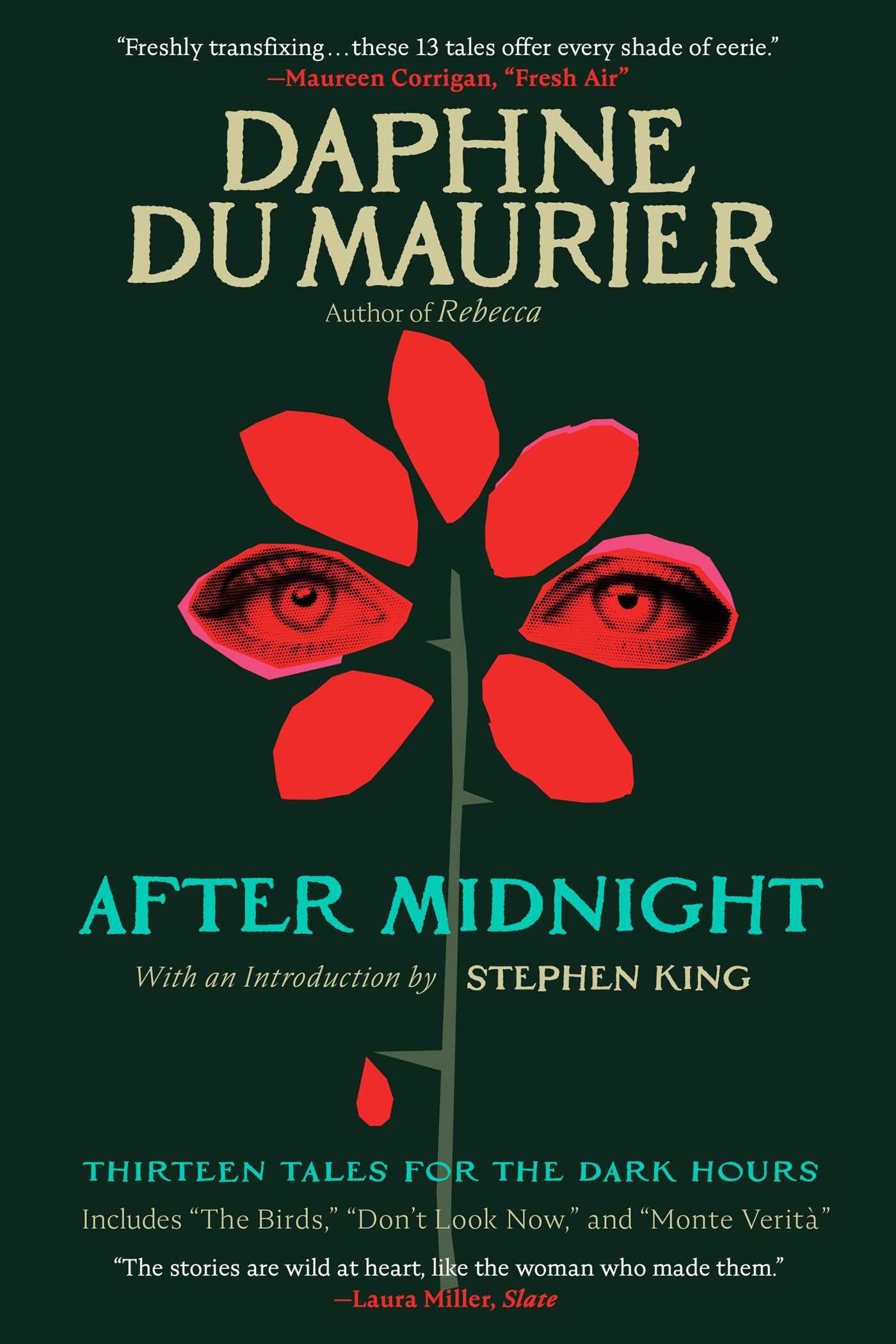
Book Cover Image (jpg): After Midnight
Trade Paperback 9781668204290
-
Author Photo (jpg): Daphne du Maurier Photograph (c) Jim Matthews(0.1 MB)
Any use of an author photo must include its respective photo credit
