
Table of Contents
About The Book
“A meditative, charming delight.” —School Library Journal (starred review)
An unlikely team of talkative plants, a curious spider, and a grumpy goldfish use their newfound magical abilities to defend their family from a greedy human in this charming middle grade novel from New York Times bestselling author Beth Ferry, with illustrations from the award-winning Fan brothers.
Ivy is the beloved houseplant of young Jillian Tupper of Number 3 Ramshorn Drive, much to the constant dismay of Toasty the goldfish, who is technically the family pet—swimming in his special place of honor, the antique octagonal fish tank—and should be the most loved. It seems that’s how the cookie (or cheese puffs, in Toasty’s case) crumbles in the curious Tupper household, but soon a sequence of thrilling and magical events challenges that way of life forever.
First, there’s the arrival of Arthur, a knowledgeable spider with a broken leg and a curious mind, hidden in an old typewriter. Then Jillian throws everyone for a loop when she brings home dear, sweet Ollie, a school houseplant who just wants to be friends and sing. When Toasty splashes the plants with his tank water out of frustration, the friends learn that they can do magical things—like lift heavy objects and turn things invisible!
It turns out Toasty’s fishtank isn’t just for fish; it was made by a curious inventor who gave it special powers that, in the wrong hands, could disrupt everything forever. And a curious man with purple shoes just so happens to want that tank at any cost. Can Ivy, Toasty, Arthur, and Ollie grow to be friends in time to work together to save their beloved Tupper family from utter ruin?
Reading Group Guide
Growing Home
By Beth Ferry
Illustrated by the Fan Brothers
About the Book
Growing Home is a whimsical and heartfelt story about four unlikely housemates—a clever spider, a lovable houseplant, a dramatic fish, and a cheerful new friend—who must overcome their differences to protect their human family from a mysterious and greedy man. With themes of friendship, empathy, courage, and teamwork, the story balances humor with adventure, all brought to life through rich vocabulary and beautiful illustrations by the Fan Brothers.
Prereading Activities
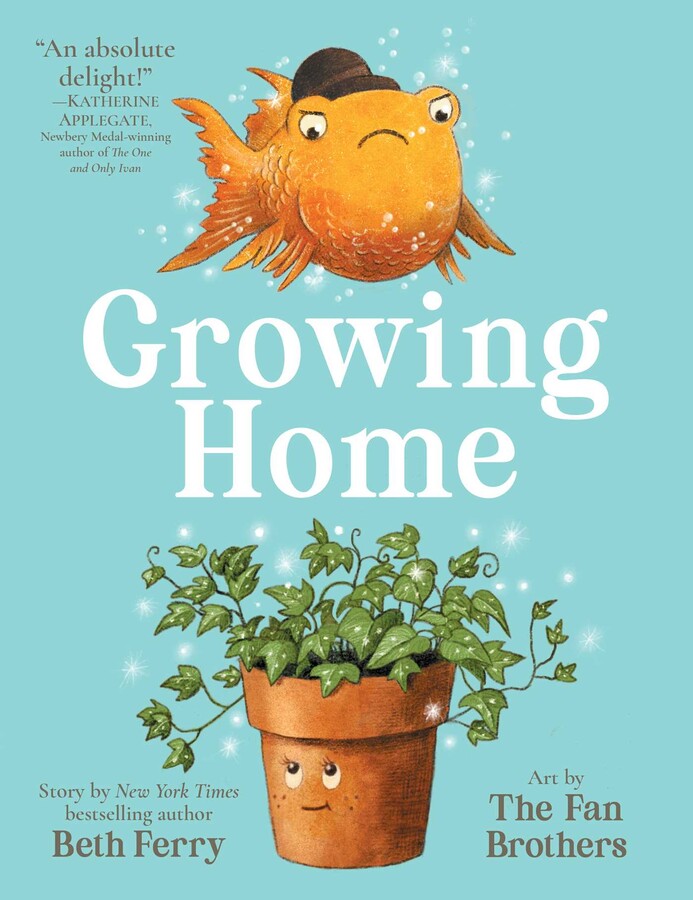
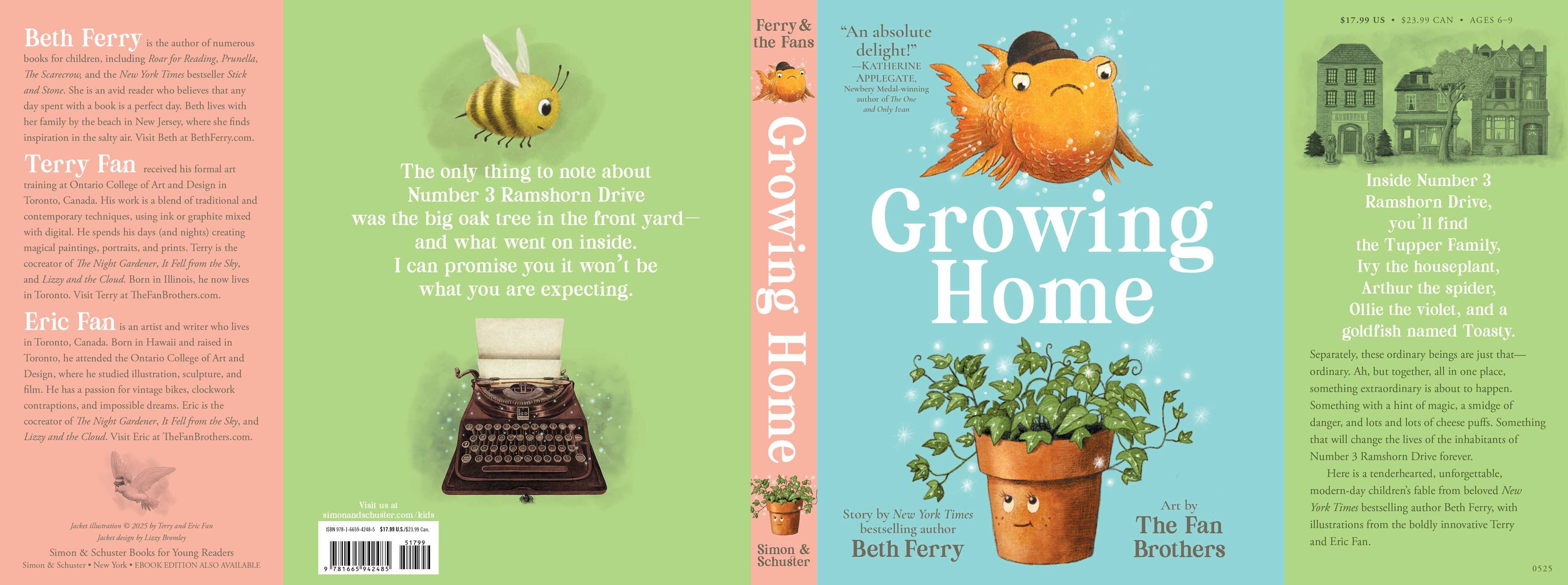
Preview the Book Cover and Illustrations
1. Have students examine the cover art and any inside illustrations. Ask them to predict what the story might be about based on the images and title.
Make Predictions
2. Share a summary or blurb of the story (such as the one describing Ivy the houseplant, Toasty the goldfish, and their magical adventures). Ask students to predict:
- Who might be the main characters?
- What problems might they face?
- What magical events could happen?
3. Let students discuss and share their predictions in small groups or as a class.
K-W-L Chart
4. Create a K-W-L chart with three columns: What We Know, What We Want to Know, and (after reading) What We Learned.
Before reading, fill out the first two columns together. For example:
K: What do we know about houseplants, goldfish, or magic?
W: What do we want to learn about the characters or the story’s setting?
After reading the story, have students fill in the Learned column, reflecting on what they have learned and answering their previous questions.
Activate Vocabulary
5. .Introduce some key vocabulary words from the story (e.g., invisible, outlandish, defend, recuperate, tromped, etc.). Ask students to guess the meanings or use them in their own sentences before encountering them in the text.
Discussion Questions
1. Who are the main characters in the story, and how are they different from one another?
2. Who is telling the story? How would it be different if Toasty or Ivy were the narrator?
3. Where does most of the story take place? What is the significance of the fish tank? Why is it so important to the plot?
4. Describe the relationship between Ivy and Toasty at the beginning of the story. How does it compare to their relationship at the end?
5. How does Toasty feel about not being the favorite? What clues from the text help you understand his feelings?
6. Compare and contrast Ivy’s and Ollie’s personalities. How are they similar and different as plants and as characters?
7. What magical powers do the characters discover, and how do they use them?
8.. How do the illustrations help tell parts of the story that aren’t in the text?
9. What problems do the characters face, and how do they solve them?
10. How does each character’s personality help or hurt the team’s efforts? Could they have succeeded without one of them?
11. How does Jillian treat the plants, animals, and other living things in her home? What does this tell you about her personality? Would you want Jillian as a friend? Why or why not?
12. Which character do you think grew or changed the most? Use examples from the text.
13. How do the characters show empathy or learn to understand one another better?
14. Why do you think the author chose to have the spider explore a typewriter? What might this symbolize about Arthur?
15. Why do you think the man with the purple shoes wants the fish tank so badly? What clues does the author give us about his character?
16. How do Jillian’s parents react to the magical or strange things happening in their home? What does this tell you about their relationship with Jillian?
17. Why do you think the author, Beth Ferry, interrupts the story to talk directly to you, the reader? How does this make you feel about the story or help you understand it better?
18. What is the message or lesson of the story? How do the characters learn this lesson?
19. What does the story teach us about friendship and teamwork?
20. Do you think the magical powers were a gift or a problem? Support your answer with evidence.
21. How would the story change if the magical powers did not exist? Could the characters still save the Tupper family?
22. How does Jillian’s relationship with her parents change from the beginning of the novel to the end? What causes this change? Have you ever had to prove something to an adult when they didn’t believe you right away?
23. Imagine you could give one new magical power to one of the characters. What would it be, and how would it affect the story?
24. If you had to choose one character to join you on an adventure, who would you pick, and why? Justify your choice using traits and actions from the story.
Extension Activities
Creative Writing Exercises
Author’s Chair: Write Your Own Aside
After reading a chapter where the narrator interrupts the story, have students write their own short “aside” as if they are the author. They should pick a moment in the story and write a message directly to the reader—this could be to explain a tricky word, give a hint about what might happen next, or share a funny thought. Students can share their asides with the class, discussing how these interruptions might help readers understand the story or feel more connected to the characters.
Author’s Craft: Write the next chapter!
Have students write or outline the next chapter of the book, using the below as prompts.
What new challenge might the team face next?
What happens if a new character is introduced—perhaps a talking lamp, a musical rug, or a tired butterfly? How would the team react?
Prompt: Arthur’s Typewriter Tales
Imagine that Arthur the spider was using the typewriter to create letters for a secret pen pal in the attic. To whom is he writing, and what does he have to say about the events in the house and his new friends? Have students write three to four “typed” letters from Arthur to a secret pen pal of their choosing.
Magical Mishaps: “What if” Writing Lab
Encourage students to write, plot, or draw a script or scene in which the magic fish tank water splashes onto something else in the house. They should set the scene as if the object gained magical powers and joined the team. Once they’ve finished the scene, ask students to create a “magical rules” section explaining how the power works, its limits, and what happens if it’s misused.
Logistics & Literacy Activities
All in with Alliteration
Alliteration occurs when a series of words begin with the same consonant or vowel sound (e.g., “Antiquarians acquire ancient objects to sell in their antiques store”). Arthur is a big fan of alliteration. Find other examples of alliteration throughout the novel, then have students write a sentence describing each character (Ivy, Toasty, Arthur, and Ollie) using alliteration.
Magic Powers Science Experiment
Discuss the magical abilities in the story (lifting objects, invisibility). Challenge pairs or groups of students to design a simple science experiment or invention inspired by these powers (such as using magnets to “lift” objects or using camouflage techniques). Have students present their ideas to the rest of the class, explaining how their invention works, connecting fiction to real-world science concepts.
The Great Debate: Who’s the Real Hero?
Host a class debate or write a persuasive essay: Who is the most important member of the team: Toasty, Ivy, Arthur, or Ollie? Use examples from the book to support your case. Encourage students to create campaign posters or superhero trading cards to help sway their audience.
Metaphor Match-Up and Mood
As a class, identify a metaphor used in the story (e.g., “she gobbled that compliment right up and wanted more”). (Chapter eleven) What does it literally mean? Discuss in groups why you believe the author chose that comparison? What mood or image does it create within the story?
- Create a Metaphor Map
- Write out the metaphor from the story
- Interpret its literal meaning
- Describe the mood or image it creates
- Explain what it reveals about the character
Challenge: Try rewriting a key sentence without the metaphor, then compare versions and discuss which one is more powerful and why.
Homophone Humor Comic
The author uses homophones, or words that sound the same but mean different things, to add humor and cleverness throughout the book. Find a passage where a homophone is used and discuss what makes it funny or confusing.
To further expand on this, ask students to create a three-panel comic using a pair of homophones (e.g., “toad” vs. “towed”) in a misunderstanding between characters from Growing Home. Write the dialogue, illustrate it, and explain the wordplay in an accompanying paragraph.
Silent Storytelling—Show, Don’t Tell
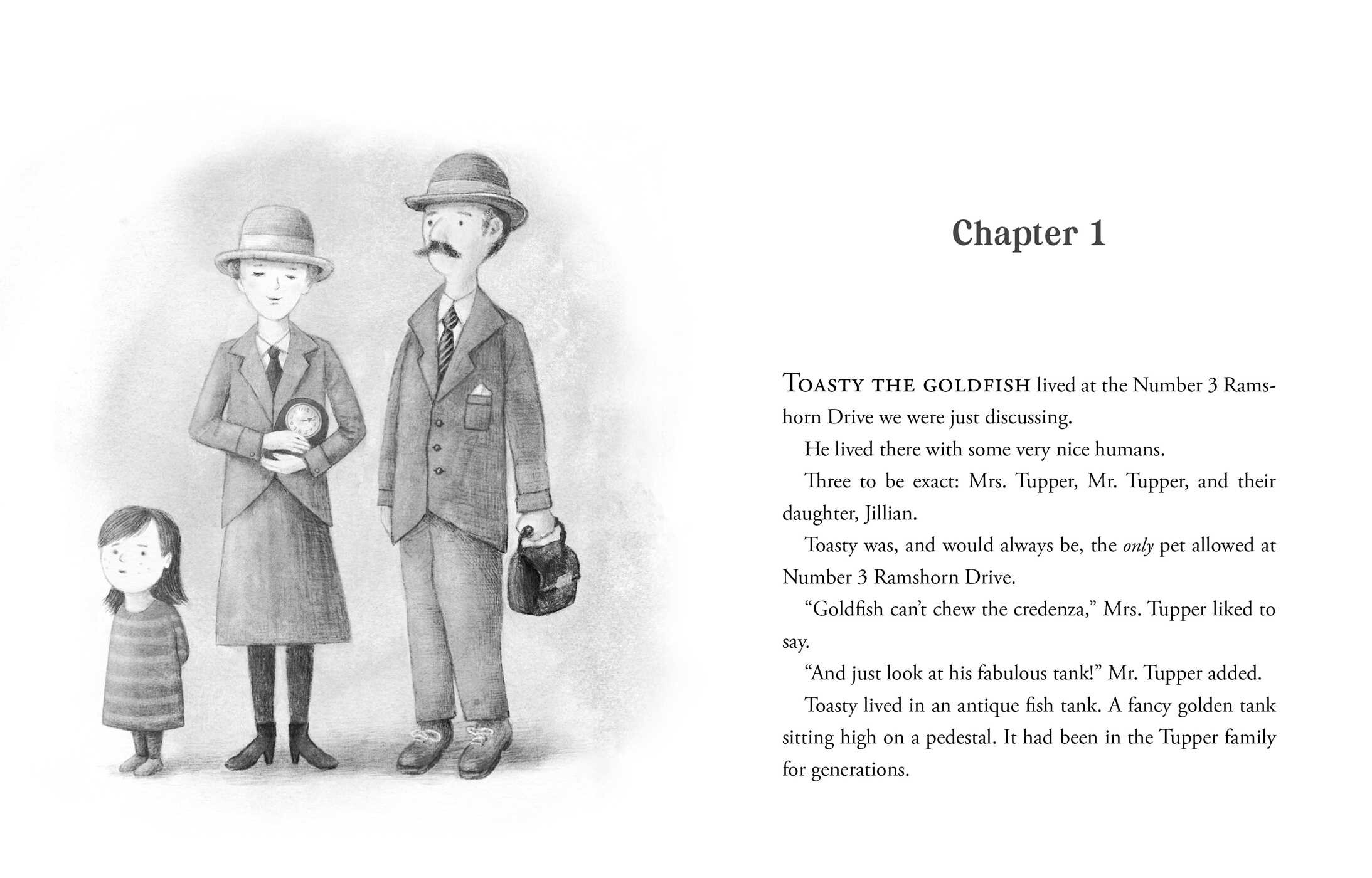
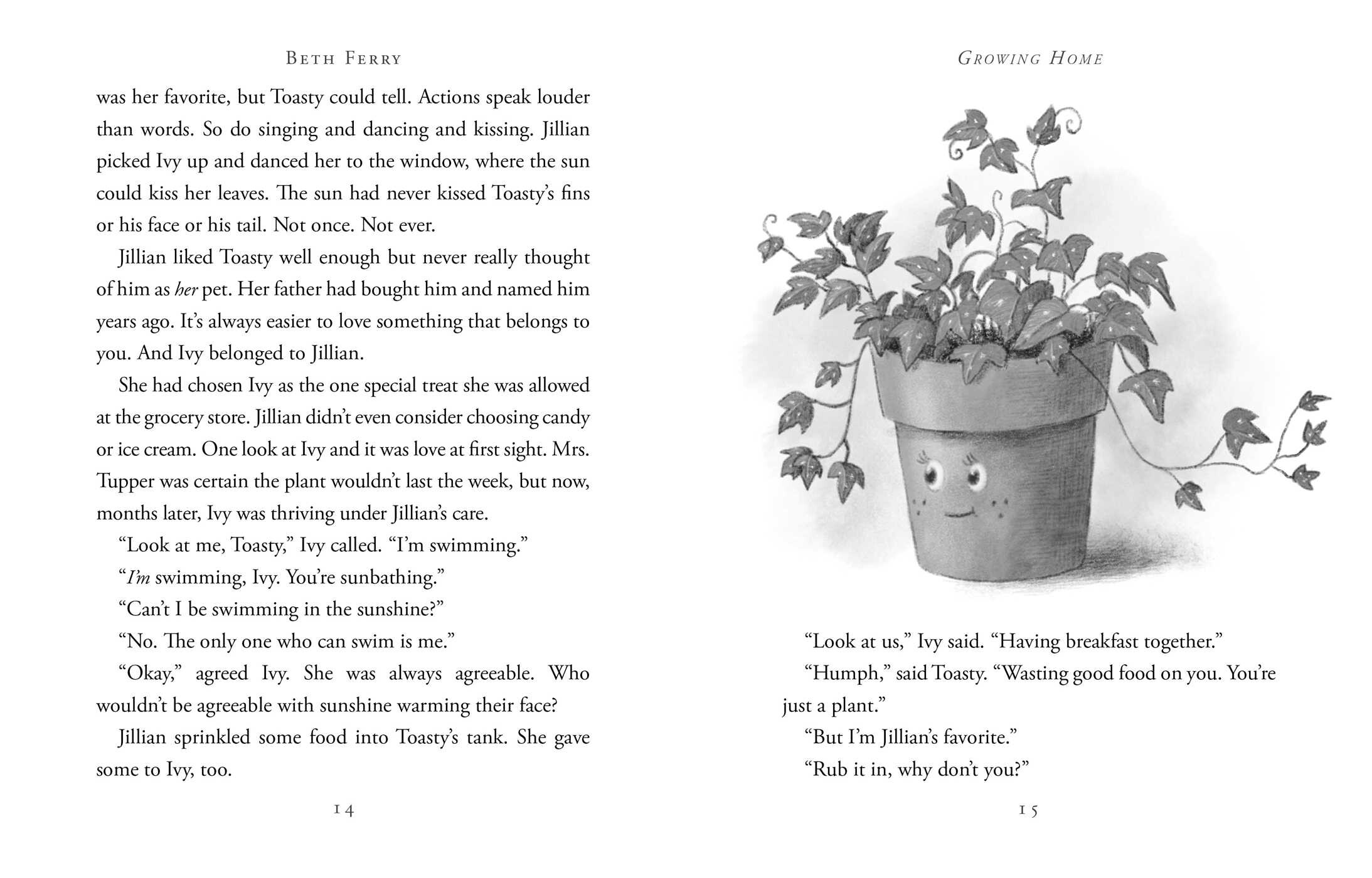
Choose an illustration from the book that includes rich detail or emotion. Write a short scene or paragraph describing what’s happening based only on the picture, using sensory details, internal thoughts, and dialogue, without summarizing or writing the text. Don’t say how the character feels directly (e.g., “Toasty was angry”)—show it through their actions or words. Turn it into a “before and after” writing task: What happened right before or after this scene, based on visual context clues?
Guide written in 2025 by Sharon Haupt, Reference Librarian and Instructor of Young Adult Literature and School Library Media Centers, Cuesta College, San Luis Obispo, California. Retired District Librarian, San Luis Coastal Unified School District, San Luis Obispo, California.
This guide has been provided by Simon & Schuster for classroom, library, and reading group use. It may be reproduced in its entirety or excerpted for these purposes. For more Simon & Schuster guides and classroom materials, please visit simonandschuster.net/m/prek12-teachers-librarians/teaching-resources.
About The Author

Beth Ferry is the author of numerous picture books for children including Roar for Reading, Prunella, and the New York Times bestseller Stick and Stone. She is an avid reader who believes that any day spent with a book is a perfect day. Beth lives with her family by the beach in New Jersey where she finds inspiration in the salty air. In addition to writing picture books, Beth also writes chapter books and graphic novels. She’s the author of the middle grade book Growing Home. You can learn more at BethFerry.com.
About The Illustrators

Terry Fan received his formal art training at Ontario College of Art and Design in Toronto, Canada. His work is a blend of traditional and contemporary techniques, using ink or graphite mixed with digital. He spends his days (and nights) creating magical paintings, portraits, and prints. Terry is the cocreator of The Night Gardener, It Fell from the Sky, and Lizzy and the Cloud. Born in Illinois, he now lives in Toronto. Visit him online TheFanBrothers.com.

Eric Fan is an artist and writer who lives in Toronto, Canada. Born in Hawaii and raised in Toronto, he attended the Ontario College of Art and Design, where he studied illustration, sculpture, and film. He has a passion for vintage bikes, clockwork contraptions, and impossible dreams. Eric is the cocreator of The Night Gardener, It Fell from the Sky, and Lizzy and the Cloud. Visit him online TheFanBrothers.com.
Why We Love It
“On the page, it’s hard to see how a story about a family of antiquarians and the creatures that live in their house would work, but it does! And the way it does is a delight, with Beth Ferry’s signature wit and penchant for wordplay and quirky characters on full display on every page.”
—Celia L., Executive Editor, on Growing Home
Product Details
- Publisher: Simon & Schuster Books for Young Readers (May 27, 2025)
- Length: 272 pages
- ISBN13: 9781665942508
- Ages: 6 - 9
Raves and Reviews
An Instant New York Times Bestseller
An ALA Notable Book
A Kids' Indie Next List Pick
A CCBC Choices Book
A Barnes and Noble Children's Book of the Year
A Junior Library Guild Selection
An Amazon Top 20 Children's Book of the Year Selection
A Spotify Best Family Audiobook of 2025
Global Read Aloud 2026 Early Reader Selection
A Florida Sunshine State Young Readers Award Pick
★ "Told in a warm and engaging narrative, the story gently explores themes of belonging, patience, and the quiet magic of being seen....A meditative, charming delight for readers who appreciate stories of found family and quiet transformation."
– School Library Journal, STARRED REVIEW
"Fans of Beth Ferry’s charming picture books will be delighted with her clever new middle grade about the joys of finding true friendship. Featuring an unlikely set of characters, whimsical asides from an irrepressible narrator, and art by the brilliant Fan Brothers, GROWING HOME is an absolute delight!"
– Katherine Applegate, Newbery Medal-winning and #1 New York Times bestselling author of The One and Only Ivan
"The utterly charming tale is populated by memorable, messy characters, and it’s a pleasure to watch them grow from jealous roommates to dear friends as they each gain wisdom and empathy. Touches of magic and a droll narrative style add enjoyment, and the occasional black-and-white illustrations are adorable accompaniments. A splendidly silly story that will have readers looking at friendship (and houseplants) in a new way."
– Booklist
"The story comes together like a recipe: Simple ingredients combine, transform, and rise into something wonderful. In its matter-of-fact wisdom, rich vocabulary (often defined within the text), hint of magic, and empathetic nonhuman characters who solve problems in creative ways this delightful work is reminiscent of Ferris by Kate DiCamillo, Our Friend Hedgehog by Lauren Castillo, and Ivy Lost and Found by Cynthia Lord and Stephanie Graegin. Charming."
– Kirkus Reviews
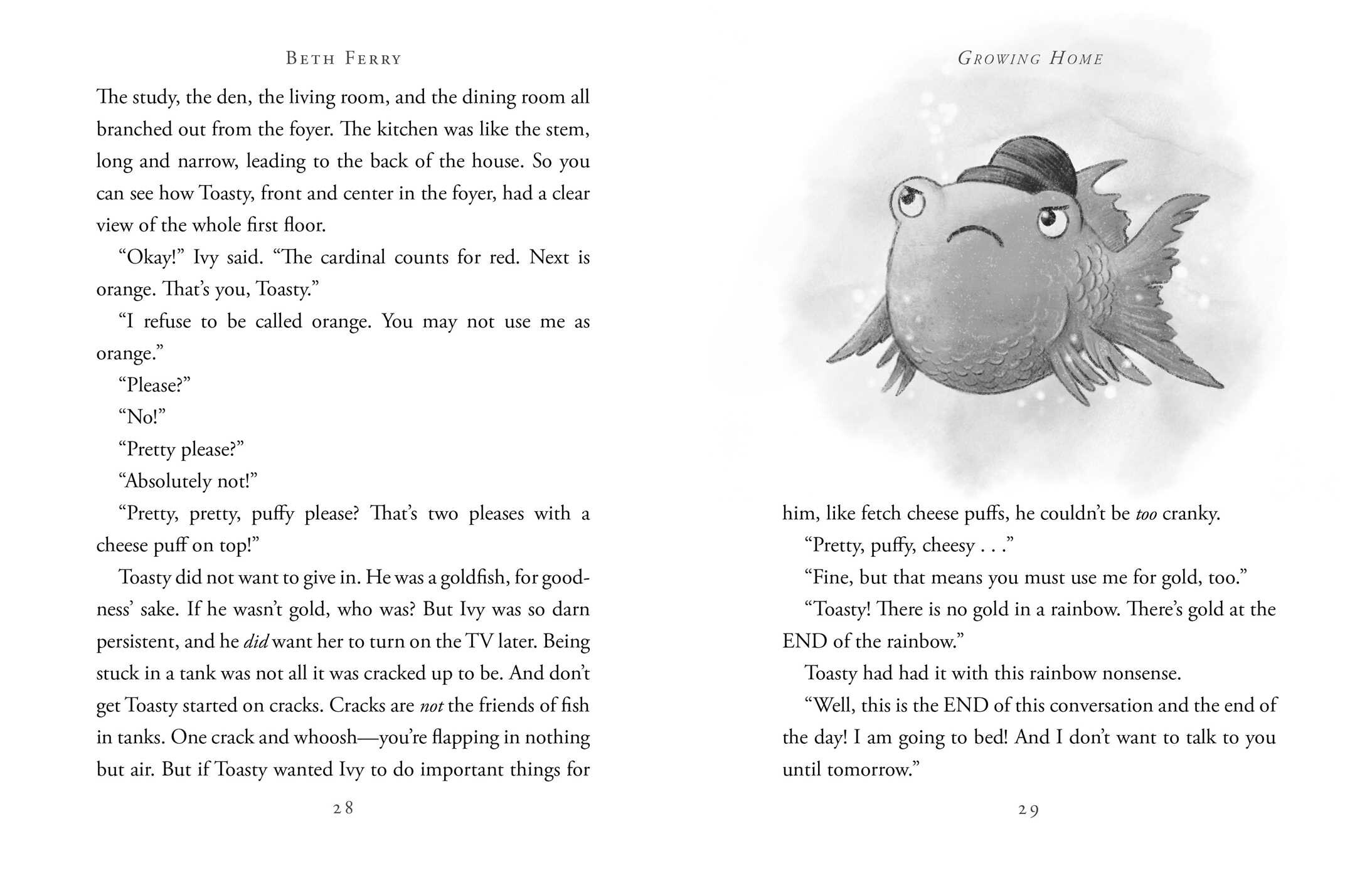
"Ferry has presented a wonderfully imaginative story with magic, mystery, and adventure, set almost entirely in one setting (goldfish tanks don’t move that easily). In addition, detailed pencil illustrations by the talented Fan brothers are sprinkled throughout, and these add whimsy to the novel’s delightfully expressive animal and vegetal protagonists, especially Toasty, with his signature bowler hat and perpetual frown."
– The Bulletin of the Center for Children's Books
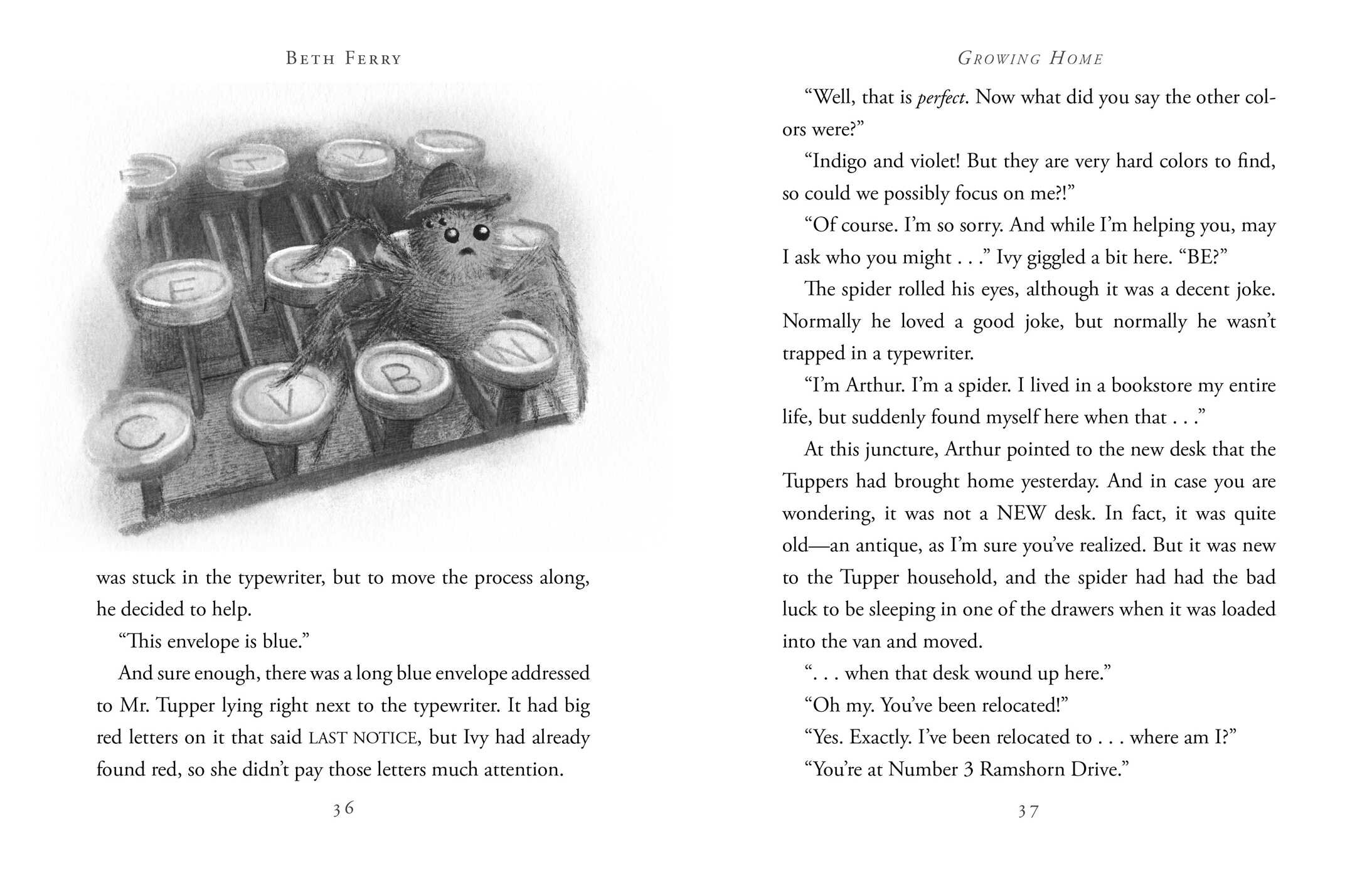
"Chatty asides from Ferry (The Peddler of Puddles) provide context and vocabulary lessons as a buoyant, omniscient narrator skillfully conveys the foursome’s idiosyncrasies, particularly Toasty’s sense of isolation and accompanying crankiness. Neat spot illustrations by the Fan brothers (Barnaby Unboxed!), rendered in their signature style, convey humorous details such as both Toasty and Arthur sporting fetching bowler-style hats."
– Publishers Weekly
"A grumpy goldfish, a self-confident ivy, a curious spider, and an anxious violet come together to love and protect their human family in this whimsical modern fantasy ideal for family readalouds."
– Shelf Awareness for Book Trades
Awards and Honors
- ALA Notable Children's Books
- Children's Sequoyah Book Award Master List (OK)
- Keystone to Reading Book Award (PA)
- Sunshine State Young Readers Award, Grades 3-5 List (FL)
- OWL Award
- Junior Library Guild Gold Standard Selection
- Capital Choices Noteworthy Books Nominee (DC)
- CBC Librarian Favorites
Resources and Downloads
High Resolution Images
-
Book Cover Image (jpg): Growing Home
eBook 9781665942508

-
Author Photo (jpg): Beth Ferry Photograph by Theresa Artigas(0.1 MB)
Any use of an author photo must include its respective photo credit
