Table of Contents
About The Book
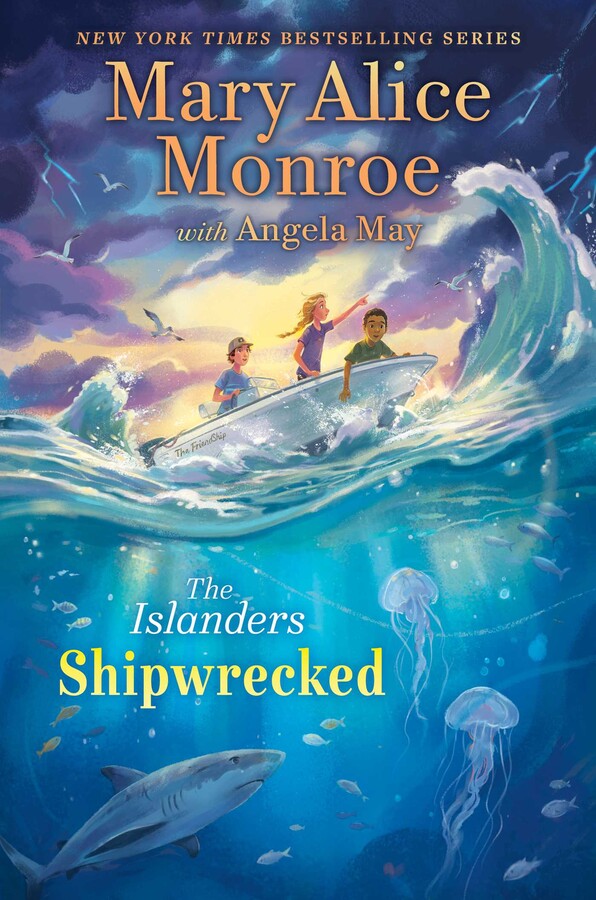
Jake Potter’s biggest dream finally comes true: he gets his very own boat! And it’s just in time for another summer of fun on Dewees Island with his best friends, Macon and Lovie.
But on their very first fishing trip, the engine dies, and the three friends find themselves adrift at sea. When a storm carries them to a small, uninhabited island far from Dewees, the kids must use every ounce of their strength, courage, and knowledge to survive as they wait for rescue. Will their friendship survive the ultimate test?
Excerpt
CHAPTER 1 The Islanders Are Back Together Again!
June 16
THIS WAS GOING TO BE the most epic summer ever!
I could feel it the moment I stepped aboard the ferry. Another summer was beginning at my grandma Honey’s house, the Bird’s Nest, as she calls it. This year, my parents were staying on the island too. Well, at least for part of the summer. They still had to go to work, which lately felt like all the time. But that wouldn’t ruin my mood because it was summer, and today I’d be back on Dewees Island with my best friends—Macon and Lovie.
The ferry sped across the Intracoastal Waterway, carving deep wakes of white-tipped water on either side of the ship. I stood on the open rooftop and leaned against the warm metal railing, taking in the broad expanse of sea and sky. The wind blew through my hair, and my grin spread from ear to ear. I loved being out on the water. The islands, palm trees, and beaches looked different from on a boat, like I imagine the world must look like to the pelicans, eagles, and other birds that fly along the Carolina coast.
I spotted the Dewees Island dock ahead and made a beeline for the ferry boat stairs. My feet clanged on the metal as I hurried down. I was first in line to exit by the time the ferry turned off the big engines. Macon waved and grinned as he trotted down the wood dock to meet me halfway. He was even bigger this summer.
“Finally! You made it,” Macon said as we slapped each other’s backs.
I felt the lingering sting of his strength. “Bro,” I said, stepping back with my chin tilted upward. “You’re massive! How tall are you now?”
“Oh, I don’t know.” Macon shrugged. “Almost six feet, I guess.”
At least, I thought, and felt a tiny bit jealous. Macon had always been bigger than me, but I expected I’d catch up one of these days. He just kept growing. And me? I seemed stuck at the same height.
I leaned to the side, trying to look past Macon. “Where’s Lovie?” I asked, hoisting my black backpack onto my shoulder and grabbing my duffel bag handle.
“She’ll be here after her babysitting job.” He gestured for me to follow him. “I’ve got my golf cart. Let’s go drop your stuff off at your grandma’s. Then we can go fishing! Summer’s waiting!”
A short while later, Macon and I were back on the dock with our fishing gear, waiting for Lovie. Neither of us wanted to waste one minute of our summer on Dewees. We had both waited impatiently an entire school year to see each other again, but now that we were back on the island, it felt like we had never left. We talked easily, catching up, like only best friends could.
“This will be my lucky day. I can feel it,” I said as I grabbed a silver mullet out of the yellow bait bucket.
Macon snorted and swiped away the sweat beading up on his brow. “You know that you’ve called this your lucky day thirteen times since we’ve been out here.” He slowly reeled in his line and nodded toward the dog sitting beside me. “The only lucky thing here is your dog.”
Lucky looked up at the sound of his name, thumped his tail, then went back to watching the water with unbridled intensity. He was forty pounds of muscle covered in a mess of wiry brown hair, poised to leap into the water. Lucky was as eager for a fish as I was. In contrast, Macon was sitting with one leg hanging over the dock and one bent at the knee. He tossed his line with a snap of his long arm, sending the line spinning far into the creek. Fishing seemed to come naturally to him, like most other things.
“You must be pretty bored to be keeping count. But this time I really mean it.” I drew back my rod over my shoulder and then threw my arm forward with effort. The line went soaring and kerplunked into the calm dark water. Almost as far as Macon’s cast.
Macon checked his watch. “We’ve been out here for half an hour and not one nibble.” He lay back on the dock with an exaggerated groan, laying his rod next to him. “It’s a good thing our lives don’t depend on what we catch, like back in the old days.” He patted his belly. “Speaking of which, I’m hungry.”
I could hear Macon unwrapping a chewy granola bar.
“Want one?” he offered through a stuffed mouthful.
I glanced over to see the bar, already half-eaten in one huge bite. Macon pinched off a piece for Lucky. He wagged his tail with thanks.
“You can’t go anywhere without food,” I teased.
Macon smirked, then popped the second half of the snack bar into his mouth. “Fuel for the mind,” he said, tapping the side of his head. Lucky nosed at his other hand, hoping for a second morsel. “And I’m a growing boy,” he added.
I looked out over the water and tried to will a fish onto my hook. Come on, fishies, I thought, imagining a spottail bass checking out my bait. I slowly reeled in my line, holding my breath with hope. Atop the nearby wooden piling, a brown pelican watched the action. Suddenly, the tip of my line bent. I jerked my rod, hoping to set the hook into whatever fish was at the end. It tugged back for a moment, and I reeled my line in as fast as I could.
“Nothing!” I hissed at the sight of an empty hook. “And my bait is gone too!”
“Lucky day, all right… for the fish!” Macon slapped his hand on the warm wooden boards, laughing at his own joke. Even my dog looked amused.
I plopped down on the edge of the dock. I found a dried-up periwinkle shell between the wood slats and flung it out over the water, annoyed.
“You jinxed us with all that lucky talk.” Macon took a long swig from his water thermos. “My mama says you shouldn’t wish a fisherman good luck.” He took another sip of water. “It’s actually bad luck.”
“That’s stupid,” I said, stretching my bare feet out into the cool water.
Macon frowned. “Are you calling my mom stupid?”
“No. Sorry. I meant that the old saying sounds stupid. Remember what you heard was the best fix for the jellyfish sting I got that first summer?”
Macon put his palm over his face and shook his head with a small chuckle. “Man, you’re not gonna let me live that down, are you?”
I took off my ball cap, pushing back the sweaty hair matted to my forehead. “Nope,” I replied with a smirk.
“Lovie should be here in a few minutes, right?” Macon asked, changing the subject.
“Yep. She said twelve thirty in her last text.” I readjusted my ball cap on my head and smoothed out my new T-shirt.
“Dressed to impress?” Macon said, wiggling his eyebrows at me with a teasing smile. “She’s going to be glad to see you’ve got your Islanders ball cap on for her.”
“I’m not wearing it for her,” I said, giving him a light punch to his upper arm, which felt as solid as a tree. His size made me glad to have him as my friend instead of an enemy. “Where’s your Islanders cap?”
“In my room… somewhere.”
I’d been in his room, and it was a lot like his brain—filled with fascinating things scattered around in every crevice and corner.
“Good luck finding that,” I teased.
As we laughed, a small boat slowly cruised by us, heading out toward the ocean. We did the Lowcountry thing where you wave at the passing boaters. The family that was packed onto the boat waved back. A black Labrador sat on the bow. That caught Lucky’s attention. He stood up and barked a hello with his tail wagging. The other dog lazily looked our way.
I felt the old yearning swell inside me. “Man, I wish…”
“Not that again,” Macon moaned.
“How much do you think a boat like that would cost?” I asked.
“You couldn’t afford the gas for that boat, bro!” Macon said.
I didn’t reply. It was true.
“Plus, why do you need a boat? Lovie’s getting ready to pull up here any minute, and you know she’d let you drive her boat since you got your boater’s certification.”
“Yeah, but it’s her boat.” My phone buzzed. I unlocked the screen to read the text. “Hold on. It’s my dad.”
Gotta cancel kayak plans. Sorry, son. Delayed with work stuff. Wanna try for Friday? Mom and I will catch a late ferry tonight.
“Whatever,” I muttered as I quickly typed back OK.
“Problem?” Macon asked, reeling in his line.
“My parents never seem to keep their promises these days,” I said, and shoved the phone back into my pants pocket. “Just my dad saying…”
The sound of an approaching boat engine drowned out my words.
A decrepit, mud-encrusted boat puttered up to the dock. Macon clenched his jaw as we shared a nervous glance.
“Oh no,” I whispered, trying not to move my lips. “It’s Oysterman Ollie.”
Lucky stood at attention, his tail lowered as he sensed the sudden change in mood. I wanted to skitter off the dock and hide in a muddy hole like a fiddler crab. But I couldn’t make myself move. Macon froze.
The potbellied man with a thick, graying beard huffed and grunted as he tied up his boat and stepped over onto the dock. His filthy white boots left a trail of dried mud clumps. The scruffy man panted, the corners of his mouth turning downward under dark eyes and sagging jowls, as he gasped like a grouper fish.
A breeze engulfed us in a mix of pluff mud, fish guts, and old sweat. I resisted the urge to tuck my nose under the neckline of my T-shirt. I leaned closer to Macon and whispered, “Do you think Oysterman Ollie remembers us?”
“Act cool.” Macon made the first move by leaning over to grab his backpack. I did the same.
“It’s been two summers,” I whispered while closing up my tackle box. “You think he’s still mad about us accidentally borrowing his boat?”
Macon’s brows rose, and he whispered back, “Correction. You and Lovie stole the boat. I just got pulled into your pea-brained scheme.” He grabbed his fishing rod. “Let’s get out of here.”
“What about Lovie?”
“Later.”
We turned to slip past when Oysterman Ollie abruptly turned to look straight at us with his rheumy eyes. I swallowed hard, choking down my nerves.
Oysterman Ollie moved two fingers from his eyes toward us in a signal that I knew meant I’m watching you. I felt frozen in place even though the sun was high and bright. Then, without uttering a word, the old fisherman hobbled up the metal ramp toward the land. A stack of loose papers fluttered in one of his hands.
Beep! Beep!
The sound of a boat horn drew our attention from Oysterman Ollie to the water, where Lovie was easing her boat into position.
“Hey, you guys! Sorry I’m late,” she yelled, and tossed her bowline out. I caught it with my free hand and helped tie her vessel to the metal cleat on the wooden dock.
“Finally!” Lovie leaped over the boat’s gunwale onto the dock. “The Islanders are together again. Now our summer can begin!” Lovie gave a big open-mouthed smile, like a dolphin, chasing away my worries.
Lucky jumped up to greet her with tail wags and leg licks. “Hi, sweet boy!” She squatted down and ruffled the messy hair behind his ears. Then she stood up, arms stretched out wide, and leaped toward me in a big hug. I was surprised but hugged her back just as tight. “Took you long enough to get here,” she said.
“Look who’s talking,” I replied with a big smile.
Then she turned to hug Macon, who looked stiff and caught off guard by Lovie’s big squeeze. When she stepped back, she whistled slowly. “You’re definitely a lot taller than last summer!”
“Yeah,” Macon said, looking at his feet.
Then Lovie pointed at my head. “You’ve still got your hat.”
Macon cut me a glance, and I stammered, “Yeah,” and tugged the rim down, hoping to hide the warmth flooding my cheeks. She tugged the bill of her own similar cap and tossed her long blond braid back over her shoulder.
Macon lived in Atlanta, so I didn’t see him at all during the school year. But I saw Lovie from time to time because she lived not far from my town of Mount Pleasant on Isle of Palms. It’d been a few months since we last saw each other, and Lovie was already a little bit taller than me, but her hair was the same. Ugh, when was my growth spurt going to kick in? And her favorite gold sea turtle necklace still dangled around her neck.
Lovie suddenly pinched her nose and cried, “Ew! What stinks?”
I pointed to the mud and barnacle-encrusted boat.
Her eyes widened. “Did you see Oysterman Ollie?”
“Yeah,” Macon groaned.
The grayish-brown pelican that had been watching me fish was now sitting at the helm of Oysterman Ollie’s boat. Lucky barked excitedly, scaring the pelican. As it flapped its long wings and lifted off, the bird released a big splatter of white poop, decorating the captain’s seat.
Macon laughed, shaking his head. “Even the bird agrees with me! That’s one bad luck boat.” We all erupted in laughter.
“Come on, you guys,” said Lovie. “Let’s get away from this stinker before the oysterman sees us and thinks we’re messing with it.”
“Great idea!” I replied. “Where to first?”
A grin spread widely across her face. “Race you guys to the Nature Center!” Lovie took off like a jet with my dog right behind her.
“And she’s off,” said Macon.
We clumsily followed with our fishing rods and gear. The laughing cackles of startled marsh hens erupted from their hidden spots in the grass. It sounded to me like a welcome home. I couldn’t help but grin. The Islanders were back together again!
Reading Group Guide
Shipwrecked
by Mary Alice Monroe
About the Book
Jake, Macon, and Lovie are about to embark on a summer they’ll never forget. These three friends, known as The Islanders, are back on Dewees Island to explore and experience the joys of yet another summer. Jake has a dream of owning a boat, and he will do just about anything to make it happen. With the help of his friends, his dream comes true. However, the dream becomes a nightmare when they are caught in a storm while on a boating trip. With no technology to help them get in touch with their families, they are on their own. To make matters worse, the Islanders become stranded on an island with no inhabitants and little food and fresh water. They must use their knowledge, strength, and courage to get through. As Jake, Macon, and Lovie already have their own inner struggles to deal with, this hardship will certainly test their patience and friendship. Will this be the end of the Islanders and their last summer together, or will they survive their own fates?
Discussion Questions
1. Shipwrecked begins with a prologue, which is defined as an introduction to a literary work that gives background information about the story or its characters. This prologue entices the reader with an apology note that sets the tone of the story. What do you think is the reason for this apology, and who wrote the note?
2. Jake, Lovie, and Macon are like the Three Musketeers, but they call themselves the Islanders. Even though they are best friends, they have different personalities. Describe their character traits and how their relationships differ among one another. Do they feel the same for each friend, or is there a closer bond between two of them? Do you think it’s harder to be best friends in a threesome than in a pair? Explain.
3. The protagonist, Jake, and his two sidekicks, Macon and Lovie, all have complicated relationships with their dads, who disappoint their children in different ways. Lovie states, “‘Parents. They are so difficult sometimes . . .’” (Chapter seven) Notice when this disappointment arises. What happens, and how do the characters feel when it does occur?
4. At multiple times in the book, we see the power of persuasion at play. To be able to convince others to adopt your point of view is a practiced skill. Notice and discuss when the characters try to persuade others to embrace their ideas. What is the situation? What do the characters say, and how is the idea presented? What is the result? Have you ever been in a situation where you needed the power of persuasion? Explain.
5. In books, authors introduce secondary characters who could be advisors to the protagonist. Honey, Dad, Mom, and Scary Harry are some of these characters. What “life tips” do these secondary characters share with Jake and the others? Which tip do you think pertains most to you, and how would you use it to enhance your life?
6. Jake is dreaming about getting his own boat and living the good life with his friends. He needs to earn money fast to buy a boat from Oysterman Ollie. What is his plan? What would be your go-to plan if you needed to earn money fast? Explain your method and how you would go about it.
7. As Jake is working hard to earn money to buy a boat, Honey says, “‘I’m really proud of all the work you’re doing. And how the neighbors are willing to find you jobs. Shows you the spirit of Dewees Island.’” (Chapter five) With all this community support, one can’t help but wonder who is helping who. Are the members of the community helping Jake, or is his service helping them? Can it be both? Discuss your thoughts, citing evidence from the text.
8. Macon is spending much of the summer studying for an acceptance into boarding school. Why is this important to his family? How does Macon feel about it? Would you consider making a life change to make your family happy, even if it’s not what you want? Why or why not?
9. Throughout the story, we see how Jake, Lovie, and Macon’s relationship strengthens. They are supportive friends, even when they don’t always agree. Jake states, “Even though we couldn’t be more different . . . we got each other.” (Chapter five) Notice and discuss how and when the friends support one another. How do they encourage each other? Do you think it’s always easy to support your family or friends? Explain.
10. During tough times, people often rely on objects to make them feel better. Jake’s treasure is his dad’s nature journals. He says that he is comforted and inspired by them. Dad is comforted by the letters Jake sends him when he is in the hospital. At what other points are characters soothed by objects? What thing comforts you? Where did you get it, and why does it make you feel good?
11. Lovie shares a secret with Jake but is hiding it from her mom. What is this secret, and why does she decide not to tell her mother this significant news? Do you think Lovie is doing the right thing in this situation? Is it morally acceptable to hide important information from your parents? What would you do?
12. Jake, Lovie, and Macon are having a splash in the creek and laughing up a storm. Jake thinks they are “free from parents’ expectations and disappointments. Free from work and studying . . . this is the way summer should be.” (Chapter seven) Describe your perfect summer. Who would you spend it with, where would you be, and what would you be doing? Why are these things important to you?
13. As we get to know the characters, we learn how they develop and change. Dad is one of these characters. For a year after his amputation from a war injury, he doesn’t show anyone his prosthetic leg. “Kids stared, whispering, and pointing.” (Chapter nine) Mom says that people mean no harm and are just “uninformed.” Describe Jake’s dad now and how he is coping with his new reality.
14. Jake is the happiest he’s ever been when he’s ready to sail the seas with his friends; that is, until they find themselves “lost at sea” with no way to contact home. Describe what happened and how it all took place. Give specific evidence on how Macon, Lovie, and Jake react and what their roles are now to help save themselves. How would you react if you were on the boat with them?
15. On July 25, Lost: Day 1, Jake is in survival mode. He remembers when his dad insisted that he memorize eight basic rules, which spell the word survival. “‘Son, emergencies happen. All the time. Not just in combat. Anywhere. To anyone. Adults and kids. These tips can help you.’” (Chapter fifteen) What do the letters stand for in the acronym SURVIVAL? Explain what they mean and which letter you think is most important.
16. On the second night adrift on the boat, Lovie says softly, “‘Have you ever . . . done something you regret?’” (Chapter seventeen) They let out a bitter laugh, but then Jake’s emotions take over, and he apologizes for this disaster as tears flow down his cheeks. What do you think Lovie and Macon are regretting? Based on your life, think about how you would answer Lovie’s question. Explain if you are comfortable sharing.
17. As time passes, the friends need to be there to watch out for each other. Their relationships change in a positive way, but sometimes in a negative way. Describe the changes you see, specifically the changes between Jake and Lovie. What is happening to their friendship? In addition, describe, using text evidence, any changes you see in Macon and Jake’s relationship.
18. The climax of a story is an intense and major turning point in the plot. Chapter 19, Lost: Night 3, changes the course of the narrative. As a thunderstorm hits the boat, the author uses specific descriptive language to help the reader visualize the scene. Retell the action as if it were a movie. How did the characters act? How would you?
19. While on the island, the friends realize that to survive they each must focus on what they do best to help one another. Jake, Macon, and Lovie each have their own gifts to help them survive on the island. Describe, and explain with textual evidence, what each character can offer. What would be your gift for island survival?
20. After being lost for days, the Islanders talk about how much they miss their families. Lovie recalls writing a note to her mom about how much she hates her and thinks how sorry she is for thinking these thoughts. “‘But that’s the thing about saying mean things. You can say you’re sorry, but it doesn’t take away the hurt.’” (Chapter twenty-six) What lesson can we learn by this statement? Have you ever been the one to say mean things, or have you been on the receiving end? How did it make you feel?
21. As the Islanders continue to survive on the island, they know they need to keep the fire they built lit. Macon’s idea is to throw his workbooks in the fire. When he gets back home, he wants to stand up to his dad and tell him, “‘I want to walk my own path, not [yours].’” (Chapter twenty-six) Would you stand up for something you believe in even if it’s not a popular decision? What do Jake and Lovie want to do when they get back home? Will any of these conversations be easy? Why do you think the Islanders are being so reflective now?
22. There have been many scary, frustrating, worrisome moments on the island. However, there have been some happy times too. What joyful moments did the characters experience while being stranded? Do you think joy can be found in most situations? Explain. Describe a time when you had to find the good in a difficult situation.
23. An omen is an event or happening that you take as a sign of something to come. When the word FRIENDSHIP, from the boat, comes to shore, the Islanders begin to reminisce and discuss their luck. Jake says, “‘I think luck has nothing to do with omens. . . . Luck, good or bad, is what you make for yourself.’” (Chapter thirty-one) Explain what Jake means by this. Do you agree with him? Why or why not?
24. After the Islanders are rescued, they have the opportunity to share the wishes they made on the island by being honest with others. When the community wants to celebrate their return, Jake explains, “‘I don’t feel like celebrating. The whole thing was all my fault. . . .’” Honey says, “‘We all make mistakes . . . throughout life we have to also forgive. Forgive others . . . forgive yourself.’” (Chapter thirty-two) What powerful message is Honey helping Jake understand? Do you believe it is easy to do? Share a moment when you found yourself in a situation similar to Jake’s, in which forgiveness played a significant role.
25. Jake ends his story with an entry in his journal. In one line he expresses, “I know the greatest treasure I found was my friendship.” (Chapter thirty-two) How does this sum up Jake’s summer? What has he learned?
Extension Activities
1. Mary Alice Monroe and Angela May write Shipwrecked in the form of an epistolary. Look up the definition of epistolary and cite evidence of the author’s style. Why do you think she chooses this style of writing for this narrative? Is it effective? Make a list of other books you know written in the same manner. Consider creating a pro-con list about the benefits and drawbacks of writing a story as an epistolary.
2. The author includes proverbs in her writing. Proverbs are short, well-known sayings that express a truth or piece of wisdom based on common sense or experience. For example, “One man’s trash is another man’s treasure” and “If you’re not early, then you’re late.” What other proverbs can you find in this book? Make a list and add others that come to mind.
3. Honey gives Jake, Lovie, and Macon black-and-white composition notebooks as nature journals. They find them very useful, while adding their own creative touches to them: drawings, writings, photos. Design the cover of your own journal, and write your daily events, thoughts, or adventures in it. What topics would you choose? How would you design it to represent you? Be creative.
4. We are introduced to acronyms when Oysterman Ollie shares the price of his boat as $3000 “OBO.” (Chapter seven) What does OBO stand for? With a partner or group, make a list, ASAP, of acronyms used in everyday language. How many can you come up with?
5. Macon, Lovie, and Jake are intrigued by heroes and famous people in history. Research and learn more about Jane Goodall, Amelia Earhart, the United States Navy Blue Angels, or Blackbeard the pirate. How do you think their experiences and achievements, either positive or negative, have inspired others or influenced history?
6. Spending time on Dewees Island gives the Islanders the opportunity to learn about animals through observation in nature. Research the Atlantic bottlenose dolphin, leatherback sea turtles, and Atlantic blacktip sharks. Compare their habitats, behaviors, and diets. What are their similarities and differences? Which one interests you most? Explain why.
Further Resources
Visit the Prosthetic Foundation website to gain awareness and learn more about how we can help change the lives of amputees. “Every day, more than 500 people in the US lose a limb, and it is estimated that, by 2050, the number of people living with limb loss will nearly double. There are over 2.1 million people in the United States living with limb loss or limb difference. Another 28 million people in our country are at risk for amputation.” AMPUTEE COALITION. See how you can help. https://www.theprostheticfoundation.org/
Guide written by Angela Benevento, a literacy specialist and elementary school teacher. She teaches and lives with her family in New York.
This guide has been provided by Simon & Schuster for classroom, library, and reading group use. It may be reproduced in its entirety or excerpted for these purposes. For more Simon & Schuster guides and classroom materials, please visit simonandschuster.net or TheBookPantry.net.
About The Author

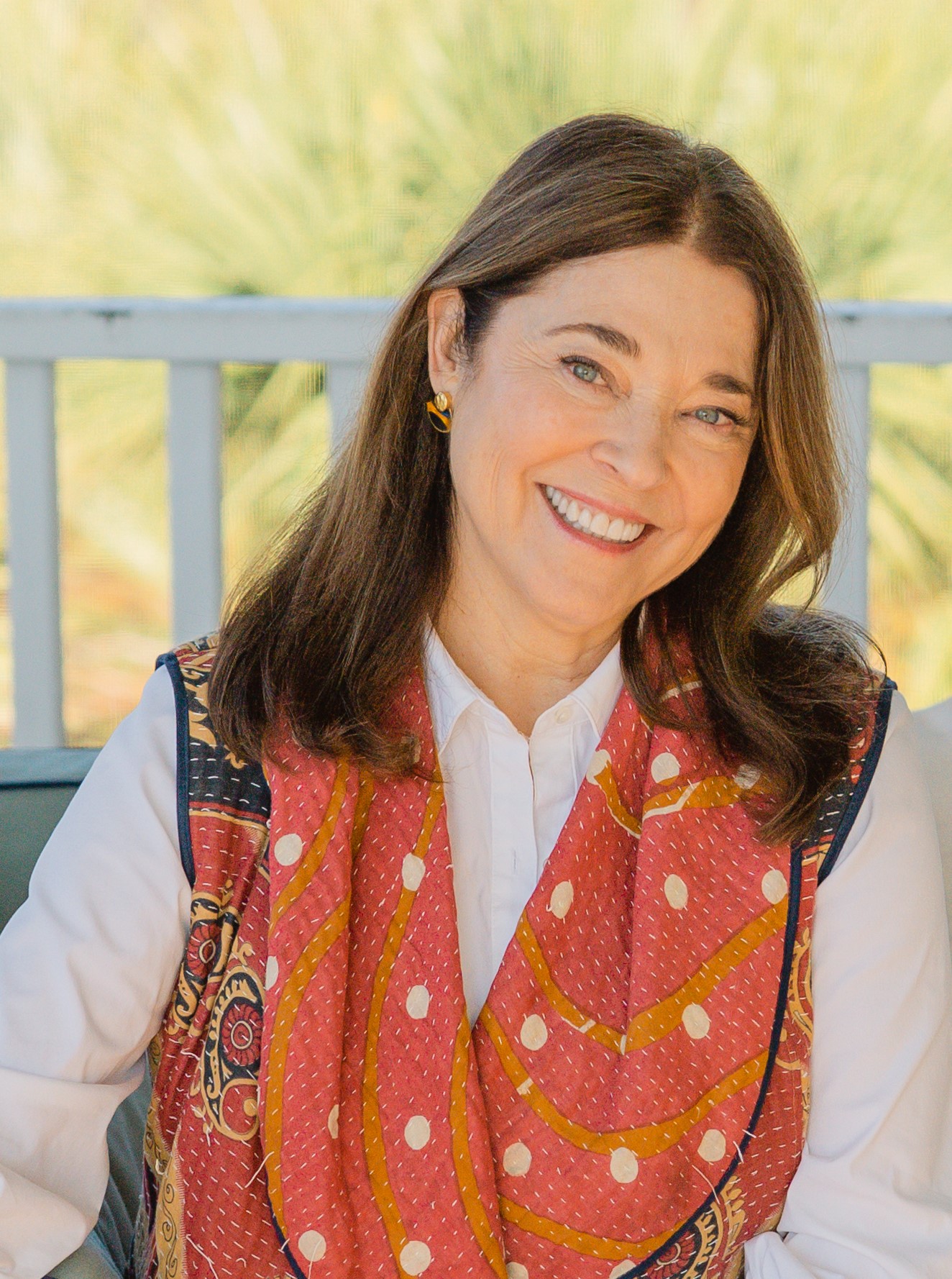
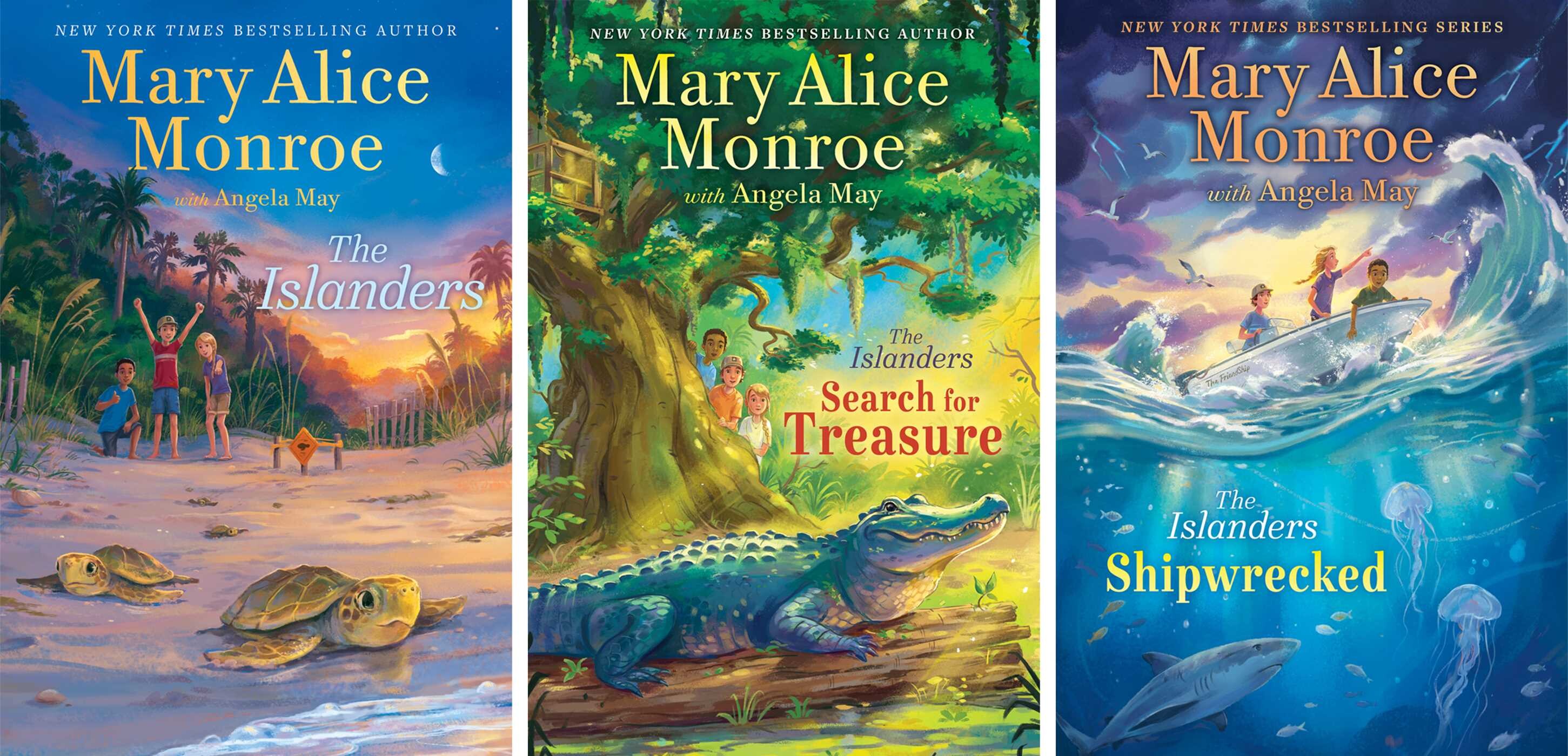
Mary Alice Monroe is the New York Times bestselling author of twenty-seven books, including the bestselling The Beach House series. Monroe also writes children’s picture books, and a middle grade fiction series called The Islanders. She is a member of the South Carolina Academy of Authors’ Hall of Fame, and her books have received numerous awards, including the South Carolina Center for the Book Award for Writing; the South Carolina Award for Literary Excellence; the SW Florida Author of Distinction Award; the RT Lifetime Achievement Award; the International Book Award for Green Fiction; the Henry Bergh Children’s Book Award; and her novel, A Lowcountry Christmas, won the prestigious Southern Prize for Fiction. The Beach House is a Hallmark Hall of Fame movie, starring Andie MacDowell. Several of her novels have been optioned for film. She is the cocreator and cohost of the weekly web show and podcast Friends & Fiction. Monroe is also an active conservationist and serves on several boards. She lives on the South Carolina coast, which is a source of inspiration for many of her books.
Product Details
- Publisher: Aladdin (June 17, 2025)
- Length: 288 pages
- ISBN13: 9781665933018
- Ages: 8 - 12
Resources and Downloads
High Resolution Images
-
Book Cover Image (jpg): Shipwrecked
Trade Paperback 9781665933018
-
Author Photo (jpg): Mary Alice Monroe Photograph © Anne Rhett Photography(0.1 MB)
Any use of an author photo must include its respective photo credit